Here’s something the fitness industry tends to underplay: staying active after 60 is one of the highest-impact health decisions a person can make. Regular exercise at this stage reduces fall risk, preserves bone density, maintains muscle mass, supports circulation, and improves cognitive function. The research is unambiguous.
The challenge isn’t motivation for most seniors — it’s finding equipment that works with their bodies rather than against them. Joints that protest high impact. Balance that’s less reliable than it used to be. Grip strength that makes certain equipment awkward. Conditions like arthritis, COPD, or post-surgical restrictions that rule out some activities entirely.
This guide focuses on fitness equipment that’s genuinely suitable for seniors — not equipment that’s technically usable but poorly designed for the realities of exercising after 60. Each pick is available on Amazon, low-impact by design, and backed by real user reviews from older adults.
Why Exercise Matters More After 60
Muscle mass declines at roughly 3-8% per decade after age 30, accelerating after 60. This isn’t inevitable — it’s largely reversible with resistance training. Seniors who do regular strength work maintain more independence, fall less, and recover faster from illness.
Cardiovascular fitness follows a similar pattern. The heart and lungs can sustain function well into advanced age with consistent cardio. A sedentary senior loses cardiovascular capacity significantly faster than an active one.
Balance, which underpins fall prevention, responds to training. Specific exercises targeting proprioception and stability reduce fall rates meaningfully in clinical studies.
The equipment in this guide addresses all three: cardio, strength, and balance. You don’t need a gym. A corner of the living room is enough.
Our Top Picks for
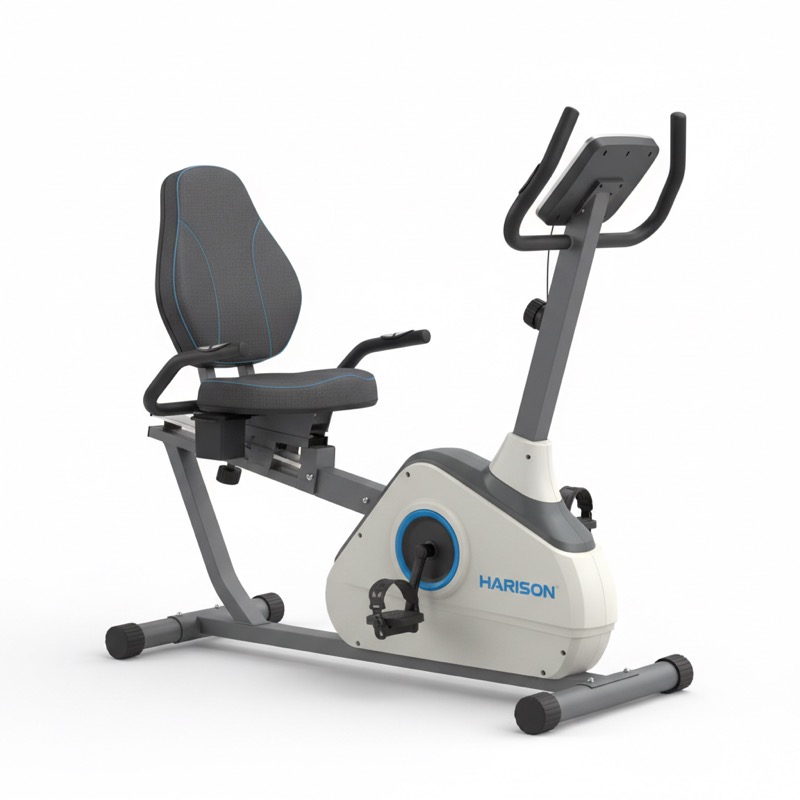
Best Overall: HARISON Recumbent Exercise Bike
A recumbent bike is the single most versatile piece of fitness equipment a senior can own. The reclined, supported position puts almost no stress on knees, hips, or the lower back. You can pedal at any resistance level for any duration, making it suitable for everything from gentle rehabilitation to sustained cardio.
The HARISON Recumbent Bike adds a key feature that makes it practical for seniors: a step-through frame. Instead of lifting your leg over a high bar to mount the bike, you walk into the frame and sit down. This eliminates the mounting problem that makes upright bikes difficult or unsafe for seniors with hip or balance issues.
The padded seat includes a backrest, which standard exercise bikes lack. Resistance is adjustable via a simple dial. The display shows speed, distance, time, and calories without unnecessary complexity.
Price is around $400-500. For a piece of equipment that provides daily low-impact cardio without any joint stress, that’s a reasonable investment that will pay back in both health and longevity of use.
Price: ~$400-500 | Step-through frame | Back-supported seat Check Price →
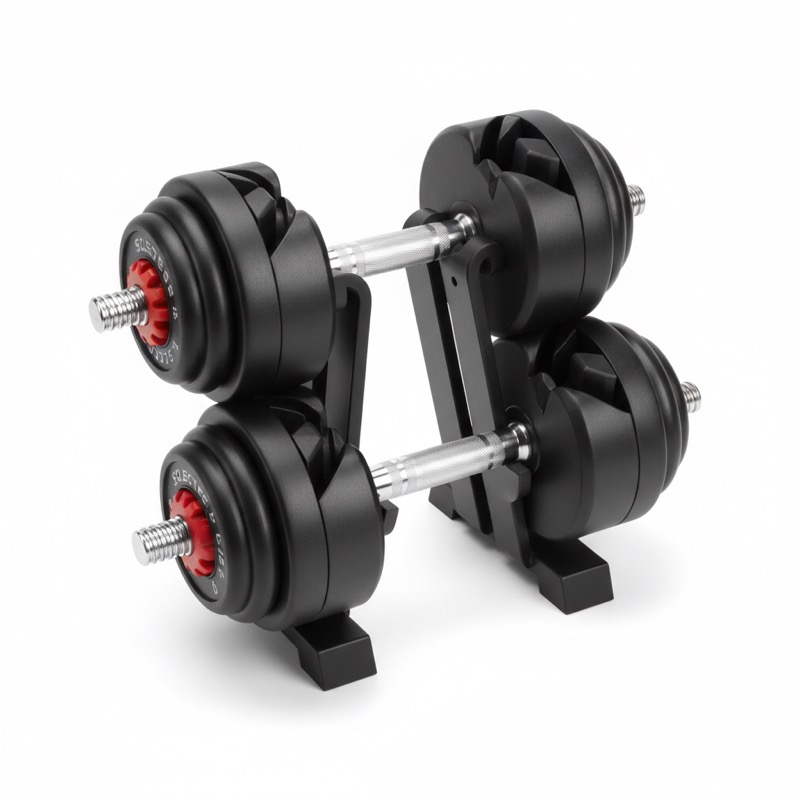
Best Strength Training: Bowflex SelectTech 552 Adjustable Dumbbells

Resistance training is non-negotiable for aging well. The question is what format makes it accessible for seniors. A full set of traditional dumbbells requires storage space and involves picking up small, round weights that are awkward with arthritic hands.
The Bowflex SelectTech 552 solves this with an adjustable dumbbell that uses a dial system to select the weight. Rotate the dial, pick up the dumbbell, and you have the weight you selected — from 5 to 52.5 pounds. One pair replaces 15 individual dumbbells.
The dial system is easier to use with arthritic hands than picking through a rack of small weights. The dumbbells are rectangular rather than round, which helps them sit flat between sets. Storage takes one shelf.
For seniors starting resistance training, 5-15 pound exercises with proper form build significant strength over weeks. For more experienced users, the range goes high enough to provide progressive challenge over years. This is genuinely the most practical strength training investment for home use.
Price: ~$300-400 per pair | Adjustable 5-52.5 lbs | Space-efficient Check Price →
Best for Beginners: Resistance Bands
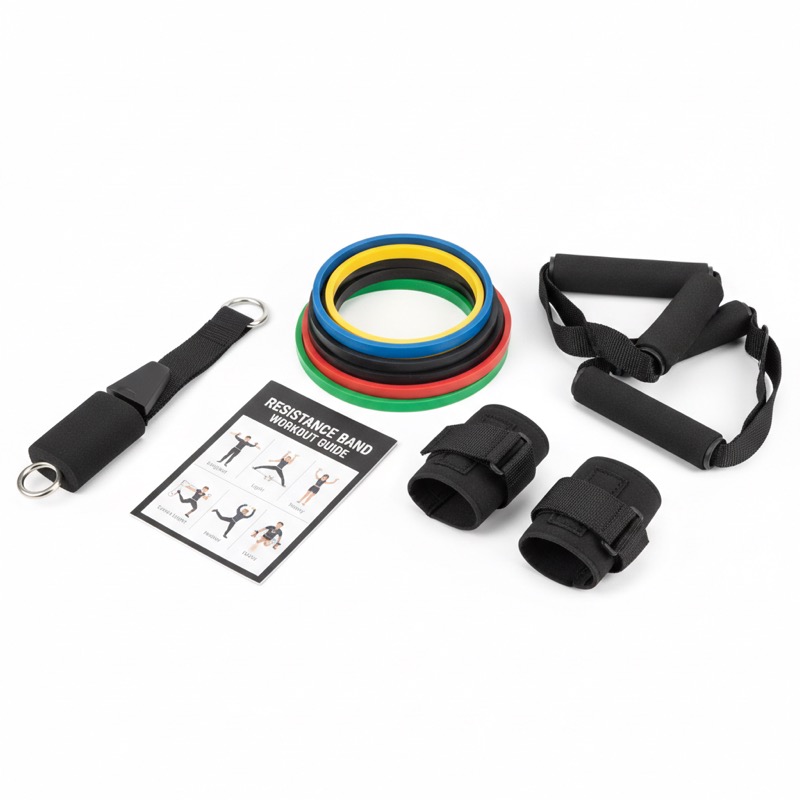
Resistance bands are the most accessible entry point to strength training. They’re affordable (usually under $30 for a complete set), can be used seated, and provide enough resistance for genuine muscle work without any risk of dropping weight on a foot.
For seniors who are new to exercise, recovering from a procedure, or have limitations that make standing exercises difficult, resistance bands with a door anchor open up a wide range of exercises — rows, chest presses, shoulder exercises, leg work — all from a chair or standing position with something to hold onto.
The tension is progressive: lighter bands for warm-up and upper body, heavier bands for legs and back. Quality sets include 4-6 resistance levels and a door anchor, handles, and an ankle strap.
For seniors who have never done structured exercise, starting with resistance bands is often better than starting with weights. The risk of injury is lower, the learning curve is gentler, and the results — particularly for maintaining upper body and core strength — are meaningful.
Price: $15-50 for a complete set | Usable seated | Zero fall risk Check Price →
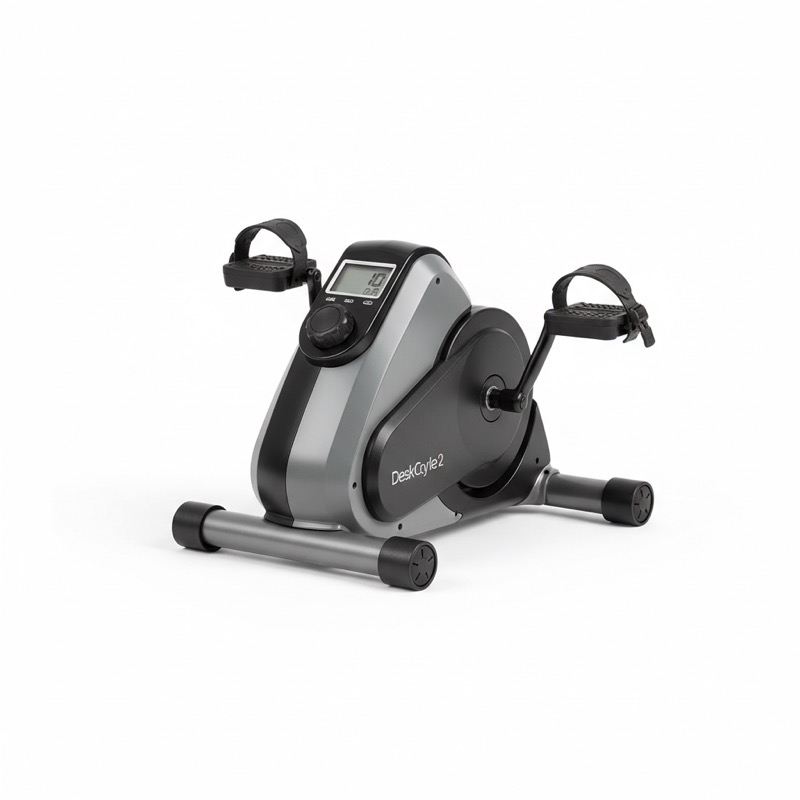
Best for Limited Mobility: DeskCycle 2 Under-Desk Pedal Exerciser
The DeskCycle 2 is exactly what it sounds like: a set of pedals you use while sitting in any chair. There’s no mounting, no balance requirement, and no impact on joints. You place it in front of your favorite chair, put your feet on the pedals, and pedal while watching television, reading, or talking.
This sounds modest, but the cumulative effect is significant. A senior who pedals for 30-60 minutes during their regular TV time gets meaningful cardiovascular work and keeps circulation moving in their legs — both of which matter for heart health and preventing the leg swelling and stiffness that comes from extended sitting.
The DeskCycle 2 runs almost silently, which matters for use during television. Resistance adjusts via a dial. The display shows time, distance, calories, and RPM.
For seniors with mobility limitations, balance problems, or conditions that make standing exercise difficult, this is often the most practical piece of fitness equipment available. It costs around $150-200 and can be used every single day.
Price: ~$150-200 | Zero balance requirement | Completely silent Check Price →
Exercise Guidelines for Seniors: What’s Safe
The American College of Sports Medicine recommends that older adults aim for:
- 150 minutes of moderate aerobic activity per week (30 minutes, 5 days — or broken into shorter sessions)
- 2 days of muscle-strengthening activities targeting major muscle groups
- Balance training 3 days per week for fall prevention
That sounds like a lot. In practice, 20-30 minutes of activity on most days is sufficient for most seniors who are starting from a sedentary baseline. The key is consistency over intensity.
Warm up before exercise. Joints and muscles need 5-10 minutes of gentle movement before more demanding activity. For seniors, skipping the warm-up increases injury risk significantly.
Start lighter than you think you need to. On a recumbent bike, start at the lowest resistance for the first week. With resistance bands, use the lightest band for the first two weeks. The goal is to build the movement pattern before adding challenge.
Monitor heart rate. A rough guideline for moderate exertion: you should be able to speak in short sentences but not hold a full conversation. Smartwatches and fitness trackers can monitor heart rate if you prefer numbers. Target 50-70% of maximum heart rate for moderate exercise (maximum is roughly 220 minus your age).
Rest between sessions. Muscles need 48 hours to recover from strength training. Do cardio daily if you want, but resistance work should alternate with rest days.
Stop if something hurts. Discomfort from exertion is normal. Sharp pain in joints is not. Stop immediately if you experience chest pain, dizziness, or pain that’s different from ordinary muscle fatigue.
Equipment to Avoid for Most Seniors
Free weight bench press: The risk of dropping weight on the chest or face is real if strength or control fails. Use a cable machine or resistance bands for chest work instead.
High-impact cardio equipment (jump ropes, plyometric platforms): High-impact activities cause joint stress that most seniors over 65 should avoid. Low-impact alternatives provide equivalent cardiovascular benefit.
Balance boards without support: Standing balance boards are excellent for balance training — but should only be used near a wall or with a chair available for support. Without something to hold onto if balance fails, the fall risk outweighs the benefit.
Very heavy resistance machines: Machines that require loading heavy weight plates are generally unsuitable for home use by seniors and carry injury risk from improper loading or use without supervision.
Frequently Asked Questions
Is it safe to exercise at 70 or 80? Yes, with appropriate exercise selection and medical clearance. Exercise research consistently shows benefit at every age, including in people in their 80s and 90s. The type of exercise matters — low-impact, controlled movement with progressive intensity is appropriate for most older adults.
Should I see a doctor before starting an exercise program? If you have heart disease, COPD, recent surgery, or any condition that affects your ability to exercise, yes. For generally healthy seniors starting a gentle program, a doctor visit isn’t always necessary, but it’s worth mentioning your plans at your next appointment.
How long before I see results? Strength improvements are typically noticeable within 4-6 weeks of consistent resistance training. Cardiovascular improvements in endurance and energy levels often occur within 2-4 weeks. Balance improvements take longer — expect 8-12 weeks of consistent balance work before meaningful changes.
What’s the minimum equipment needed? A resistance band set and a pedal exerciser cover both strength and cardio at low cost and minimal space. If you want to invest more, a recumbent bike adds sustainable cardiovascular capacity. Start minimal and add equipment as the habit develops.
For seniors who want to extend their activity beyond the home, our best walkers guide covers the mobility aids that support outdoor walking and activity. Our grab bars for home safety addresses the bathroom safety equipment that reduces fall risk — the other side of the active-aging equation.
Summary
The best senior fitness equipment is the equipment you’ll actually use. For most seniors, that means low-impact, easy-to-start, and usable in the living room without special setup or coaching.
The HARISON Recumbent Bike provides the best combination of cardiovascular benefit and ease of use. The Bowflex SelectTech 552 is the most practical approach to home strength training. And the DeskCycle 2 makes daily movement accessible even for seniors with significant mobility limitations.
Start with one piece of equipment, use it consistently for 30 days, and then decide what to add next. Consistency beats intensity at every age.