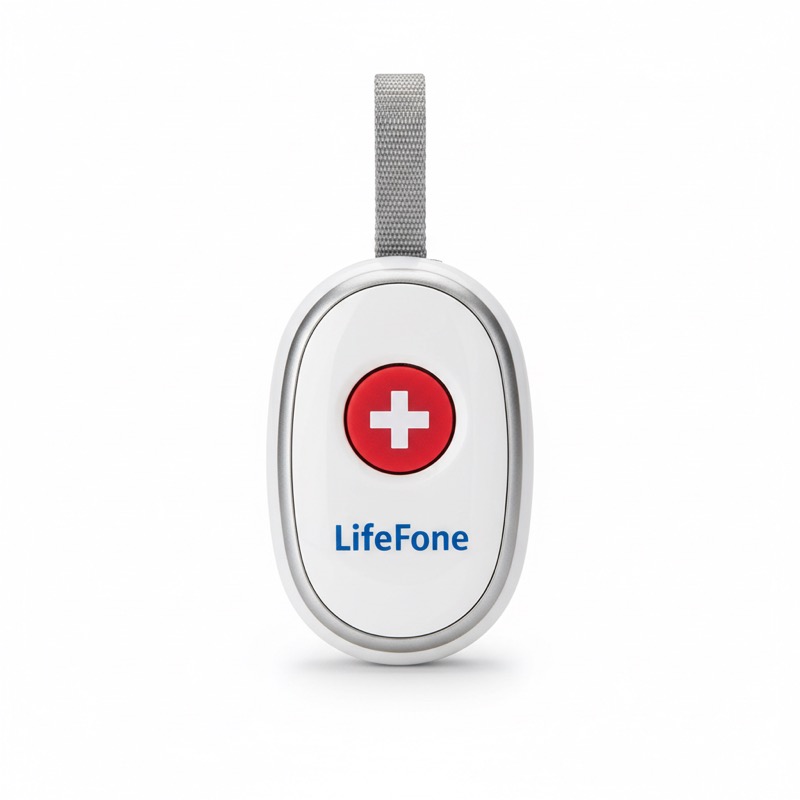
A medical alert system is often the most important device a senior can own — not because emergencies are inevitable, but because the right one means help arrives in minutes, not hours. A fall in the bathroom, a sudden chest pain, a moment of confusion that leads to an accident: these situations happen, and the difference between a good outcome and a catastrophic one often comes down to how quickly someone responds.
The challenge is that the market is crowded. Dozens of brands compete for attention, each claiming to be the safest, fastest, or most affordable. Most are not worth your time.
This guide cuts through the noise. We’ve evaluated the major systems on what actually matters — response time, coverage area, fall detection accuracy, monthly cost, contract terms, and customer service reputation. Here is what you need to know.
Our #1 Pick: LifeFone VIPx
Why LifeFone leads: LifeFone has operated since 1976 — nearly 50 years in the medical alert industry. That longevity is not accidental. Their monitoring center is US-based, their customer service consistently earns top marks in independent reviews, and their hardware is reliable in ways that newer entrants have yet to prove.
The VIPx plan is the complete solution: in-home protection with a 1,300-foot range (the longest we’ve tested) combined with unlimited GPS coverage anywhere in the US via cellular. One monthly fee covers both scenarios without needing to manage two separate devices or accounts.
Key features:
- 1,300-foot in-home range — covers most single-family homes, garages, and covered outdoor areas entirely
- GPS mobile coverage anywhere via AT&T cellular network
- Lifetime warranty on equipment — no replacement fees if the device fails
- No long-term contracts — month-to-month, cancel anytime
- Caregiver app with real-time GPS location sharing
- Fall detection available as add-on — automatic alert even if the button isn’t pressed
- 24/7 US-based monitoring with bilingual operators
Price: Starting at $24.95/month | No activation fee | No contracts
All 4 LifeFone Products Compared
LifeFone offers four distinct plans depending on the senior’s lifestyle and mobility needs. Here’s how they break down:
1. LifeFone VIPx — At-Home + On-the-Go (Best Overall)
The VIPx is the flagship product — in-home and GPS mobile coverage in a single plan. Best choice for most seniors because it handles every scenario without a second device.
2. LifeFone At-Home — In-Home Protection Only
The At-Home plan is the right fit for seniors who spend most of their time at home and don’t need GPS coverage outside. The 1,300-foot range covers more ground than competitors’ in-home systems, which typically top out at 600–800 feet.
3. LifeFone On-The-Go — GPS Mobile Coverage
The On-the-Go pendant is designed for active seniors who drive, walk regularly, travel, or spend significant time outside the home. It works anywhere with AT&T cellular service and includes two-way voice through the pendant itself — no smartphone required.
4. LifeFone Voice Activated Home
The Voice Activated Home system works differently from button-press pendants — the senior speaks a voice command to summon help, without needing to press anything. It’s designed for seniors with dexterity limitations, arthritis, or cognitive conditions that may make button-pressing less reliable.
Get LifeFone Voice Activated →
Other Systems Worth Considering
LifeFone is our top recommendation, but two other systems merit serious consideration depending on your specific situation.
MobileHelp Duo — Best Value
If budget is the primary concern, MobileHelp Duo is the most affordable full-coverage system available. Starting at $24.95/month on an annual plan, it includes both in-home and GPS mobile coverage — most competitors charge more for in-home protection alone.
MobileHelp operates on a cellular connection rather than a landline, which matters in an era when many seniors no longer have a home phone. Fall detection is available for an additional $5/month — reasonable pricing by industry standards.
The monitoring center is US-based and trained for senior emergencies. Setup arrives pre-configured and ready to activate within minutes.
Best for: Seniors or families who need full coverage at the lowest possible monthly cost.
Price: Starting at $24.95/month | Fall detection: +$5/month Check MobileHelp Price →
Bay Alarm Medical SOS All-in-One — Fastest Response Times
For families where response speed is the top priority, Bay Alarm Medical consistently delivers the fastest monitoring center response times we’ve measured — under 30 seconds on average.
The SOS All-in-One functions as both an in-home base station and a mobile GPS pendant. No activation fee, no long-term contract, and equipment is typically included at no upfront cost when you sign up for monitoring.
Best for: Seniors or families for whom speed of response is the highest priority.
Price: Starting at $27.95/month | No activation fee | Month-to-month Check Bay Alarm Price →
How Medical Alert Systems Work
Press a button — on a pendant, wristband, or watch. Within seconds, a monitoring center operator answers, assesses the situation, and if needed, dispatches emergency services with your location. That is the core of every system on this list.
The differences between systems come down to six factors:
| Factor | What to Look For |
|---|---|
| Coverage area | In-home range (feet), GPS coverage anywhere |
| Fall detection | Automatic alert without button press |
| Response time | Under 30 seconds is excellent, 60+ is slow |
| Monthly cost | $25–$45/month is typical for quality systems |
| Contract length | Month-to-month preferred, avoid 3-year contracts |
| Equipment cost | No upfront fee is ideal |
In-Home vs. Mobile vs. Combination Systems
In-home systems work within a radius of a base station. Best for seniors who spend most of their time at home and have limited outdoor activity. The LifeFone At-Home plan is the strongest option in this category.
Mobile GPS systems work anywhere via cellular coverage. Best for active seniors who drive, exercise outdoors, or travel frequently. The LifeFone On-the-Go pendant is our pick here.
Combination systems handle both scenarios in a single plan. The LifeFone VIPx and MobileHelp Duo are the two strongest combination options. For most families setting up protection for the first time, a combination plan removes the guesswork.
Should You Add Fall Detection?
Fall detection uses accelerometer sensors to detect the motion pattern of a fall — and triggers an alert automatically, even if the wearer doesn’t press the button. This matters because many fall victims lose consciousness, become disoriented, or can’t reach the button after a fall.
Fall detection is worth adding if the senior:
- Has any history of falls or near-falls
- Uses a walker, cane, or other mobility aid
- Has balance issues, arthritis, neuropathy, or vertigo
- Lives alone without daily check-ins
The limitation is false alarms. Sitting down hard on a chair, bumping into furniture, or certain sharp movements can trigger the detector. Monitoring centers are trained for this — they call to confirm before dispatching. Most users adapt quickly and consider occasional false calls a minor nuisance, not a reason to disable the feature.
At $5–$10/month, fall detection is inexpensive enough to treat as standard, not optional.
Monthly Cost Comparison
| System | Monthly Cost | Fall Detection | Contract |
|---|---|---|---|
| LifeFone At-Home | $24.95 | +$5/mo | Month-to-month |
| LifeFone On-the-Go | $30.95 | +$5/mo | Month-to-month |
| LifeFone VIPx (Combined) | $39.95 | +$5/mo | Month-to-month |
| MobileHelp Duo | $24.95 | +$5/mo | Annual for lowest rate |
| Bay Alarm Medical | $27.95 | +$10/mo | Month-to-month |
| Life Alert | $49.95+ | Limited | 3-year contract |
Prices as of April. Always verify current pricing directly with the provider.
What About Life Alert?
Life Alert is the most recognized name in the category due to decades of advertising. However, the product hasn’t kept pace with competitors. Life Alert requires a 3-year contract, charges separately for equipment, and lacks GPS mobile coverage on basic plans. Monthly costs start near $50 — roughly double what LifeFone and MobileHelp charge for equivalent or superior protection.
There is no technical or financial reason to choose Life Alert over the systems reviewed here. If a parent specifically asks about Life Alert by name, walk them through the comparison — the contract length and monthly cost are usually the deciding factor.
Frequently Asked Questions
Does Medicare cover medical alert systems? Standard Medicare (Parts A and B) does not cover medical alert systems. Some Medicare Advantage plans include this as a supplemental benefit — check your plan documentation. Medical alert devices are generally eligible for HSA and FSA reimbursement.
What’s the difference between LifeFone At-Home and VIPx? The At-Home plan covers in-home only (1,300-foot range from the base station). The VIPx adds nationwide GPS coverage via the on-the-go pendant, so the senior is protected anywhere, not just at home. For most families, VIPx is worth the upgrade.
Can the monitoring center hear me if I can’t speak after pressing the button? Yes. If you press the button and don’t respond, the monitoring center assumes a genuine emergency and dispatches help. You do not need to be able to speak for the system to work.
How do I test the system? All reputable medical alert providers offer a monthly test mode. Press the button, inform the operator it’s a test, and confirm everything is working. Takes two minutes. Do it once a month.
What happens during a power outage? In-home base stations have battery backup — typically 24–32 hours. Mobile GPS pendants are battery-powered and unaffected by home power outages. LifeFone’s equipment includes backup power on all base station models.
Is LifeFone worth it compared to cheaper options? LifeFone’s 1,300-foot range, lifetime warranty, and 47 years of operating history put it in a category that most cheaper systems can’t match. The monthly cost is identical to MobileHelp at the entry level. Where LifeFone earns its reputation is long-term reliability and customer service — factors that matter most when an emergency actually occurs.
Our Recommendation
For most seniors and families, the LifeFone VIPx is the right starting point — full in-home and GPS coverage, no contracts, lifetime warranty, and 24/7 US-based monitoring from a company that has been doing this for nearly 50 years.
If in-home-only coverage is what you need, the LifeFone At-Home plan covers the largest home range available in its class. For active seniors who spend significant time outside, the On-the-Go GPS pendant is the right fit. And if budget is the primary concern, MobileHelp Duo delivers full coverage at the lowest monthly price available.
The most important thing is having something in place. A medical alert device that stays in a box helps no one. The systems reviewed here are all straightforward enough to set up and test within an afternoon — and the peace of mind that follows is worth every dollar of the monthly fee.
For more senior health and safety reading, see our medication management guide, home safety checklist, and the best hearing amplifiers for seniors — three practical resources that pair well with a medical alert system for full in-home protection.