Hearing loss affects more than half of adults over age 65, and two-thirds of those over 75. It’s one of the most common age-related changes there is — and also one of the most undertreated. The traditional path to hearing help has meant expensive appointments, custom fittings, and prescription hearing aids that can cost $3,000 to $7,000 per pair.
Hearing amplifiers — also called personal sound amplification products, or PSAPs — are a different category. They’re not prescribed medical devices. They don’t require an audiologist. They cost between $30 and a few hundred dollars, and for people with mild to moderate hearing loss, they can make a meaningful difference in daily life.
Are they as good as premium hearing aids? No. Are they good enough to help you follow a dinner conversation, hear the television without blasting it, or catch what someone says when they’re not looking directly at you? Often, yes.
This guide covers what we’ve found to be the most useful options — and explains clearly when an amplifier is the right tool and when you genuinely need to see an audiologist.
Hearing Amplifiers vs. Hearing Aids: The Honest Difference
The FDA now distinguishes between three categories:
Prescription hearing aids are medical devices fitted and programmed by an audiologist for specific hearing loss profiles. They’re appropriate for moderate to severe hearing loss and offer the most customization.
OTC (over-the-counter) hearing aids, legalized in the US in 2022, are self-fitted devices regulated by the FDA as hearing aids — but available without a prescription. They’re designed for mild to moderate hearing loss and typically cost $200–$1,500 per pair.
Hearing amplifiers / PSAPs are not classified as hearing aids. They amplify all sounds in the environment rather than processing specific frequencies. They’re best for situational use — watching TV, following conversations in quiet rooms — and for people at the milder end of the hearing loss spectrum.
If you’ve had a formal hearing test and know you have moderate or severe hearing loss, we’d recommend looking at OTC hearing aids rather than basic amplifiers. If you haven’t been tested but you’re noticing you need higher TV volume than before, struggle to follow conversations in noisy rooms, or frequently ask people to repeat themselves — a hearing amplifier is a reasonable, low-cost first step. And then get your hearing tested.
How We Evaluated These Products
We assessed hearing amplifiers on five criteria:
Sound quality and clarity. Does it make voices clearer, or just louder? The best amplifiers emphasize speech frequencies (roughly 1,000–4,000 Hz) where most conversational hearing loss occurs. The worst just turn up the volume and add distortion.
Feedback (whistling). Cheap amplifiers feedback constantly — that high-pitched whistle you’ve heard when someone with an older hearing aid hugs you. Better products have feedback suppression circuits that minimize this significantly.
Comfort and fit. Amplifiers you won’t wear consistently are worthless. We prefer behind-the-ear designs for most users — they’re easier to handle, easier to adjust, and less likely to cause ear canal irritation than deep-insert styles.
Battery life. Rechargeable is the standard now, and rightfully so. Disposable battery models require fiddly tiny batteries that can be genuinely difficult to handle for people with arthritis or reduced finger dexterity.
Ease of use. Volume controls should be operable with arthritic fingers. Charging should be straightforward — ideally a case that charges the devices while you sleep.
What to Know Before You Buy
Get Your Hearing Tested First
This is the most important recommendation in this guide. A basic hearing test is inexpensive (many audiologists offer it free), takes 20 minutes, and tells you whether you’re dealing with mild loss that an amplifier can help with — or moderate to severe loss that requires a properly fitted hearing aid. The National Council on Aging has a free online hearing screener that takes about five minutes.
Start with One
If you’ve never worn a hearing device, start with one ear — your worse ear — and get used to how amplification feels before adding a second device. The brain needs time to adapt to processing amplified sound. Wearing two from day one can feel overwhelming and cause people to give up before they’ve given the device a fair chance.
Expect an Adjustment Period
Amplified sound is different from natural hearing. Background noise that you’ve stopped noticing — the refrigerator hum, traffic outside — will suddenly be audible again. Most people adjust within one to two weeks. Give it that time before concluding a device doesn’t work.
Our Top Picks
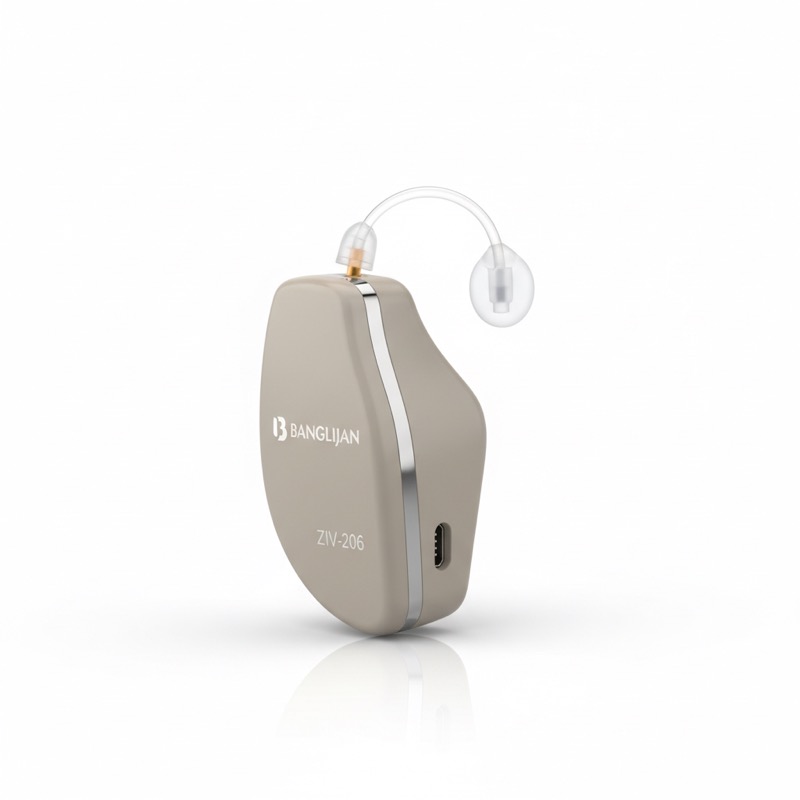
Best Overall: Banglijian ZIV-206 Rechargeable BTE Amplifier
The Banglijian ZIV-206 Rechargeable BTE Amplifier earns our top overall spot because it gets the fundamentals right without overcomplicating things. It’s a behind-the-ear design with a rechargeable battery (20+ hours per charge), a simple volume dial that’s large enough to operate comfortably, and sound quality that meaningfully emphasizes speech frequencies.
The feedback suppression is better than most amplifiers in this price range. You’ll hear occasional feedback when something comes close to the microphone, but it doesn’t whistle constantly the way budget models do. The carrying case doubles as a charger — both devices charge overnight and are ready in the morning.
Four ear tip sizes are included. The fit isn’t custom, but most users find one that works. Sound feels natural and present, not tinny or distant. For mild hearing loss and situational use — television, dinner conversations, phone calls — this does what it claims.
Battery life: 20+ hours per charge Price range: $45–$65 per pair Best for: First-time users, everyday conversational hearing, television
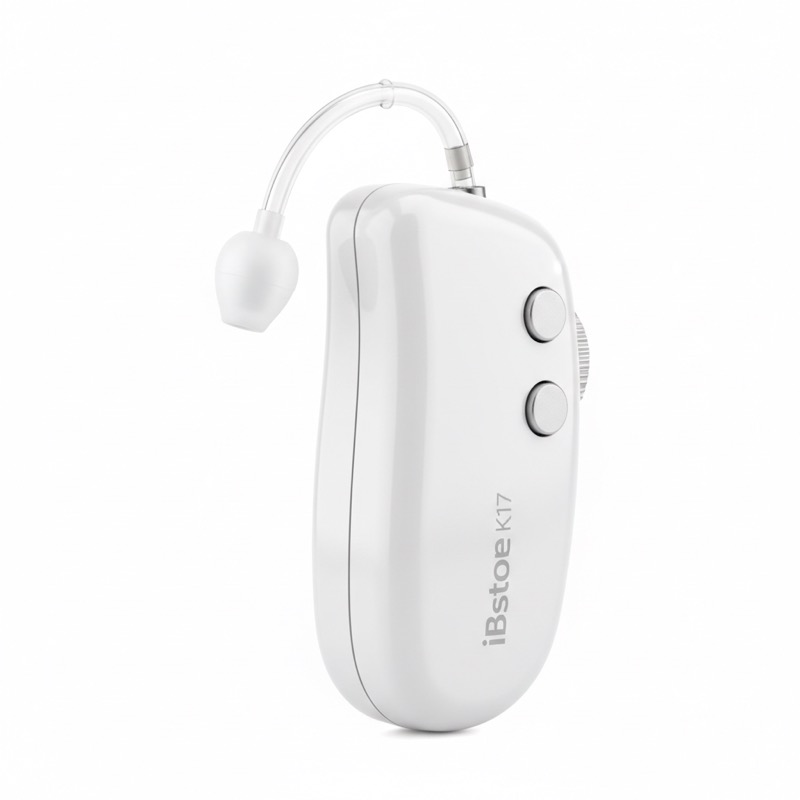
Best Budget: iBstone K17
If price is the primary consideration, the iBstone K17 Hearing Amplifier delivers usable amplification for under $30 per pair. It runs on disposable size 13 batteries (about two weeks per battery), amplifies with reasonable clarity for a device at this price point, and fits comfortably behind the ear.
The K17 lacks the refinement of pricier options — background noise is amplified alongside voices, and there’s no programmatic speech enhancement. But for someone who primarily wants help hearing the TV or catching conversation in quiet settings, it works. It’s also worth considering as a trial device: if amplification helps at all, you’ll know an investment in a better device is worthwhile.
One caution: the battery compartment requires a degree of finger dexterity to open and change. If arthritis is a significant issue, the rechargeable options lower on this list will serve better.
Battery: Size 13 disposable (~2 weeks) Price range: $25–$35 per pair Best for: Tight budget, casual situational use, first-time trial
Best for TV Watching: Sennheiser SET 860
Television is the most common complaint we hear from seniors and their families — either the TV is too loud for everyone else in the room, or it’s not loud enough for the person who needs it. The Sennheiser SET 860 TV Listener solves this differently from in-ear amplifiers: it’s a wireless neck loop system that transmits audio directly from the TV to a receiver worn around the neck.
Because the audio goes directly from the source to you, there’s no room noise, no microphone picking up distracting sounds, and no feedback issues. The sound quality is excellent and the system works across a room — up to 100 meters range in open space.
The tradeoff is the form factor. A neck loop is different from an in-ear device and some people find it unusual at first. But for someone whose primary hearing challenge is the television specifically, this is by far the most effective solution at this price point. Family members also appreciate that the TV volume can come down to a normal level.
Range: Up to 100m Price range: $100–$140 Best for: Television specifically, multiple users can share a transmitter base
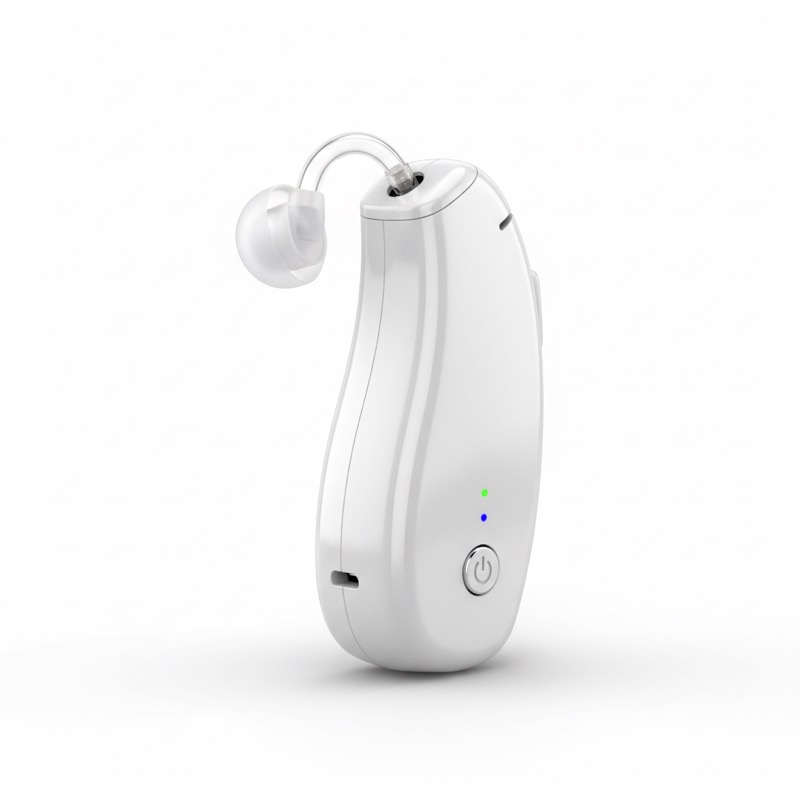
Best Step Up: Elehear Beyond Pro
The Elehear Beyond Pro occupies the space between basic amplifier and full OTC hearing aid. It uses AI-based processing to distinguish speech from background noise — genuinely, not just as a marketing claim — which means you hear voices more clearly in noisier environments than a basic amplifier can manage.
The rechargeable battery lasts about 20 hours; the charging case provides an additional four full charges, so a full week of use without needing to plug in the case is realistic. App-controlled via smartphone for those who want fine-grained adjustment; also usable without the app for those who don’t.
At $649 it’s at the high end of amplifiers and the low end of OTC hearing aids. If you’ve tried simpler amplifiers and found them insufficient — especially in restaurants, group settings, or outdoors — the Elehear Beyond Pro is a meaningful step up without requiring an audiologist visit.
Battery life: 20 hours + 80 hours case Price range: $599–$699 per pair Best for: Moderate hearing loss, noisy environments, tech-comfortable users
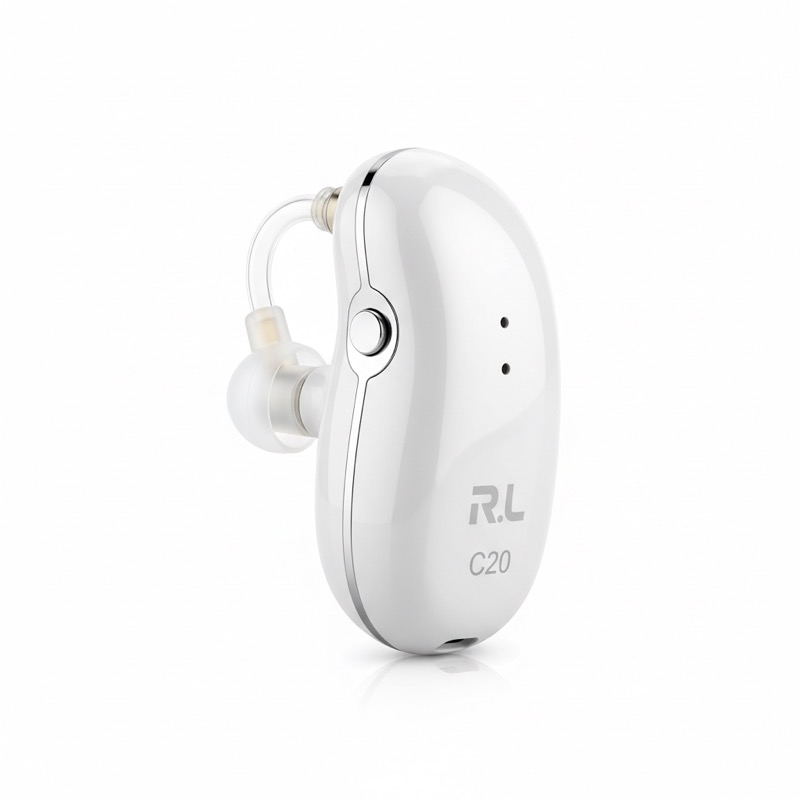
Best for Arthritis: R&L C20 Rechargeable Amplifier
The R&L C20 Rechargeable Amplifier is designed with reduced finger dexterity in mind. The charging case opens with a single wide button press rather than a small latch or clip. The volume control is a rocker switch with satisfying tactile feedback. The ear pieces slide in without requiring precise placement of small components.
Sound quality is solid — not the sharpest speech clarity we’ve tested, but consistent and comfortable across the frequency range. Rechargeable battery lasts 16–18 hours. It comes with multiple ear tip sizes and the instruction booklet is printed in genuinely readable font sizes.
For seniors with arthritis or reduced fine motor control, these thoughtful ergonomic choices matter more than the last 5% of audio performance.
Battery life: 16–18 hours per charge Price range: $55–$75 per pair Best for: Arthritis, reduced finger dexterity, users who struggle with small controls
Getting the Most From Your Hearing Amplifier
Start in quiet environments. Wear your amplifier at home for the first few days. Get used to how voices sound, how to adjust the volume, and how the fit feels. Once that’s comfortable, try it in a busier setting.
Clean it regularly. The ear tip accumulates earwax, which dampens sound quality over time. Most devices come with a small cleaning tool and replacement ear tips. A quick wipe-down every few days keeps performance consistent.
Store it properly. Hearing amplifiers don’t like moisture. Store them in their case when not in use, and consider a small silica gel desiccant packet if you live somewhere humid. If you swim or sweat heavily, remove the devices beforehand.
Adjust the volume gradually. The temptation is to turn it up high to catch everything. Resist this. Start at a lower volume and increase it gradually as your brain adjusts. Overamplification causes fatigue and can make you less likely to wear the device consistently.
When a Hearing Amplifier Isn’t Enough
If you’re struggling to hear in most environments despite using an amplifier on full volume, that’s a signal your hearing loss has progressed beyond what a simple amplifier can address. At that point, the options are:
- OTC hearing aids — FDA-regulated, self-fitted, $200–$1,500 per pair. Jabra Enhance and MDHearing are consistently well-reviewed and represent strong value.
- Prescription hearing aids — The most effective option for significant hearing loss. Modern digital hearing aids are remarkably capable; the cost barrier has come down somewhat with OTC legislation, but custom-fitted aids remain the gold standard for complex hearing loss profiles.
Hearing loss that goes unaddressed for years is associated with increased cognitive decline and social isolation — both serious concerns. The right tool, at whatever level it takes, is worth pursuing.
For more health and wellness recommendations, see our guide to the best blood pressure monitors and our best pill organizers guide. For overall equipment roundups, our best health products of is a good starting point.