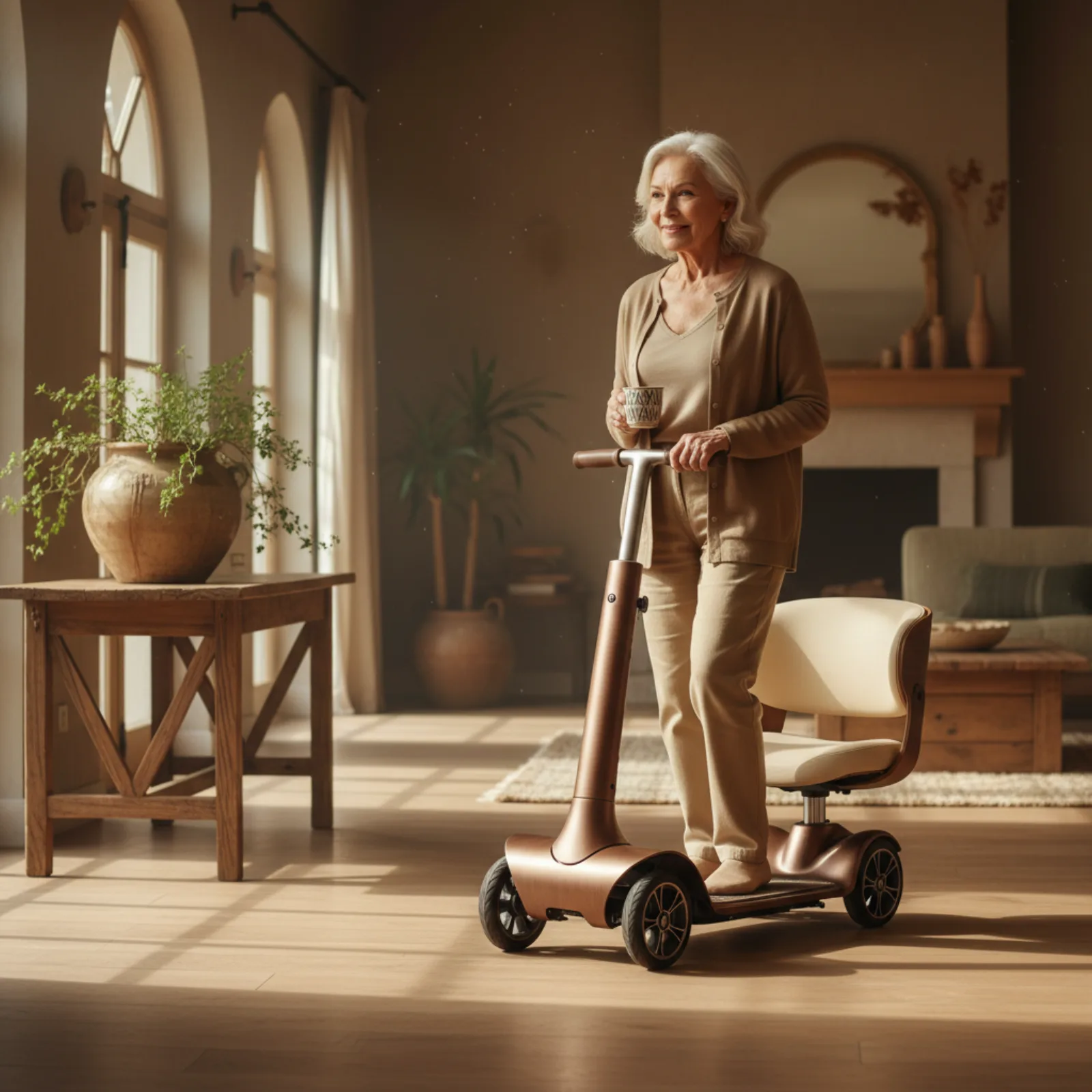
Recovering from a foot or ankle injury is challenging at any age. For seniors, the stakes are higher. A simple slip or a loss of balance can lead to further injuries, making the choice of mobility aid a critical decision for safety and independence.
When a doctor prescribes “non-weight bearing” status, the two most common options are traditional crutches and the knee walker. While crutches are the standard medical go-to, many seniors find the knee walker a transformative alternative.
Understanding the Knee Walker for Seniors
A knee walker is a three- or four-wheeled device with a padded platform. Instead of putting weight on a broken foot or surgical site, the user rests their knee (or shin) on the platform and pushes themselves forward.
For seniors, this device shifts the burden of movement from the upper body and armpits to the legs and core. It allows for a more natural gait than hopping on one foot. Because it provides a wide base of support, it significantly reduces the risk of tipping compared to narrow-base aids.
Many models come with baskets for carrying medications, water, or phones. This is a vital feature for seniors who may need to carry health monitors or prescriptions while moving around the house.
The Challenges of Traditional Crutches
Crutches have been used for decades, but they present several physical hurdles for adults over 60.
Upper Body Strain Crutches require significant strength in the arms, shoulders, and chest. As we age, muscle mass naturally decreases. Relying solely on the upper body to move the entire weight of the person can lead to rapid fatigue and joint pain in the wrists and shoulders.
The Balance Struggle Maintaining balance on crutches is a constant mental and physical effort. Seniors with existing balance issues or mild vertigo may find the “tippy” nature of crutches frightening. A small trip or a slick floor surface can easily result in a fall.
Pressure Points Incorrect use of underarm crutches can lead to nerve damage in the axilla (underarm area). Many seniors struggle with the grip strength required to keep the crutches stable, leading to hand slippage.
Comparing Stability and Safety
Safety is the primary concern for caregivers and seniors. When comparing a knee walker for seniors against crutches, stability is the clear winner for the walker.
Fall Prevention A knee walker functions similarly to a walker or a wheelchair. It has a lower center of gravity and multiple points of contact with the floor. This makes it far less likely to slip on hardwood or tile floors.
Weight Distribution On crutches, the entire body weight is shifted to the opposite leg and the arms. This can cause secondary pain in the “good” leg, often leading to hip or knee strain. The knee walker distributes weight more evenly across the platform and the active leg.
Energy Expenditure Moving with crutches is exhausting. For a senior, the effort required to move from the bedroom to the kitchen can be a full-workout. A knee walker uses wheels to glide, meaning the user spends less energy and can remain active longer without fatigue.
Comfort and Quality of Life
Recovery is not just about healing a bone; it is about maintaining a quality of life. The ability to perform basic tasks independently determines a senior’s mental well-being during recovery.
Hands-Free Capability One of the biggest drawbacks of crutches is that you cannot carry anything. If a senior wants a glass of water or a book, they must either balance the item on their lap or ask for help. Knee walkers usually include a storage basket, restoring a level of independence.
Pain Management Crutches often cause “secondary pain” in the armpits and palms. While the knee walker requires a comfortable knee joint, it eliminates the bruising and chafing associated with crutch pads.
Psychological Impact There is a psychological toll when a senior feels “unstable.” The confidence provided by the wheels of a knee walker often encourages seniors to move more. Movement is essential for preventing blood clots and muscle atrophy. For more tips on maintaining health during recovery, explore more in our Wellness Hub.
Choosing the Right Device: A Decision Guide
Neither device is a universal fit. The right choice depends on the specific injury and the senior’s overall health.
Choose Crutches If:
- The injury is very short-term (less than a week).
- The user needs to navigate very narrow hallways where a walker cannot fit.
- The user has severe knee arthritis that makes resting the knee on a platform painful.
- The user is highly athletic with exceptional upper-body strength and balance.
Choose a Knee Walker If:
- The recovery period is several weeks or months.
- The senior has limited upper-body strength or arthritis in the hands/wrists.
- Balance is a concern, or there is a high risk of falling.
- The user needs to carry items (meds, water, phone) while moving.
- The home has mostly flat surfaces (hardwood, linoleum, low-pile carpet).
Practical Tips for Using a Knee Walker
If you decide a knee walker is the best fit, keep these safety tips in mind to ensure a smooth recovery.
Check the Fit The platform height must be adjusted correctly. If it is too high, the user may struggle to push; if it is too low, the leg will be at an awkward angle. The user should be able to stand upright comfortably.
Surface Awareness While safer than crutches, knee walkers can still struggle with thick shag rugs or transitioning from a room to a porch with a high threshold. Always clear the path of “trip hazards” like throw rugs or loose electrical cords.
The “Siting” Transition Getting on and off a knee walker requires a bit of coordination. Seniors should practice this transition with a caregiver present until they feel confident. Using a sturdy chair to pivot from the walker to a seat is the safest method.
Foot Protection Even though the injured foot is not touching the ground, it is often recommended to wear a light slipper or sock. This protects the foot from accidental bumps against furniture while gliding.
Cost and Availability
Most mobility aids are available through medical supply stores or online retailers. When searching for a knee walker for seniors, look for models with:
- Locking brakes: Essential for safety when transitioning on and off.
- Adjustable height: To accommodate different leg lengths.
- Removable knee pads: For easy cleaning.
Here are two top-rated knee walkers well-suited for seniors:
- Drive Medical Knee Walker — Widely recommended by orthopedic patients, features locking hand brakes, adjustable height, and a padded cushion. Durable steel frame handles daily home use.
- Nova Medical Products Knee Scooter — Lightweight aluminium frame, basket included, height-adjustable platform. Well-rated for indoor and flat-surface outdoor use.
Look for models with:
- Locking brakes: Essential for safety when transitioning on and off.
- Adjustable height: To accommodate different leg lengths.
- Removable knee pads: For easy cleaning.
Final Considerations for Caregivers
For children and caregivers, the goal is to minimize the risk of a “secondary fall.” A senior who falls while on crutches often sustains injuries to the opposite hip or wrist.
When observing your loved one, ask these questions:
- Are they leaning too far forward? (Sign of instability)
- Are they complaining of shoulder or wrist pain? (Sign that crutches are too taxing)
- Are they avoiding movement because they are afraid to fall? (Sign that a more stable device is needed)
The transition to a knee walker often removes the fear factor, allowing the senior to focus on healing rather than the stress of simply getting across the room.
Sources
- Mayo Clinic - Information on mobility aids and injury recovery: https://www.mayoclinic.org
- National Institute on Aging (NIA) - Guidelines on balance and fall prevention for seniors: https://www.nia.nih.gov
- Arthritis Foundation - Tips for using assistive devices with joint pain: https://www.arthritis.org