A walking cane is the most personal piece of mobility equipment a senior will own — used dozens of times a day, depended on in every weather condition, and expected to prevent a fall when balance is compromised. Choosing the wrong one doesn’t just cause discomfort. It can make balance worse, create wrist pain, and ultimately sit unused in a corner.
The good news: getting it right isn’t complicated. Height is the most critical factor, handle type comes second, and style follows from those two decisions. This guide walks through all three, then covers the top picks across different needs.
How Do You Measure the Correct Cane Height for a Senior?
The correct cane height for a senior equals the distance from the floor to the wrist crease when standing upright with arms hanging naturally at the sides. For most adults, this measurement falls between 30 and 40 inches. A properly-fitted cane allows the elbow to bend at a 15–20 degree angle when the cane tip touches the floor — confirmed by occupational therapists as the optimal angle for weight distribution.
Step-by-step height measurement:
- Stand upright in the shoes you normally wear (shoe sole height affects the measurement).
- Let your arms hang naturally at your sides, relaxed.
- Have someone measure from the floor to the crease on the inside of your wrist.
- That measurement is your target cane height.
Most adjustable canes cover a range of 30–39 inches. If your measurement falls outside that range, look for canes marketed as tall (36–43 inches) or petite (26–34 inches).
What Are the Different Types of Walking Canes for Seniors?
There are five main types of walking canes for seniors, each suited to different balance needs and lifestyles:
1. Standard Single-Point Cane A single rubber tip. Lightweight, simple, compact. Best for: seniors who need minimal support — balance reassurance rather than significant weight-bearing.
2. Offset Handle Cane The handle curves forward so it sits over the shaft’s center. This distributes body weight more evenly and reduces strain on the palm. Best for: daily users, especially those with wrist or hand arthritis.
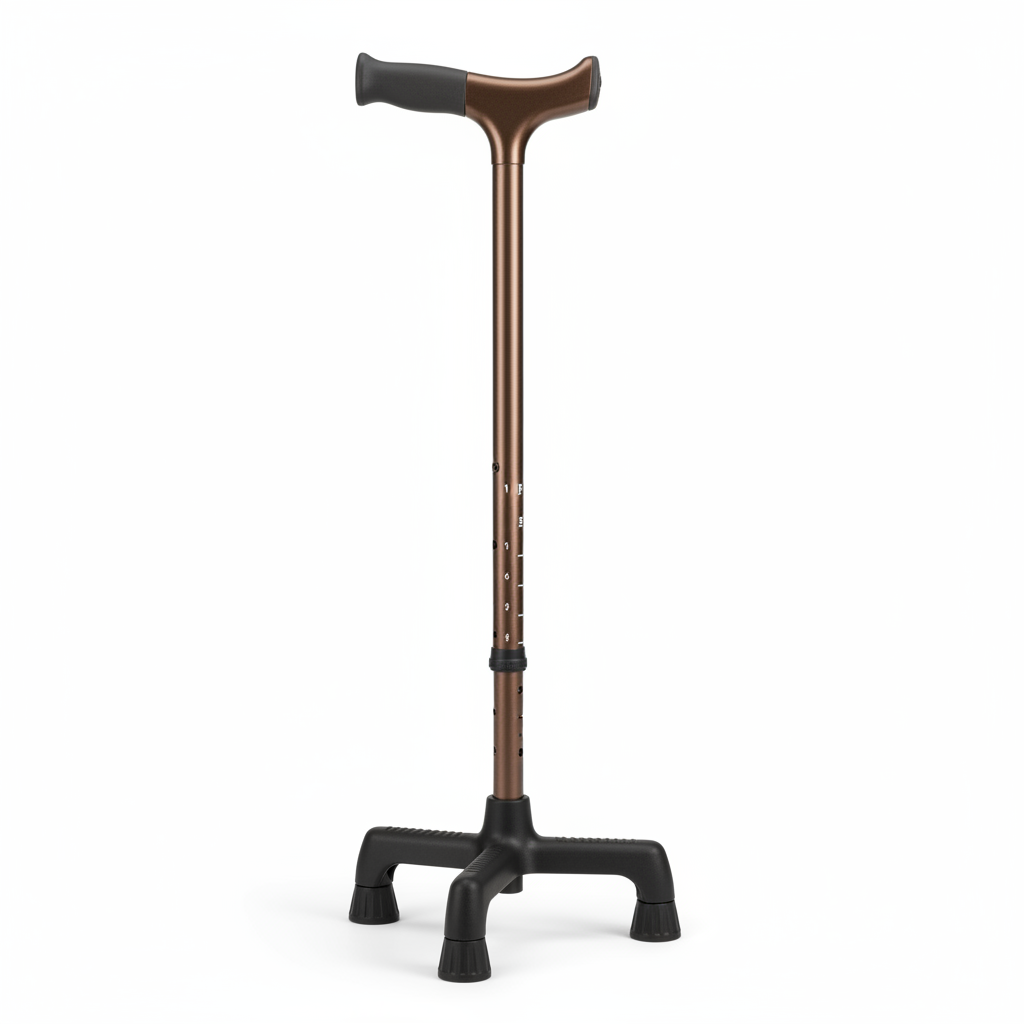
3. Quad Cane (Four-Point Base) Four short legs at the base instead of one tip. Much more stable than single-point canes, stands independently. Best for: seniors with significant weakness, balance disorders, or those recovering from stroke.
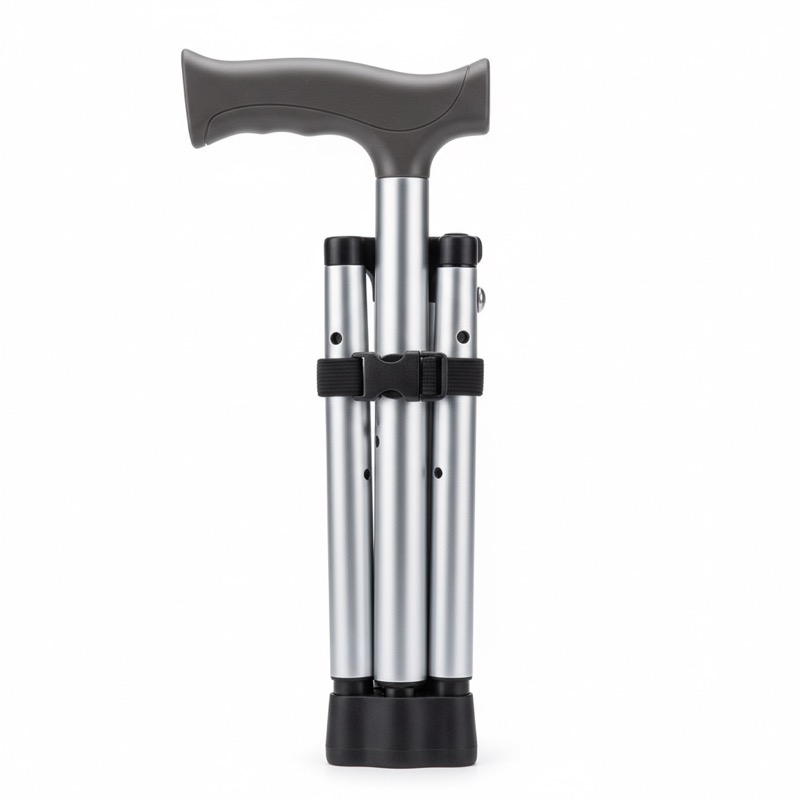
4. Folding Cane Collapses into 3–4 sections for travel or storage. Same function as a standard single-point cane when deployed. Best for: seniors who travel, drive, or need to store the cane out of sight during seated activities.
5. Walking Stick / Derby Handle Cane Traditional wooden style with a round or T-shaped handle. Less adjustable, often more aesthetically important to the user than functional specifics. Best for: occasional use, style preference, or users who only need minimal support.
How to Choose the Right Walking Cane Handle for Seniors
The handle is the most important ergonomic decision when choosing a cane. Your palm transfers all the load to the cane through the handle — a poor design causes pain, fatigue, and reduces how much you actually use the cane.
Standard crook (J-hook) handle. The classic bent top. Hangs on your arm when not in use. Problematic for heavy users because the hook shape concentrates pressure on the palm and can cause hyperextension.
Offset handle. The shaft connects slightly behind the center of the handle, so your weight pushes down through the shaft rather than forward. Occupational therapists almost universally recommend offset handles for everyday use because they reduce wrist and palm fatigue. The American Occupational Therapy Association includes offset canes in their fall prevention toolkit for older adults.
Fischer handle. A broad, anatomically contoured grip that distributes pressure over the full palm. Ideal for users with arthritis who find smaller handles painful.
Fritz handle. An ergonomic palm-filling grip similar to Fischer, often with a foam or gel pad. Good for heavy users who put significant weight through the cane.
Which Hand Should You Hold a Cane In?
Hold the cane in the hand opposite your weaker or injured leg. If your right knee or hip is the problem, hold the cane in your left hand. This is counterintuitive but correct — the cane moves forward with the weaker leg and provides support during the stance phase on that side, reducing joint load by up to 50% according to research published in Physical Therapy.
Cane walking pattern:
- Move the cane and your weaker leg forward together.
- Step through with your stronger leg.
- Repeat — cane and weaker side always move as a pair.
This is the standard pattern taught in physical therapy. Using the cane on the same side as the problem leg — the instinctive mistake — provides almost no benefit and can actually increase asymmetric loading on your joints.
When Is a Cane Not Enough?
A single-point cane is appropriate when a senior needs balance support but can bear their own full weight. When weight-bearing is genuinely impaired, or when fall frequency is high, consider:
- Quad cane — more stable, good transition from walker back to independent walking
- Rolling walker (rollator) — for seniors who need both hands free and significant support
- Forearm crutches — for temporary non-weight-bearing situations
Our mobility hub page covers the full range of mobility aids and when to use each one.
Our Top Walking Cane Picks for Seniors
Shop Walking Canes on Amazon →
Hugo Mobility Adjustable Offset Cane
The Hugo Mobility Adjustable Offset Cane is the best all-day cane for seniors who use a cane regularly. The offset handle design is the key feature: it shifts load from the palm to the wrist, reducing fatigue during extended use and virtually eliminating the palm pressure that makes standard crook handles painful for arthritic hands.
It adjusts from 30 to 39 inches with a push-button lock — a 3-second operation with no tools. At under 2 lbs, it doesn’t add noticeable fatigue to the arm over a full day of walking. The large rubber tip wears well and accepts standard replacement tips available in any pharmacy.
Price: ~$25–35 | Height Range: 30–39 inches | Weight: under 2 lbs
Key Features
- Offset handle reduces palm and wrist strain
- Adjusts 30–39 inches, push-button lock
- Under 2 lbs, lightweight aluminum shaft
- Large rubber tip, standard replacement size
HurryCane Freedom Edition Folding Cane
The HurryCane Freedom Edition solves the single biggest frustration of cane users: where to put it when you’re seated. The HurryCane folds into four sections in seconds, fits in the included carry bag, and its pivoting base stands upright on its own at a table or in a car door pocket without falling over.
The 360-degree pivoting base is more than a gimmick — it maintains contact with uneven ground (cobblestones, slanted driveways) that would tip a standard single-tip cane. For travel, this is the most practical design available. For full-time daily use, the Hugo’s offset handle is more ergonomically optimal.
Price: ~$35–50 | Height Range: Adjustable | Capacity: 250 lbs
Key Features
- Folds into 4 sections, carry bag included
- Stands independently — no leaning
- Pivoting base for uneven terrain
- 250 lbs capacity
Drive Medical Quad Cane with Large Base
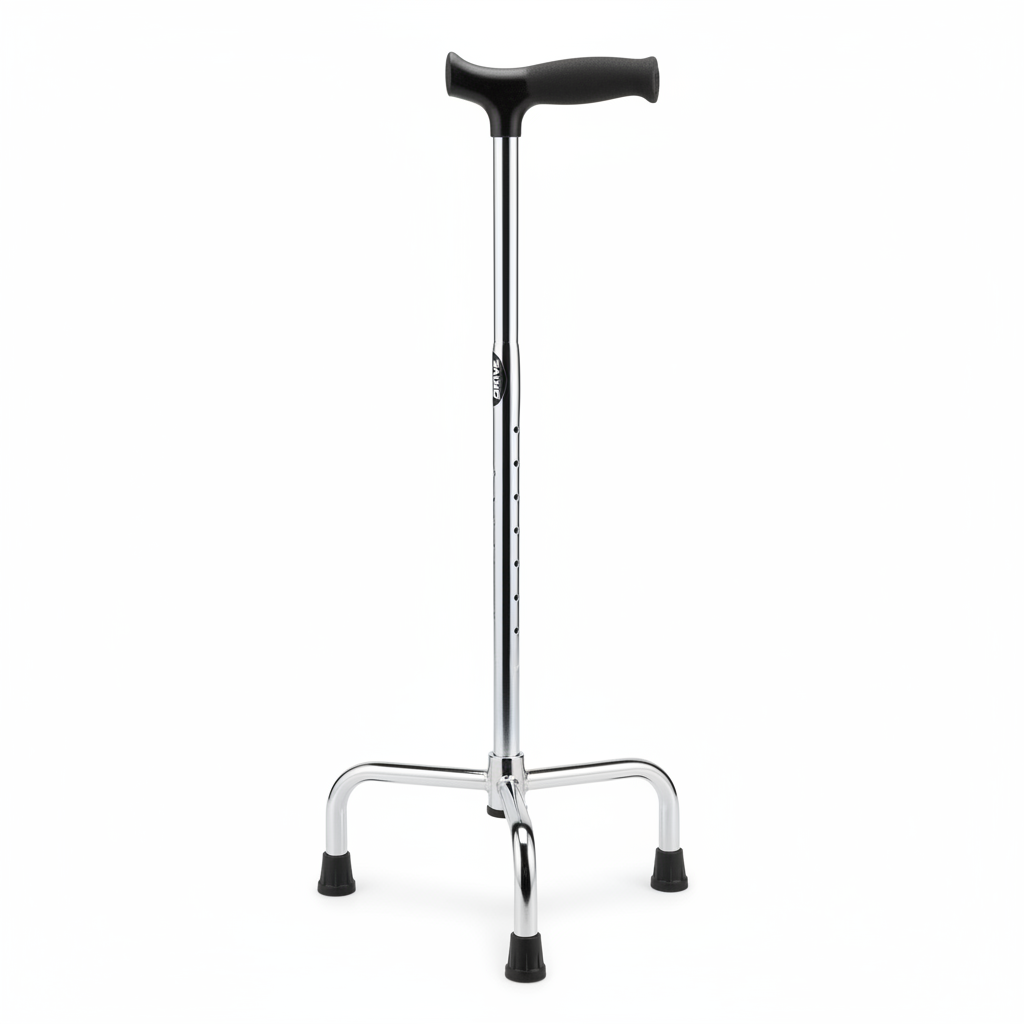
When stability is the primary requirement — for seniors with balance disorders, significant weakness, or recovering from stroke — the Drive Medical Quad Cane provides a level of support that single-point canes cannot match. The four-point base distributes weight across a wider footprint, and the cane stands independently, which matters enormously when you need to use both hands briefly (opening a door, carrying a bag).
The offset handle follows the same ergonomic logic as the Hugo — weight through the wrist, not the palm. At 300 lbs capacity and an adjustment range of 28–37 inches, it fits most users.
Price: ~$20–35 | Height Range: 28–37 inches | Base: Large 4-point
Key Features
- Four-point base, maximum stability
- Stands independently
- 300 lbs capacity
- Offset handle, adjustable height
Tips for Using a Cane Safely on Different Surfaces
Getting the right cane is step one. Using it correctly across different surfaces extends its benefit significantly:
Stairs (with handrail): Lead with the stronger leg going up (“good leg to heaven”). Lead with the cane and weaker leg going down (“bad leg to hell” — an old PT mnemonic). Keep the handrail hand on the rail at all times.
Wet or slippery floors: Standard rubber tips have reduced grip when wet. Ice-and-snow cane tips are available with retractable spikes for winter use. On wet indoor tile, slow down and keep weight centered directly over the cane tip.
Thick carpet: Cane tips compress into thick carpet slightly, effectively shortening the cane by half an inch or more. Adjust your technique accordingly, and consider a cane tip with a wider base.
Outdoor terrain: A pivoting quad cane (like the HurryCane) handles outdoor terrain better than single-tip canes on gravel, grass, or cobblestone.
Replace rubber cane tips when the flat bottom shows visible wear — typically every 6–12 months with daily use. Worn tips are a leading cause of cane-related falls. Replacement tips cost $3–8 at any pharmacy.
Frequently Asked Questions
How do I know if my cane is the right height?
When you hold the cane with your arm relaxed at your side, the elbow should bend about 15–20 degrees. If your elbow is straight or over-extended, the cane is too tall. If your elbow is bent past 20–25 degrees, the cane is too short. Re-adjust using the formula: floor to wrist crease while standing.
Should a walking cane be used on the left or right side?
Hold the cane on the opposite side from your weaker or injured leg. Cane moves with the weaker leg — they advance together. This is the correct technique taught by physical therapists and supported by biomechanical research on reducing joint load.
What is the difference between an offset handle cane and a straight cane?
An offset handle cane has the handle positioned so the weight transfers through the shaft’s axis, reducing wrist and palm strain. A straight (crook or derby) cane concentrates load on the palm at the point of grip. For daily use, offset handles are significantly more comfortable and recommended by occupational therapists.
How often should I replace the rubber tip on my cane?
Replace the rubber tip every 6–12 months with daily use, or when the flat bottom shows visible wear patterns. A worn tip significantly reduces grip — especially on smooth indoor floors and wet surfaces. Standard replacement tips are available at pharmacies for $3–8.
Can a cane prevent falls?
A correctly fitted cane used with proper technique reduces fall risk significantly for seniors with balance difficulty. A study published in the Journal of Gerontology found that cane use combined with balance training reduced fall incidence in older adults by 40–50%. The cane’s benefit is maximized when height is correct and the user has received basic instruction on proper technique.
Stay Informed
Want more mobility and safety tips for aging at home? Join thousands of seniors and caregivers who get our weekly guides — practical advice, no fluff.
Sign up for our free newsletter
Related reading: Best All-Terrain Walkers for Seniors | How to Walk with a Walker | Mobility Hub