
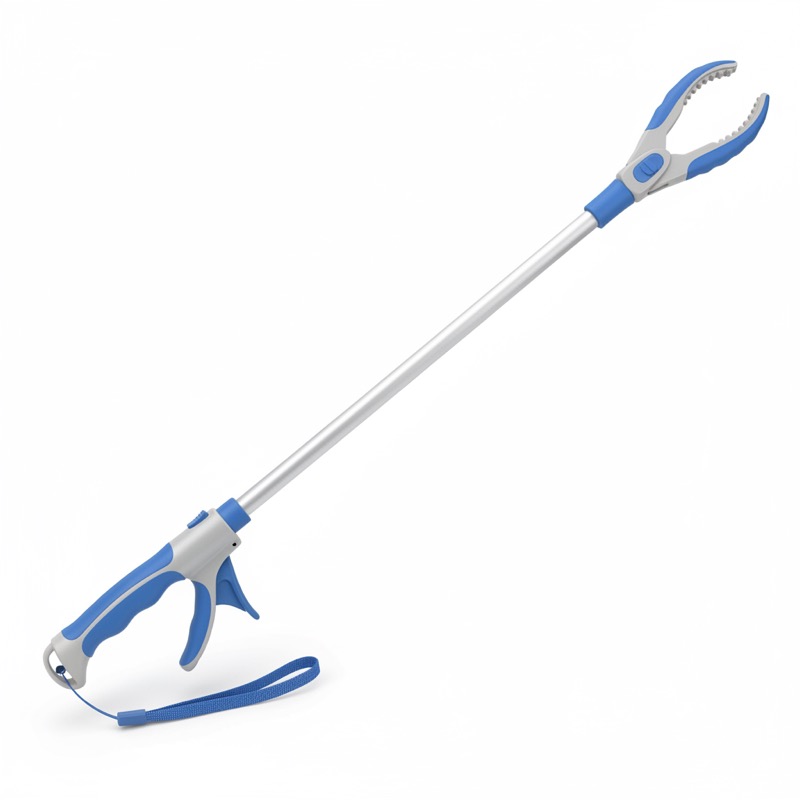
My neighbor Dave had hip replacement surgery last spring. The first week home, he told me the two things that made the biggest difference weren’t the walker or the raised toilet seat — it was the reacher grabber his daughter bought him on her way out the door.
“I dropped my phone on the first day,” he said. “Without that thing, I would’ve had to call someone just to pick it up off the floor.”
That’s what a good reacher does. It closes the gap between where you can safely reach and where things end up — socks on the floor, the TV remote under the couch, a can of soup on the bottom shelf. For anyone dealing with back pain, hip surgery recovery, or just stiff joints in the morning, a quality grabber tool can quietly change the whole shape of a day.
Here’s what we found after comparing 20+ models.
Why Reachers Matter More Than Most People Realize
According to the CDC, over 36 million falls happen among older adults each year. A significant portion happen during routine moments — reaching for something too far away, bending down when the body isn’t ready for it, or twisting in an awkward direction.
Reachers eliminate most of those moments. They’re simple tools, but they do important work.
Occupational therapists — the professionals who help people regain independence after surgery or injury — recommend reachers as one of the first adaptive tools to have at home. After hip replacement surgery specifically, patients are typically restricted from bending past 90 degrees for 6 to 12 weeks. A 32-inch reacher turns that restriction into a manageable inconvenience rather than a daily crisis.
And it’s not just surgery recovery. If your lower back protests every time you reach for something below knee height, a reacher means you can pick up what you dropped without the wincing and the five-minute recovery afterward.
What to Look for in a Reacher Grabber
Before we get into specific picks, here’s what separates a reacher that gets used every day from one that ends up in a drawer.
Length. Most people need at least 30 inches. Standard floor-to-counter reach is around 28 inches, but a little extra gives you margin. If you use a wheelchair, 32–36 inches gives you full floor coverage without leaning. If you’re taller or need to reach under furniture, go with 36 inches.
Rotating head. A jaw that pivots — typically 90° or 360° — means you can grab things in awkward positions without repositioning your whole arm. This matters most when reaching behind objects or into tight spaces.
Trigger design. Look for a trigger your whole hand can squeeze, not just one finger. Pistol-grip triggers are easiest on arthritic hands. Some models have spring-loaded jaws that open automatically when you release — those are easier to use one-handed.
Weight. A heavy reacher gets fatiguing. Aluminum models typically weigh 5–8 oz. Avoid steel reachers for everyday carry unless you need the extra jaw strength for heavy items.
Jaw type. Rubber jaws grip fabric and smooth surfaces. Suction cup tips work on dishes and smooth containers. Magnetic tips pick up metal objects — coins, keys, dropped pill capsule caps. Some reachers combine all three.
The 6 Best Reachers and Grabbers for Seniors
RMS Long Reach Grabber Tool — Best Overall
The RMS is the one most occupational therapists hand to patients leaving the hospital. At 32 inches with a rotating jaw and magnetic tip, it covers almost every daily scenario — picking up laundry, retrieving items from low shelves, grabbing dropped medications off the floor.
The trigger handle is easy on hands that don’t have much grip strength. The jaw opens wide enough to handle most household items without fussing. At under 7 oz, it’s light enough to carry from room to room without thinking about it.
If you can only have one reacher in the house, this is the one.
Vive Suction Cup Reacher Grabber — Best for Hip Surgery Recovery
After hip replacement or any procedure that restricts bending, 36 inches of reach makes a meaningful difference. The Vive is long, foldable, and comes with a suction cup tip that grips smooth surfaces like dishes and containers.
The fold-down design is important — it fits in a hospital bag or overnight bag, and it stores flat in a drawer. Many physical therapists recommend this model specifically because it meets the hip precaution range-of-motion guidelines issued post-surgery.
The soft rubber jaw also handles delicate items — you can pick up a piece of fruit or a paper cup without crushing it.
Ettore Grip ‘N Grab — Best Heavy-Duty Option
Most reachers max out around 2–3 lbs. The Ettore handles up to 7 lbs, which means it can pick up a can of paint, a heavy book, or a full water bottle without flexing or slipping.
The steel construction makes it heavier than aluminum models, but for yard work, garage tasks, or anyone who regularly moves heavier objects, that tradeoff is worth it. The wide jaw opens further than most competitors.
This is the pick for people who want a reacher that does real work, not just light household retrieval.
Duro-Med Folding Reacher — Best for Travel
At 26 inches folded and under 5 oz, the Duro-Med folds in half and disappears into a carry-on bag or purse. It’s the reacher that goes everywhere — road trips, hotel stays, visiting grandchildren.
The trigger is easy-squeeze, and the jaw handles most travel-sized items without issue. It’s not the most heavy-duty option, but as a second reacher or a travel companion to your main grabber, it’s hard to beat.
Pik Stik Pro — Best Kitchen Grabber
Kitchen use has specific demands. You need a grabber that can handle canned goods on low shelves, boxes pushed to the back of a cabinet, and items in awkward positions behind other things.
The Pik Stik’s 360° rotating head and wide jaw are built for exactly this. The dishwasher-safe jaw insert is a nice touch — kitchen reachers get messy, and being able to actually clean the jaw matters.
The pistol-grip handle is comfortable for extended use. This is the one to keep near the stove or in the pantry.
Hugo Mobility Compact Reacher — Best Budget Pick
Not every situation needs 32 inches. If you primarily need help reaching things on countertops or just above arm height, a 19-inch compact reacher is easier to maneuver in tight spaces and lighter to carry.
The Hugo is well-built for the price, with a jaw that opens 3.5 inches — wider than most compact models. Wheelchair users especially find the shorter length easier to handle in close quarters.
It’s the affordable entry point if you’re trying a reacher for the first time and aren’t sure which length you need.
After Hip Surgery: What Your OT Won’t Always Tell You
Most patients leave hip replacement surgery with a sheet of restrictions. No bending past 90 degrees. No crossing your legs. No reaching past your feet.
What the sheet often doesn’t say clearly is that a reacher makes every single one of those restrictions manageable.
You can’t put on your own socks without bending — but a sock aid and a reacher together solve that problem. You can’t pick up something you dropped — but a 36-inch reacher means you never have to ask someone to get it for you. You can’t reach the bottom shelf — but a reacher means you can reorganize your kitchen to keep what you need within the tool’s range.
AARP recommends reachers as part of any home modification plan for people recovering from orthopedic surgery. Occupational therapists typically include them in the standard home safety assessment for anyone returning home post-hospitalization.
Get one before you need it. The worst time to figure out which reacher to buy is when you’re already restricted.
How to Get the Most Out of Your Reacher
A few things most people learn the hard way:
Keep it somewhere you’ll actually use it. Most people end up wanting two — one for the bedroom and one for the kitchen. The reacher that’s in the closet doesn’t help you when you drop something in the bathroom.
Practice with light items first. The jaw mechanism takes a few tries to get used to. Start with a sock or a piece of paper before you try to grip a glass.
Don’t use it for hot items. A reacher is not designed to grip anything near a stove burner or out of a microwave. The jaws can slip, and a burn is a worse outcome than asking for help.
Bring it when you travel. Hotel rooms and guest bathrooms aren’t set up for mobility limitations. Your reacher comes with you everywhere.
Bottom Line
Reachers and grabbers are a small but practical part of a larger mobility toolkit. Browse all mobility aids and independence products in our mobility aids resource center.
A good reacher is one of those tools that sounds small until you actually need it. Then it’s the thing you reach for before you reach for anything else.
For most seniors, the RMS Long Reach Grabber is the right starting point — long enough, light enough, easy to grip. If you’re recovering from hip surgery, go longer with the Vive 36-inch. If you spend a lot of time in the kitchen, the Pik Stik Pro is worth the dedicated spot in the pantry.
Pick the length that matches where you’ll use it most. That’s the only real rule.
Want more senior gear tips? Join our free newsletter — we send one email a week with product reviews, home safety ideas, and gear that makes independent living easier. No spam, ever. Subscribe here.