
An elderly person using an indoor walker outside is asking for trouble. Those narrow 5-inch wheels catch on every crack, wobble on gravel, and sink into soft ground. For seniors who want to stay active outdoors — walks in the park, trips to the farmer’s market, time in the garden — the right outdoor walker makes the difference between independence and staying home.
This guide covers the best outdoor walkers for elderly users specifically, with honest notes on what works on real outdoor surfaces: cracked sidewalks, gravel paths, packed dirt, and grass.
What Makes a Walker Suitable for Outdoor Use?
Not every rollator marketed as “outdoor capable” actually performs outdoors. Here’s what to look for:
Wheel diameter is the most important factor. Indoor walkers use 5- or 6-inch wheels. Those catch on surface irregularities. For genuine outdoor performance, you need at least 7.5 inches — and 10 inches is noticeably better on rough terrain. Bigger wheels roll over obstacles instead of stopping at them.
Brake type matters on slopes. Loop brakes (squeeze to slow, push down to lock) give you continuous control going downhill. Push-down brakes — common on basic walkers — only stop you completely, with no gradual control in between. If you’ll be walking on any incline, loop brakes are safer.
Frame width and stability. Outdoor surfaces aren’t level. A wider stance (at least 22 inches between wheels) means the walker resists tipping on soft or uneven ground. Compare this to narrow indoor rollators that feel unstable the moment you leave the hallway.
Weight and foldability. You need to get the walker to the trail, park, or sidewalk. If it won’t fit in your car trunk or is too heavy to lift, you won’t use it. Most good outdoor walkers weigh 15–22 lbs and fold to about 12 inches wide.
Seat padding. A walker with a padded seat lets elderly users rest mid-walk without having to find a bench. For longer outdoor walks, this is the difference between a 20-minute outing and a 45-minute one.
Best Outdoor Walkers for Elderly — Our Top Picks
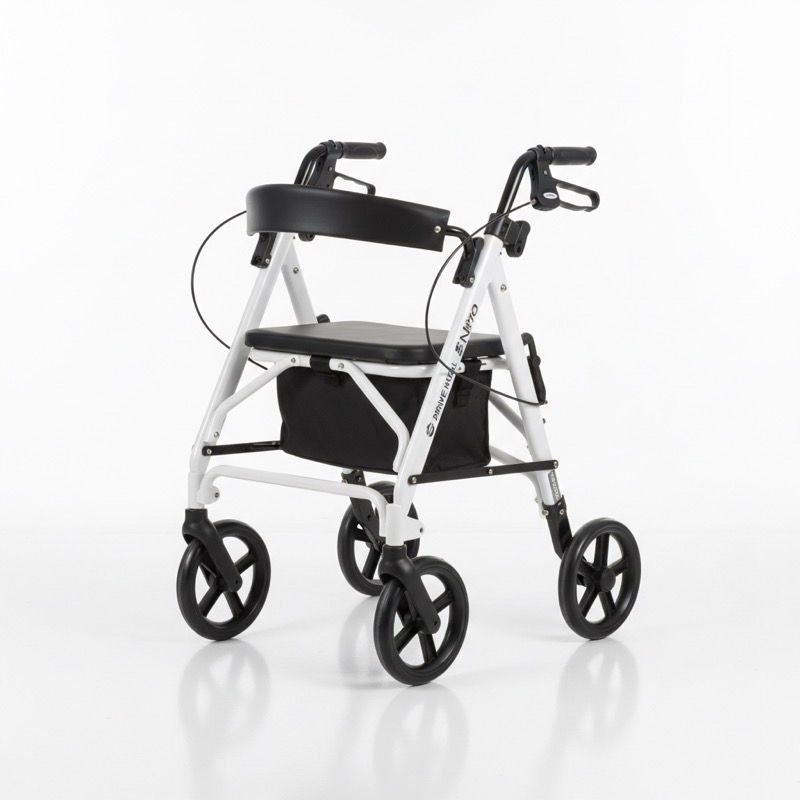
Best Overall: Drive Medical Nitro Euro Style Rollator
The Drive Medical Nitro Euro Rollator is the standard for outdoor rollator performance. The 10-inch wheels are simply the largest you’ll find on any consumer rollator, and the difference on real terrain is obvious — small roots, curb lips, gravel, and packed dirt pose no obstacle. The frame is lightweight aluminum at about 17 lbs, and it folds thin enough to stand upright in most car trunks.
The Nitro includes a hand-stitched underseat bag — most competitors charge extra for this. Loop brakes lock in place for resting on slopes. The seat is padded with a firm, supportive surface rated for extended sitting.
One practical note: the Nitro runs at the higher end of the price range for outdoor rollators. For seniors who walk outside frequently, the investment is worthwhile. For occasional outdoor use, one of the options below may be sufficient.
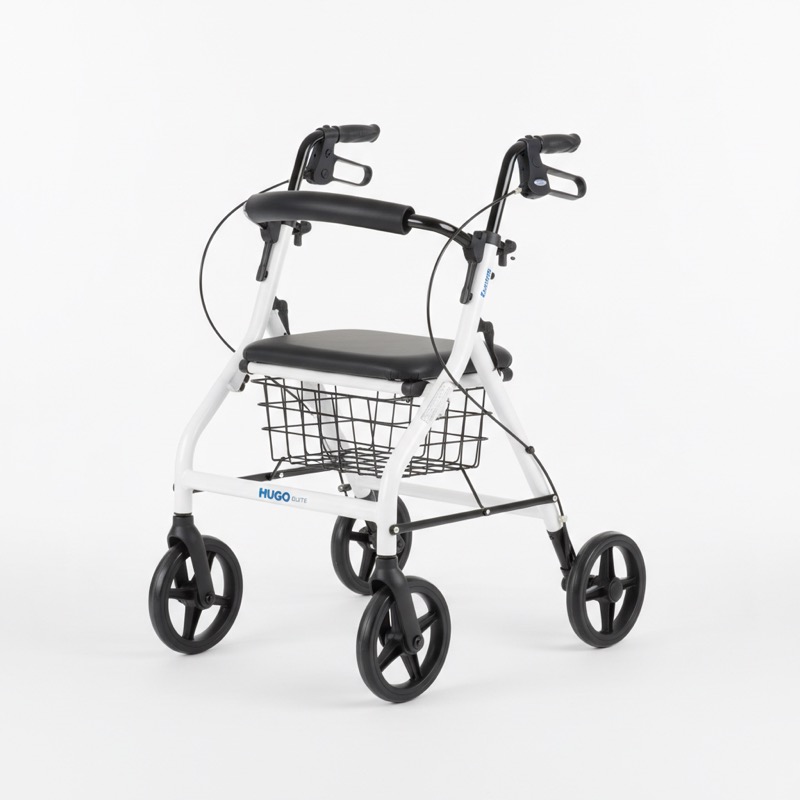
Best Value: Hugo Mobility Elite Rollator
The Hugo Mobility Elite hits the outdoor performance sweet spot at a more accessible price. Its 8-inch wheels handle the majority of outdoor surfaces — cracked pavement, gravel driveways, grass, and packed dirt — without the lurching you get from smaller-wheeled models. Physical therapists frequently recommend it for outdoor use specifically.
At 18 lbs with a 300 lb seat rating, it’s sturdy without being unwieldy. Loop brakes are easy to squeeze even with arthritic hands. The aluminum frame folds flat in about 5 seconds for car transport.
One dimension to check: the Hugo is about 26 inches wide when open, which exceeds standard interior doorframes (24 inches). If you’ll bring it indoors, measure your entry door first.
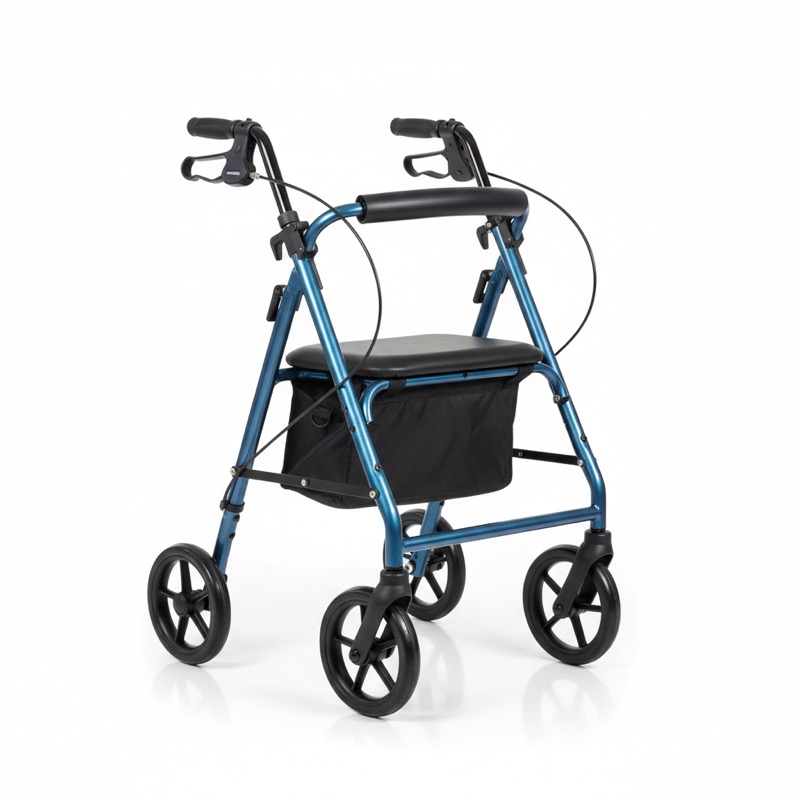
Best Lightweight: OasisSpace Compact Rollator
When portability is the priority — travel, smaller vehicles, frequent folding — the OasisSpace Compact Rollator deserves consideration. At under 15 lbs, it’s among the lightest aluminum rollators available. The 7.5-inch wheels handle sidewalks and park paths well.
It’s not designed for rough terrain — loose gravel and soft ground challenge it. But for elderly users walking in neighborhoods, parks, or shopping areas, it provides adequate outdoor performance without the weight penalty of heavier models.
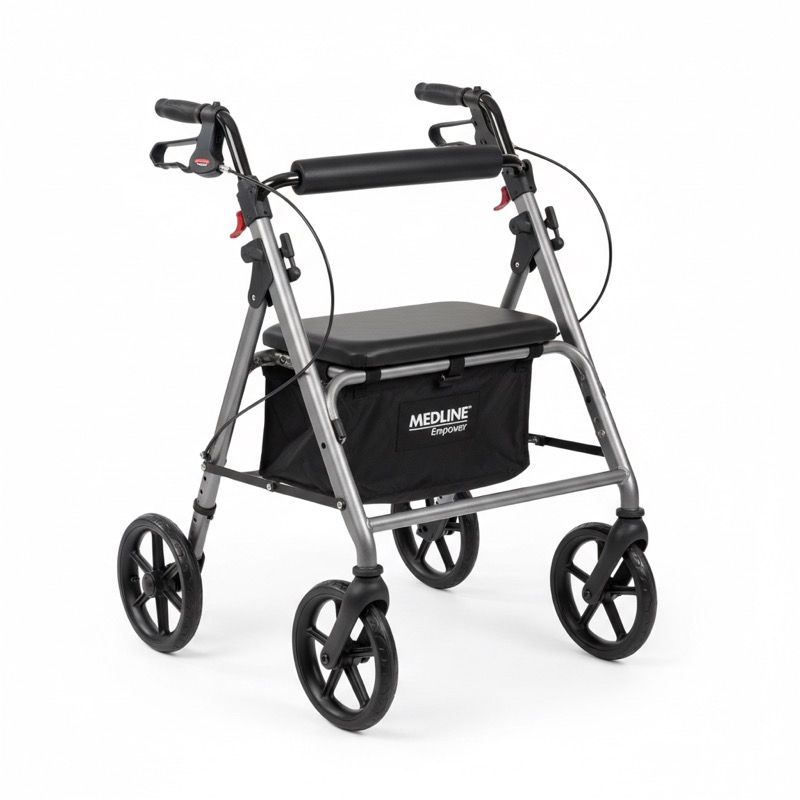
Best Budget: Medline Premium Empower Rollator
The Medline Premium Empower is hospital-grade quality at a price that’s accessible on a fixed income or Medicare. The 7.5-inch wheels handle smooth concrete and packed paths without issue. Rubberized handle grips are comfortable for extended walks.
The seat height is fixed rather than adjustable — a limitation compared to higher-end models. But for elderly users who need a dependable outdoor walker at a manageable cost, the Medline delivers.
Types of Outdoor Walkers for Elderly
Rollators (Four-Wheel Rolling Walkers)
Rollators are the right choice for most elderly users who want to walk outdoors. They roll continuously rather than requiring a lift-and-plant motion. Four wheels provide stability on uneven surfaces, and the built-in seat means you can rest whenever you need to.
Key specifications for outdoor rollators: 7.5-inch minimum wheel diameter, loop brakes, aluminum frame, foldable design.
Three-Wheel Rollators
Three-wheel rollators are lighter and more maneuverable but less stable on rough outdoor surfaces. They work for pavement and smooth paths but aren’t recommended for gravel, grass, or significant inclines. Most elderly users benefit from the added stability of a four-wheel design outdoors.
Heavy-Duty / Bariatric Rollators
For seniors over 300 lbs, standard rollators may not provide adequate support. Heavy-duty models are rated to 400 lbs or more with reinforced frames. If weight capacity is a concern, verify the specifications before purchasing — the rating printed on the product is not always tested to the same standard.
Standard Walkers vs. Rollators for Outdoor Use
Traditional four-legged walkers require you to lift and plant with each step — manageable on smooth indoor flooring but exhausting and awkward outdoors. Rollators glide continuously, requiring significantly less effort. Unless a doctor or physical therapist has specifically recommended a non-wheeled walker for medical reasons, a rollator is almost always the better outdoor option.
How to Fit an Outdoor Walker for Elderly Users
Proper fit prevents compensatory posture that leads to back pain, neck strain, and falls.
Handle height: Stand in your normal shoes, arms hanging at your sides. The handle height should match your wrist crease. When you grip the handles, you should have a 15–20 degree bend at the elbow. Too high and you shrug your shoulders. Too low and you hunch forward.
Frame width: When standing inside the walker, you should have a few inches of clearance on each side — enough to move naturally, not so much that the frame feels unstable.
Seat height: Sit on the walker seat with feet flat on the floor. Your knees should be at roughly 90 degrees. A seat that’s too low requires a deep squat to sit or stand, which is difficult for elderly users with limited knee or hip mobility.
Brake tension: Squeeze the brake handles fully. If you can’t fully compress them comfortably, the tension is set too high — or the brakes aren’t the right design for your grip strength. Many rollators allow brake tension adjustment. If not, look for models with softer brake ergonomics.
Using an Outdoor Walker Safely
Practice on flat pavement first. Before taking a new walker on gravel or uneven surfaces, spend a few sessions on flat, smooth pavement to get accustomed to the brakes and rolling feel.
Engage the locks before sitting. Every rollator has a brake lock for sitting. Squeeze the brakes and push down to lock before you sit down. Never sit on an unlocked rollator — it can roll forward unexpectedly.
Going downhill: Slow your pace, keep the walker slightly ahead of you, and maintain light brake pressure throughout the descent. Don’t lock the brakes while moving — controlled friction is safer than a hard stop.
Curb cuts and lips: Approach at a slight angle rather than head-on. Come to a near stop before the curb, then roll over it slowly. Large-wheeled rollators (8–10 inches) handle most curb cuts without stopping entirely.
Grass and soft ground: On soft surfaces, larger wheels are noticeably easier. If the rollator feels like it’s sinking, pause and shift your weight. Avoid steep grassy slopes — even large-wheeled rollators can tip on significant grade changes.
Medicare Coverage for Outdoor Walkers
Medicare Part B may cover a rollator if prescribed by a doctor as medically necessary for your condition. Coverage requires a prescription, a qualifying diagnosis, and that you purchase from a Medicare-enrolled supplier. The rollator must meet Medicare’s classification as a “wheeled walker” — standard rollators generally qualify.
Typical Medicare coverage: 80% of the approved cost after the Part B deductible, with the remaining 20% covered by supplemental insurance or paid out of pocket. Call your Medicare plan before purchasing to confirm coverage and supplier requirements.
Looking for a comprehensive comparison of all walker types, including how outdoor rollators compare to canes and scooters? Our mobility hub for seniors covers the full range with honest side-by-side notes. For a detailed breakdown of the top outdoor-rated rollators specifically, see our main guide to all-terrain walkers for seniors.
Frequently Asked Questions
What is the best outdoor walker for elderly with arthritis? Rollators with loop brakes and ergonomic handle grips are the best choice for elderly users with arthritis. Loop brakes require less grip strength than push-down brakes. Look for cushioned, non-slip handle grips and smooth brake tension adjustment. The Hugo Mobility Elite and Drive Medical Nitro both score well on arthritic-friendly brake design.
Can a standard walker be used outdoors? Standard four-legged walkers (no wheels) can technically be used outdoors on smooth pavement but are impractical on gravel, grass, or any uneven surface. They require a lift-and-plant motion with every step, which is tiring and risky on variable terrain. For outdoor use, a rollator with large wheels is almost always the better option.
How much should I spend on an outdoor walker for an elderly parent?
Expect to spend $120–$280 for a quality outdoor rollator. Budget models (under $100) often have smaller wheels and less durable frames that underperform outdoors. The Drive Medical Nitro ($200–$250) and Hugo Mobility Elite ($150–$200) represent the best value for seniors who walk outside regularly.
Is a heavier walker more stable outdoors? Weight does not equal stability for outdoor walkers. What matters is wheel size, frame width, and build quality. A lighter aluminum frame with 10-inch wheels (like the Drive Medical Nitro) is more stable outdoors than a heavier steel-framed walker with 6-inch wheels. Always check wheel diameter and frame width rather than overall weight when evaluating outdoor stability.