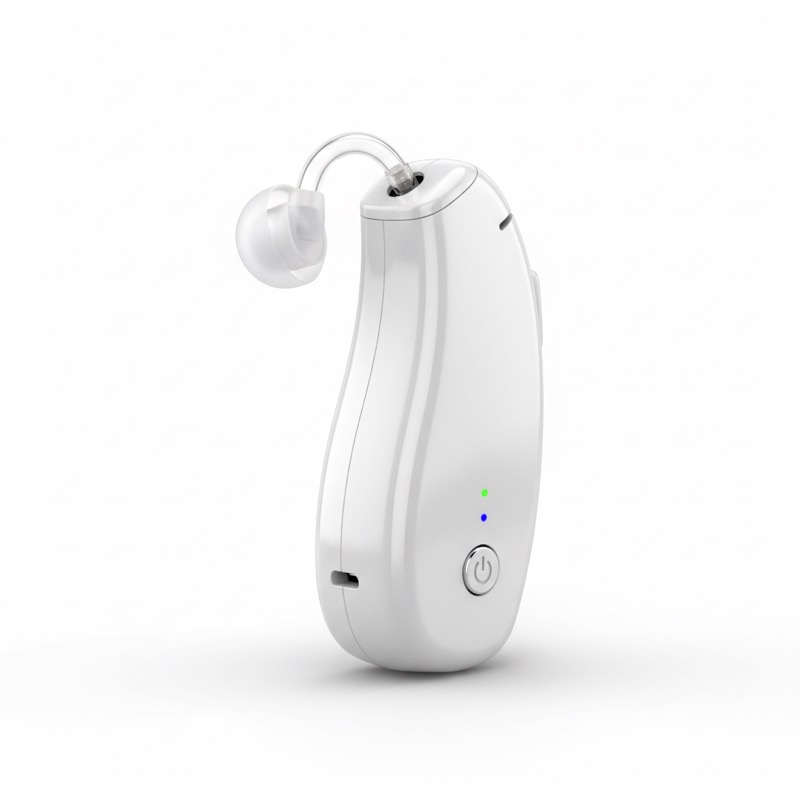
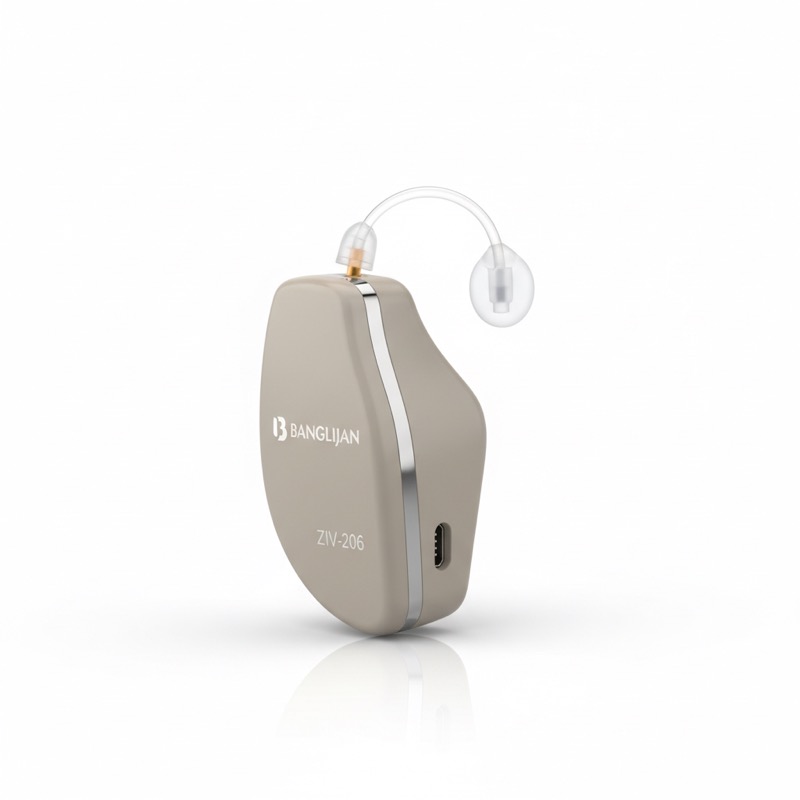
Hearing loss creeps up slowly. One day you’re turning the TV up a little more than you used to. Then you start asking people to repeat themselves. Then you realize you’re nodding along in conversations you can only half follow.
About 1 in 3 adults between ages 65 and 74 has some degree of hearing loss, according to the National Institute on Deafness and Other Communication Disorders (NIDCD). By age 75, that number jumps to nearly half of all adults.
For most seniors, the first instinct is to wait. Hearing aids feel like a big commitment — expensive, medical, permanent. But there’s a middle category that most people don’t know well: personal sound amplifiers, sometimes called hearing amplifiers or PSAPs (Personal Sound Amplification Products). They don’t require a prescription. They don’t require an audiologist visit. They cost between $30 and $400. And for mild to moderate hearing loss, they can make a real difference in daily life.
This guide is for seniors who are at the beginning of that journey — or for adult children trying to find something practical that a parent will actually use.
Hearing Amplifier vs. Hearing Aid: What’s the Difference?
This is the most important thing to understand before spending any money.
Hearing amplifiers (PSAPs) are consumer electronics. The FDA does not classify them as medical devices. They amplify sound across frequencies — essentially making everything louder. They are not designed to diagnose, treat, or compensate for clinically diagnosed hearing loss.
Hearing aids are FDA-regulated medical devices. Since 2022, over-the-counter (OTC) hearing aids are available without a prescription for adults with mild to moderate hearing loss. They process sound selectively — emphasizing speech, reducing noise, adapting to environments. They cost more, but address actual hearing loss rather than just volume.
The practical distinction: if you’ve had a hearing test and been diagnosed with mild to moderate hearing loss, an OTC hearing aid is the more appropriate tool. Our guide to best OTC hearing aids for seniors covers that category in detail.
If you haven’t been tested yet, or if you want to try amplification before committing more money, a hearing amplifier is a reasonable starting point. The cost is low enough that it’s not a significant financial risk.
Hearing Amplifier vs OTC Hearing Aid: Which Do You Need?
The 2022 FDA Over-the-Counter Hearing Aid final rule created a new category between consumer amplifiers and prescription devices. The distinction matters because it changes who each product is right for — and how much you should expect to pay.
| Feature | Hearing Amplifier (PSAP) | OTC Hearing Aid |
|---|---|---|
| Price range | $30–$200 per pair (Source: FDA PSAP guidance) | $800–$3,000 per pair (Source: NIDCD 2023 cost survey) |
| FDA regulation | Consumer electronics — not FDA-regulated as medical devices | FDA-cleared medical device (21 CFR Part 800, since Aug 2022) |
| Fit & setup | One-size-fits-most ear tips, manual volume dial | Self-fitted via app with hearing screener, programmable profiles |
| Sound clarity | Amplifies all frequencies equally | Selective amplification targeting speech frequencies (1–4 kHz) |
| Battery life | 8–500+ hours depending on model (rechargeable or disposable) | 15–30 hours per charge (most rechargeable, some disposable) |
| Target user | Mild hearing loss, situational use (TV, quiet conversations) | Mild to moderate diagnosed hearing loss (adults 18+) |
The simple rule: If you’ve had a hearing test and been told you have mild to moderate hearing loss, an OTC hearing aid is the appropriate tool — the selective frequency processing actually addresses your hearing profile. If you haven’t been tested but want to see whether amplification helps at all, a PSAP is a reasonable low-cost trial.
According to the NIDCD, fewer than 30% of adults over 70 who could benefit from hearing assistance actually use any device. The price gap is one reason. A $40 PSAP that gets worn daily delivers more real-world benefit than a $3,000 prescription aid left in a drawer — but the right long-term tool for diagnosed hearing loss is still a proper hearing aid. Our full guide to best OTC hearing aids for seniors covers that category in detail.
Who Benefits from Hearing Amplifiers?
Hearing amplifiers work well for a specific group of people. They’re not a solution for everyone.
Good candidates:
- Seniors with mild hearing loss who miss some words in conversation but can still follow along
- People who struggle in specific situations — TV watching, phone calls, quiet restaurants, church
- Anyone who hasn’t had a formal hearing test yet and wants to try amplification first
- Those on a fixed income who need a practical, affordable solution
- Adults whose adult children want to help without a large upfront investment
Not ideal for:
- Anyone with moderate to severe or profound hearing loss — the amplification won’t be enough
- People who miss most of a conversation even in quiet rooms
- Anyone experiencing sudden hearing loss, pain, or discharge from the ear — see a doctor first
- Those with tinnitus (ringing in ears) as their primary concern — amplifiers may worsen it
If you’re unsure which category applies, a free hearing screening is worth doing before any purchase. Many audiology clinics offer no-cost screenings, and AARP often partners with providers for free checks.
What to Look For: 4 Key Features
Shopping for a hearing amplifier comes down to four practical factors:
1. Battery type — rechargeable vs. disposable
Rechargeable is almost always the better choice for seniors. Disposable batteries require handling tiny components and remembering to buy replacements. Rechargeable devices charge overnight — the same routine as a phone. The only trade-off: if you forget to charge it, you’re without it.
2. Feedback suppression
That high-pitched whistling sound is called feedback. It’s one of the most common complaints about cheap amplifiers. Better devices have electronic circuits that detect and cancel feedback before it becomes audible. This feature matters far more than raw amplification levels.
3. Comfort and fit
A hearing amplifier you stop wearing does nothing. Behind-the-ear (BTE) devices are generally easier to handle and cause less ear canal discomfort than deeply inserted styles. Multiple ear tip sizes should be included — fit varies between individuals, and a bad fit causes pain and sound leakage.
4. Volume control design
For seniors with arthritis or reduced finger dexterity, the volume control is more important than any audio specification. Large rotary dials and clearly labeled buttons are far more practical than tiny recessed controls requiring a fingernail to adjust.
The 6 Best Hearing Amplifiers for Seniors
Williams Sound Pocketalker Ultra — Best Overall
The Williams Sound Pocketalker Ultra is different from every other product on this list. It’s not a behind-the-ear device. It’s a small handheld amplifier — about the size of a TV remote — that you carry in a shirt pocket or clip to clothing, with a wire running to an earphone or neck loop.
That sounds old-fashioned. In practice, it’s one of the most effective personal amplifiers available, which is why audiologists, hospitals, and care facilities have used it for decades.
There is no Bluetooth to pair. No app to download. No battery level to track (runs on standard AA batteries). You point the built-in microphone toward the person speaking, turn the volume dial, and you hear them clearly. The large rotary dial is easy to operate even with stiff or arthritic fingers.
Where the Pocketalker excels is face-to-face conversation. Place it on a table during dinner, and the directional microphone picks up voices across the table while reducing background noise. Doctors use it with hard-of-hearing patients specifically because it works immediately, every time, without any setup.
Battery: 2x AA (80+ hours) | Price: $130–$155 | Best for: Face-to-face conversation, seniors who prefer simple tech
Britzgo BHA-220 — Best Budget Rechargeable
The Britzgo BHA-220 is a rechargeable behind-the-ear amplifier that earns high marks for one specific strength: it lasts a very long time between charges. The manufacturer rates the battery at 500+ hours — in practice, most users report several weeks of daily use before needing to charge.
That long battery life matters more than it might seem. One of the most common reasons seniors stop using hearing amplifiers is forgetting to charge them. The Britzgo removes that problem almost entirely.
Sound quality is solid for this price range. A digital noise-reduction chip reduces the ambient buzz that cheaper amplifiers produce. Two selectable listening programs — one for quiet environments, one for noisier rooms — switch with a single button press.
Battery: Rechargeable, 500+ hours per charge | Price: $45–$65 per pair | Best for: TV watching, all-day wear
Zvox VoiceBud VB20 — Best Discreet Style
For seniors who want something that doesn’t look like a hearing device, the Zvox VoiceBud VB20 is the closest to invisible on this list. It sits in the ear canal rather than behind the ear — similar in appearance to a wireless earbud.
Zvox is primarily known for TV sound systems, and their AccuVoice processing technology — originally developed to make dialogue clearer through televisions — is adapted here for real-world use. The result is noticeably improved speech clarity compared to basic amplifiers that simply turn up everything.
Six ear dome sizes come in the box, making a comfortable fit straightforward. The main limitation is battery life — about 8-10 hours on a charge, which means daily charging. The case doubles as a charger, so the routine of dropping it in at night is manageable.
Battery: Rechargeable, 8–10 hours per charge | Price: $70–$100 each | Best for: Discretion, strong speech clarity
Cyber Sonic Personal Sound Amplifier — Best Under $50
The Cyber Sonic is a straightforward behind-the-ear amplifier at the lowest price point on this list — typically under $40 per pair. It runs on disposable size 13 batteries (about 10 days per battery) and amplifies sound adequately for quiet environments.
There’s no noise processing, no multiple programs, no app. It amplifies everything — voices and background noise together. In quiet settings, that works fine. At a noisy restaurant, it becomes less useful.
The honest use case for the Cyber Sonic is for seniors who are curious whether amplification helps at all before spending more. Think of it as a proof-of-concept purchase. If it makes a noticeable difference, that’s a signal a better device is worth the investment.
Battery: Size 13 disposable, ~10 days | Price: $30–$45 per pair | Best for: First-time trial, tight budget, quiet environments
Sound World Solutions CS50+ — Best for Noisy Environments
The Sound World Solutions CS50+ sits at the upper end of the amplifier category — close to OTC hearing aid territory in both price and capability. Its adaptive noise reduction system monitors your listening environment and adjusts sound processing in real time.
In practice, this means it performs significantly better than basic amplifiers in challenging listening situations — restaurants, group conversations, outdoor events. Voices stay clear while background noise is reduced, rather than everything being amplified together.
Bluetooth streaming capability pairs with a smartphone or tablet, sending audio from calls, podcasts, or streaming video directly into the device with no wire. A companion app lets you adjust a four-channel equalizer to personalize the sound profile.
Battery: Rechargeable, 18 hours per charge | Price: $250–$350 per pair | Best for: Restaurants, group settings, tech-comfortable seniors
Etymotic BEAN Quiet Sound Amplifier — Best for Natural Sound
The Etymotic BEAN takes a different approach than the rest of this list. It uses passive filtering — physical sound attenuation — combined with selective amplification that boosts soft sounds while reducing loud ones naturally. This gives a more natural listening experience than purely electronic amplification.
The deep-fit canal design reduces wind noise and background chatter. Because there’s no active amplifier circuit, there’s no battery to charge, no electronics to fail. These are built to last.
The trade-off: fit matters enormously with deep-insertion devices. Seniors with narrow or curved ear canals may find them uncomfortable. The included foam tips help, but it’s worth ordering from a retailer with a return policy.
Battery: None required | Price: $150–$200 per pair | Best for: Natural sound quality, long-term durability, quiet conversation settings
How to Use a Hearing Amplifier Safely
A hearing amplifier that’s used incorrectly can cause fatigue, discomfort, or even temporary hearing irritation. These four practices help you get the most from yours:
Start at low volume. Begin with the volume dial well below maximum. Your brain needs time to adapt to amplified sound. Start with a few hours of use per day and gradually increase. Jumping to full volume on day one is the most common mistake.
Clean ear tips weekly. Accumulated wax and moisture on ear tips reduce sound quality and can cause ear canal irritation. Use a dry cloth or the cleaning tool included with most devices. Never insert the tip into the ear canal without first checking it’s clean.
Store in a dry place overnight. Moisture from sweat or humidity damages amplifier electronics over time. A simple dehumidifier jar (often called a dry box) extends device lifespan significantly — they cost about $10 and are worth every cent.
Never exceed safe listening levels. Even with a hearing amplifier, the CDC recommends keeping amplified sound below 85 decibels for extended listening. If people nearby can hear sound from your amplifier, the volume is likely too high. Turn it down and use it in a quieter environment instead.
If the amplifier causes pain, pressure, or ringing in your ears, remove it immediately and consult your doctor before resuming use.
Frequently Asked Questions
Are hearing amplifiers covered by Medicare?
No. Medicare Part A (hospital insurance) and Part B (medical insurance) do not cover hearing aids, hearing amplifiers, or exams for fitting them (Source: medicare.gov — Hearing aids). Some Medicare Advantage (Part C) plans offer hearing benefits as supplemental coverage, but the covered amount, devices, and provider network vary by plan — check your specific Summary of Benefits before assuming coverage. Medicaid hearing coverage varies by state. Our Medicare DME coverage guide breaks down what the program does and doesn’t cover.
Hearing amplifier vs hearing aid — what’s the difference?
A hearing amplifier (also called a PSAP, or Personal Sound Amplification Product) is a consumer electronics device. It amplifies all sounds in the environment and is not FDA-cleared to diagnose, treat, or compensate for hearing loss (Source: FDA PSAP guidance). A hearing aid is an FDA-cleared medical device regulated under 21 CFR Part 800, designed specifically for people with hearing loss. Since August 2022, OTC hearing aids can be purchased without a prescription for adults 18+ with mild to moderate hearing loss. The practical difference: amplifiers make things louder; hearing aids selectively process sound for clinical hearing loss.
Can I wear a hearing amplifier all day?
Yes, but with two cautions. First, start gradually — most audiologists recommend a few hours per day for the first week so your brain adapts to amplified sound. Second, check the battery spec: rechargeable models typically run 8–20 hours per charge, so all-day wear is only realistic if the battery matches your day length (or if the charging case gives mid-day top-ups). The CDC recommends keeping any amplified listening below 85 dB for extended periods (Source: CDC — NIOSH sound level guidance). If you experience fatigue, pressure, or ringing, remove the device and consult your doctor.
Do hearing amplifiers really work?
For mild hearing loss and situational use, yes. They won’t restore normal hearing, and they won’t help with severe hearing loss. But for someone who struggles with TV volume, conversation in quiet settings, or phone calls, a good amplifier can make those situations meaningfully easier. The key is matching the right device to your actual hearing situation.
How long do hearing amplifiers last?
Most quality amplifiers last 2–5 years with normal use. Rechargeable batteries typically hold capacity for 500–1,000 charge cycles before noticeably degrading. Disposable battery models can last longer mechanically, since battery replacement keeps them running indefinitely.
When to See an Audiologist
A hearing amplifier is not a substitute for professional hearing care. There are situations where you should see an audiologist or your doctor before trying any amplification device:
- Sudden hearing loss — any rapid change in hearing over 72 hours is a medical emergency requiring immediate attention
- Hearing loss in only one ear — asymmetric hearing loss has specific causes that require diagnosis
- Pain, pressure, or discharge from either ear alongside hearing difficulty
- Ringing, buzzing, or roaring (tinnitus) as your primary concern — amplifiers may make this worse
- You’ve already tried amplifiers at full volume and still struggle — this indicates hearing loss beyond what consumer amplifiers can address
The American Academy of Audiology provides a directory to find a licensed audiologist near you. Many offer free or low-cost initial screenings. A proper hearing test gives you real data — frequencies affected, severity of loss, and whether you need professional treatment or whether a consumer device will genuinely help.
For seniors managing multiple health conditions, combining tools makes sense. See our guides on senior medical alert systems, blood pressure monitors, and medication management for a complete picture of health monitoring at home.