Getting up from a low toilet is one of the most physically demanding routine tasks for people with arthritis, hip replacements, or reduced leg strength. The mechanical challenge is significant: rising from a low seated position requires more quad and hip muscle engagement than rising from a chair at table height.
Standard toilets sit 15–16 inches from the floor. A raised toilet seat adds 2–6 inches to that height, which can make the difference between independent bathroom use and needing assistance every time.
This isn’t a dramatic intervention. It’s simple physics — and the right product can genuinely extend someone’s independence.
How We Chose These Products
We evaluated raised toilet seats across five areas:
Height increase. Products range from 2 to 6 inches of added height. The right amount depends on the individual’s height and mobility limitations — taller people or those with significant knee/hip restrictions typically need 4–6 inches.
Stability under load. A raised seat that wobbles is dangerous. We looked at clamping mechanisms, base geometry, and maximum weight ratings. All our top picks support at least 300 lbs; most support 400 lbs or more.
Toilet compatibility. Raised seats must fit properly on the toilet bowl. Round and elongated bowls are different sizes, and some one-piece toilets have unusual geometries. We noted compatibility requirements for each pick.
Hygiene and cleanability. Raised seats sit on top of existing toilet hardware and create gaps where bacteria and moisture accumulate. Designs that minimize gaps and use non-porous materials are meaningfully easier to keep sanitary.
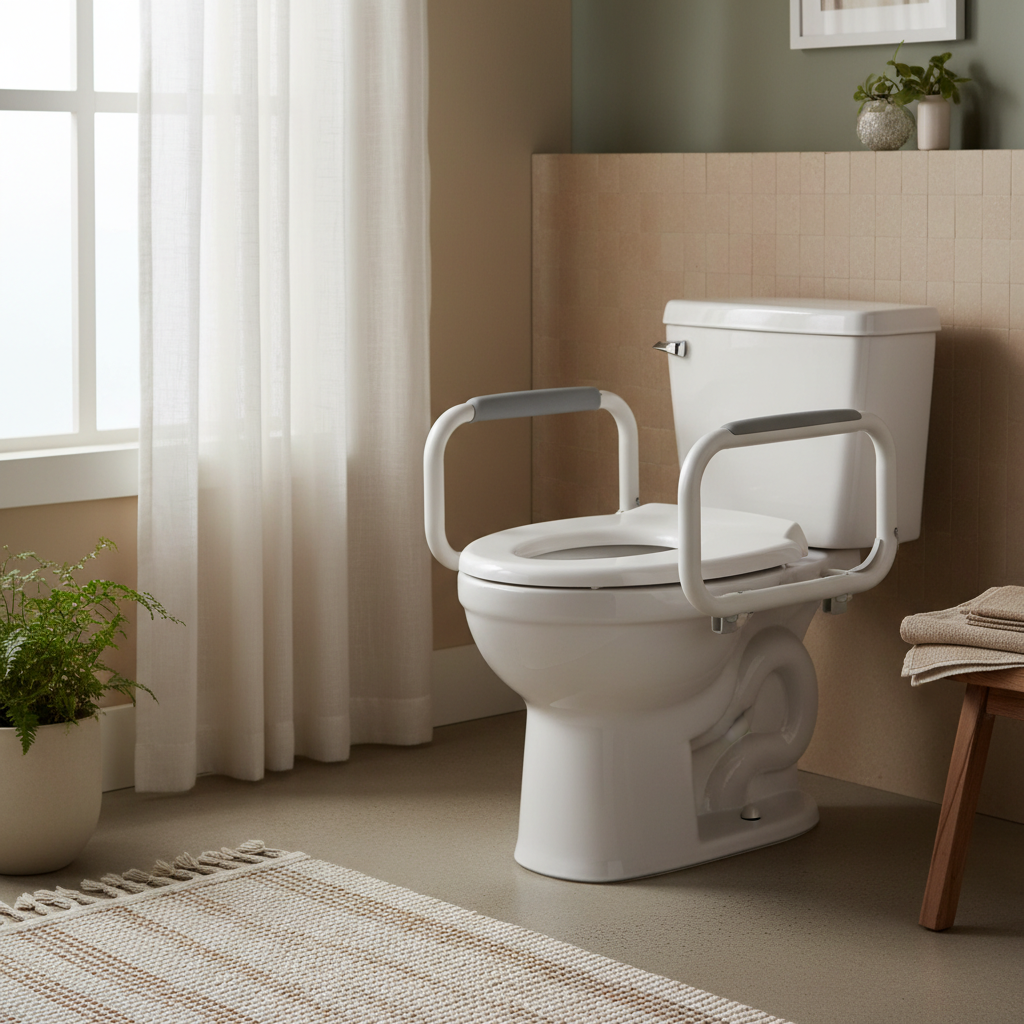
Armrests. Seats with integrated armrests provide push-off support that can make standing dramatically easier. We considered both armrested and armrest-free models depending on use case.
Our Top Picks
Best Overall: Drive Medical Raised Toilet Seat with Arms (RTL12027RA)
Drive Medical is one of the dominant names in durable medical equipment, and the RTL12027RA is a good example of why. It raises the toilet seat 5 inches and adds padded armrests that attach securely to the seat frame — not to the toilet or floor.
The armrests are the real differentiator here. For someone with weakened legs or recovering from hip surgery, having something solid to push against while standing up is the difference between a safe, controlled movement and a lurch that risks a fall. The pads are firm enough to support weight without flexing.
The arms remove completely for users who don’t need them, which is useful in households where the bathroom is shared with family members who prefer the standard seat. Installation is tool-free and takes a few minutes.
One limitation to verify before purchasing: this model may not fit some one-piece toilets, particularly those from TOTO or Kohler with curved bases. Check the product dimensions against your toilet bowl geometry before ordering.
Best Basic Riser: Carex Toilet Seat Riser (A70900)
Not everyone needs armrests. For people who need height assistance but have adequate upper body strength to push off the toilet tank or nearby grab bar, a simple riser is the cleaner, lower-profile solution.
Carex’s A70900 adds 4 inches of height and fits most round and elongated bowls. The clamping mechanism uses a lever system that locks tightly to the bowl rim — there’s minimal rocking or shifting under load. It supports up to 300 lbs.
The seat is molded in a single piece with no fabric or padding, which makes cleaning straightforward. This is an underrated consideration: padded seats can harbor bacteria if not cleaned regularly, and some users find the maintenance burden adds to caregiver workload.
Best for Heavy-Duty Use: Medline Elevated Toilet Seat with Padded Arms (MDS89664XW)
For users over 250 lbs who need both height increase and armrest support, the Medline MDS89664XW is the right choice. It’s rated to 400 lbs and features wider, more generously padded arms than standard models.
The 5-inch height increase matches the Drive Medical pick, but the wider seat and sturdier arm construction accommodate larger body frames more comfortably. The seat clamps to the toilet bowl with Medline’s locking mechanism, which is one of the more secure systems we’ve encountered.
This model is larger overall, so verify your bathroom width before purchasing — in a very narrow bathroom, the extended arm width can create a tight fit.
Best for Travel or Temporary Use: Vaunn Medical Raised Toilet Seat (No Arms)
For post-surgery recovery, travel, or situations where a permanent raised seat isn’t needed, Vaunn’s lightweight riser (2.4 lbs) is easy to pack, install, and remove. It adds 4 inches of height and clamps to most standard bowls in under a minute.
It supports 300 lbs and comes in both round and elongated bowl versions — verify which version you need at time of purchase. The surface is smooth polypropylene that cleans easily. This isn’t a long-term solution for significant mobility limitations, but as a temporary or travel option, it’s practical and affordable.
Key Considerations Before You Buy
Height: How Much Is Enough?
A rough guideline from occupational therapists: when seated on the toilet, your thighs should be roughly parallel to the floor — the same position recommended for chairs. If your knees are significantly higher than your hips, the toilet is too low.
For most people under 5’8”, a 4-inch riser is the right starting point. Taller individuals, or those with significant hip or knee restrictions, often benefit from 5–6 inches.
With Arms or Without?
Armrests add meaningfully to the utility of a raised seat for people with:
- Arthritis in the hands or wrists (push-off requires wrist extension)
- Hip replacement recovery (many post-surgical protocols restrict forward bending)
- General leg weakness that makes standing from any low surface difficult
If grab bars are already positioned correctly next to the toilet, a basic riser without arms may be sufficient. The two work well in combination.
One-Piece vs. Two-Piece Toilets
Standard raised seats are designed for two-piece toilets (separate tank and bowl). One-piece toilets — common in higher-end bathrooms from brands like TOTO and Kohler — have different bowl geometry that can prevent standard raisers from clamping correctly. If you have a one-piece toilet, check compatibility specifically before purchasing.
Frequently Asked Questions
Will a raised toilet seat fit my toilet? Most raised seats fit standard two-piece toilets in both round and elongated bowl configurations. One-piece toilets require checking specific product compatibility. Measure your bowl length (round bowls are approximately 16.5 inches; elongated are approximately 18.5 inches) and compare to the product specifications.
Can I use a raised toilet seat with a soft-close toilet seat? Most raised seats are designed to replace the existing toilet seat, not stack on top of it. You’ll typically remove your current seat before installing a riser. Some models clamp over the bowl rim regardless of whether a seat is present — check the installation instructions for the specific product you’re considering.
How do I clean around a raised toilet seat? Remove the raised seat periodically for thorough cleaning — most models remove in seconds without tools. Clean both the riser and the toilet bowl rim where they make contact. This prevents bacteria and odor buildup that can develop in the clamping zone.