A wet bathroom floor is one of the most common hazard sites in any home. For adults 65 and older, a slip in the shower or tub can mean a serious injury, an ER visit, and weeks of difficult recovery. The right bath mat won’t eliminate that risk entirely, but a good one closes the gap meaningfully.
The problem is that not all bath mats marketed as “non-slip” actually perform under real conditions. Some suction cups lose grip after a few weeks. Others curl at the edges and become tripping hazards themselves. Some are nearly impossible to clean, leading to mold and mildew that create their own problems.
We’ve evaluated the options. Here’s what actually works.
What We Tested For
Suction strength on real tub surfaces. We checked how mats performed on standard smooth porcelain, older textured fiberglass, and acrylic tub floors. Suction cups need a smooth, flat surface to seal properly — a mat that’s excellent on one surface type may perform poorly on another.
Edge design. Thick, hard-edged mats can be tripping hazards for people with shuffling gaits or limited foot lift. We favored mats with thin, beveled, or tapered edges.
Drainage holes. Water that pools on top of a bath mat becomes its own slip hazard. Well-designed mats have enough drainage holes to shed water quickly.
Ease of cleaning. Bathroom mats accumulate mold, soap scum, and bacteria quickly. Machine washable materials are strongly preferable. Mats that can only be wiped down are a maintenance problem.
Cushioning. Falls do happen. Mats with some cushioning won’t prevent injury, but they can reduce severity. We noted cushioning as a secondary positive factor.
Our Top Picks
Best Overall: SlipX Solutions Extra Long Bath Mat (30” x 30”)
Most standard bath mats are 14 x 28 inches — too small to cover the full shower or tub floor where someone is likely to step. SlipX’s Extra Long version at 30 x 30 inches is a meaningfully better solution for safety-focused bathrooms.
The mat uses 200 suction cups per square foot, which generates strong grip on smooth porcelain and most acrylic surfaces. The surface features raised ridges that provide traction for wet feet while channeling water to the drainage holes beneath.
It’s machine washable on cold, which makes routine cleaning actually happen. After washing, it dries reasonably quickly when hung over the tub edge. The beveled perimeter reduces the edge-catching risk that flat-cut mats create.
One honest limitation: like all suction-cup mats, it performs less reliably on heavily textured tub floors. If your tub has significant texture from an anti-slip coating applied years ago, a bath mat alone may not be the right solution — that’s when a teak mat or shower chair becomes more important.
Best for Textured Surfaces: Teak Shower Mat by TeakCraft
Teak wood shower mats work on a different principle than suction-cup mats. They rest on rubber feet rather than suction cups, making them effective on textured, older, or irregular tub floors where suction cups won’t grip well.
The TeakCraft mat features tightly spaced teak slats with small rubber feet on each slat, creating a stable elevated platform. The natural teak resists water and mildew without any chemical treatment. It also has a pleasant, spa-like aesthetic that feels less institutional than rubber mats.
The trade-off: it doesn’t conform to the tub surface the way a rubber mat does, and the gaps between slats mean it’s not useful for someone who needs a continuous non-slip surface to walk on. Teak mats work best as a stable standing platform inside the shower, not as a full tub-floor covering.
Best Outside the Tub: Gorilla Grip Original Bath Rug Mat
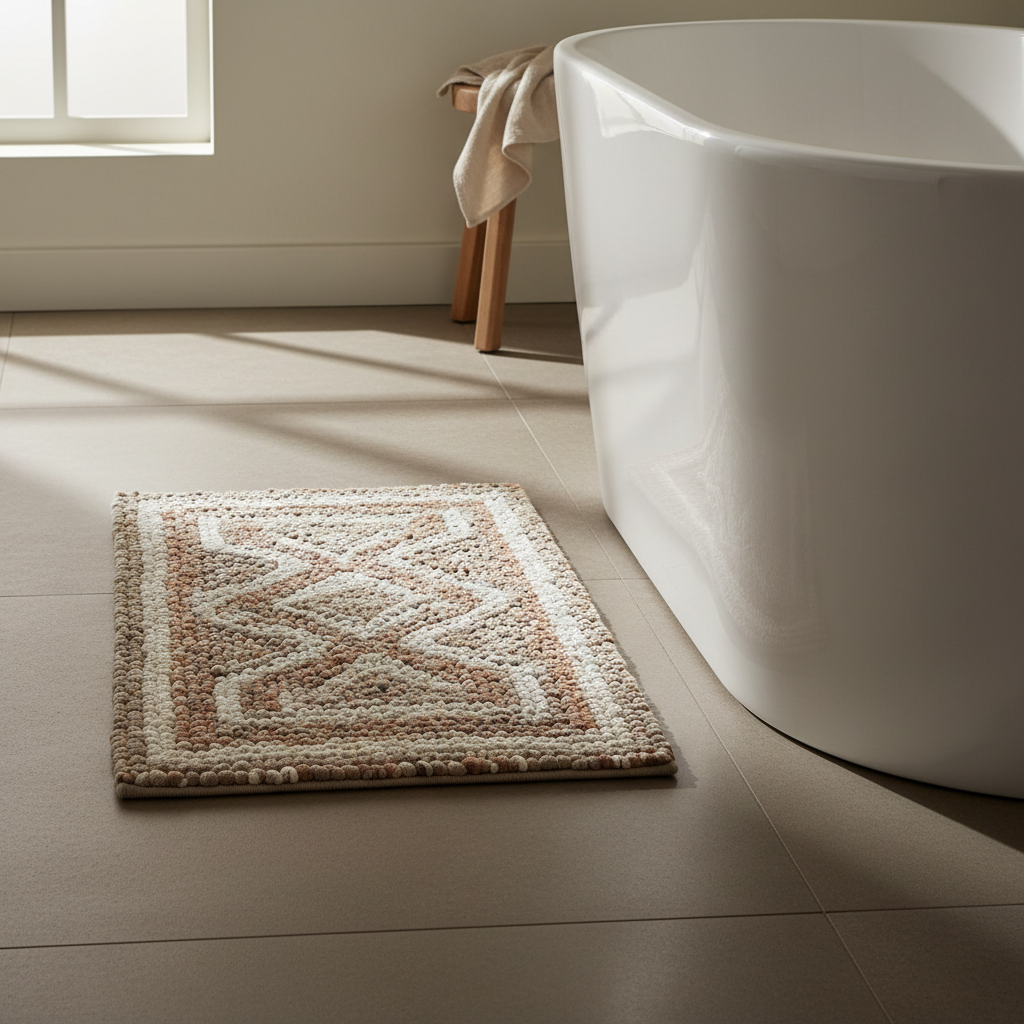
The floor outside the tub is often the most dangerous spot — people step out of the shower onto a smooth tile floor with wet feet. A high-quality bath rug for this transition zone is as important as the in-tub mat.
Gorilla Grip’s bath rug uses a TPR backing with hundreds of small suction points that grip smooth tile, hardwood, and most flooring surfaces. The surface is a thick microfiber that absorbs water quickly and cushions each step. It’s machine washable and holds its shape well through repeated washing.
At 24 x 36 inches, it covers the area immediately outside the tub and extends to where most people land when they step out. This size matters — a small 17-inch mat leaves the majority of the exit path unprotected.
Best Compact Option: Vive Non-Slip Tub Mat
For smaller tubs or showers where a 30-inch mat is too large to lay flat, Vive’s 16 x 28 inch mat is our pick. It features the same suction cup grid as larger mats in a more manageable size, with a non-porous surface that resists mold growth.
This mat is also a practical choice for travel or visiting family — it’s lightweight, folds flat, and provides meaningful grip in unfamiliar hotel tub surfaces where someone isn’t certain of the floor condition.
Bath Mat Safety: What People Often Get Wrong
“Non-slip” doesn’t mean permanently secured. Suction cups need to be pressed down firmly every time you place the mat. They also need to be released and the mat removed periodically — both to clean the mat and to clean the tub floor underneath, which can accumulate soap scum that eventually prevents suction.
Check the mat regularly. Suction cups wear out. If you notice a mat shifting or lifting at the edges when you step on it, it’s time to replace it. The useful lifespan for most rubber bath mats is 12–18 months with regular use.
Mats don’t replace grab bars. A non-slip bath mat reduces the chance of a foot slipping. It does nothing to help someone catch themselves if they lose balance. Grab bars and bath mats work together — neither replaces the other.
Frequently Asked Questions
How often should I replace a non-slip bath mat? Most rubber bath mats should be replaced every 12–18 months. The signs that it’s time: suction cups that no longer grip firmly, persistent discoloration that won’t wash out (mold in the material), or edges that curl up and create a tripping hazard.
Can I use a bath mat if I have a walk-in shower instead of a tub? Yes, and for walk-in showers with smooth tile floors, a non-slip mat is particularly important. Look for a mat sized appropriately for your shower base, and make sure it can lie completely flat — a mat that bunches or folds in a walk-in shower is dangerous.
Will a bath mat work on a textured tub floor? Standard suction-cup mats rely on a smooth surface to seal. On heavily textured tub floors, suction cup grip is significantly reduced. In this situation, a teak mat with rubber feet, or a fitted non-slip insert designed specifically for textured surfaces, is a better choice than a standard rubber mat.