Falls are the leading cause of injury-related deaths among adults 65 and older in the United States. Nearly 36 million falls happen every year, and the bathroom — with its wet surfaces, hard floors, and awkward movements — is where a disproportionate number of them occur.
A good grab bar changes that math. Grab bars give you something solid to hold while you lower yourself onto the toilet, step over the tub edge, or stand up from a shower chair. They’re not a sign of getting old. They’re the same kind of smart engineering that put handrails on every staircase in the country.
This guide cuts through the noise. We’ve evaluated grab bar standards, installation requirements, and product specifications — and identified the best options across several categories so you can find the right bar for your specific bathroom.
How We Evaluated These Grab Bars
We assessed grab bars across six factors that actually matter to real users:
Weight rating. ADA-compliant grab bars must withstand 250 lbs of force in any direction. We only recommend bars rated at 500 lbs or higher — because in practice, people often pull and push at angles the standard doesn’t fully account for.
Grip diameter. The ADA specifies a grip diameter of 1.25 to 1.5 inches. Bars outside this range can be difficult to grip securely, especially for people with arthritis or reduced hand strength.
Surface texture. Smooth stainless steel gets slippery when wet. We prefer bars with a lightly textured or knurled grip section — enough to hold without being abrasive.
Finish durability. Chrome and brushed nickel hold up well in humid environments. We dock points for finishes that show corrosion quickly in bathroom conditions.
Installation type. Permanent wall-mounted bars are the gold standard for safety. We evaluated how each bar installs, what hardware is included, and whether the mounting flange hides screws safely.
Real-world usability. We considered feedback from occupational therapists and the caregivers and seniors who actually use these products daily.
What You Need to Know Before Buying
ADA Standards Are the Floor, Not the Ceiling
The Americans with Disabilities Act sets minimum standards for grab bars in commercial facilities. Those same standards are a useful benchmark for home installations. Key points:
- Bars must be between 33 and 36 inches from the floor when mounted horizontally near the toilet
- Tub grab bars are typically mounted 33–36 inches from the tub floor
- Shower grab bars should be positioned so they’re usable from both standing and seated positions
You don’t have to follow ADA specs to the letter in your own home. But they represent decades of research into what actually helps people.
Where to Put Them — and Where Not To
The most useful grab bar locations in a typical bathroom:
- Next to the toilet: One bar on the dominant-hand wall, horizontal at seat height, 42 inches long. If space allows, a second bar on the opposite wall.
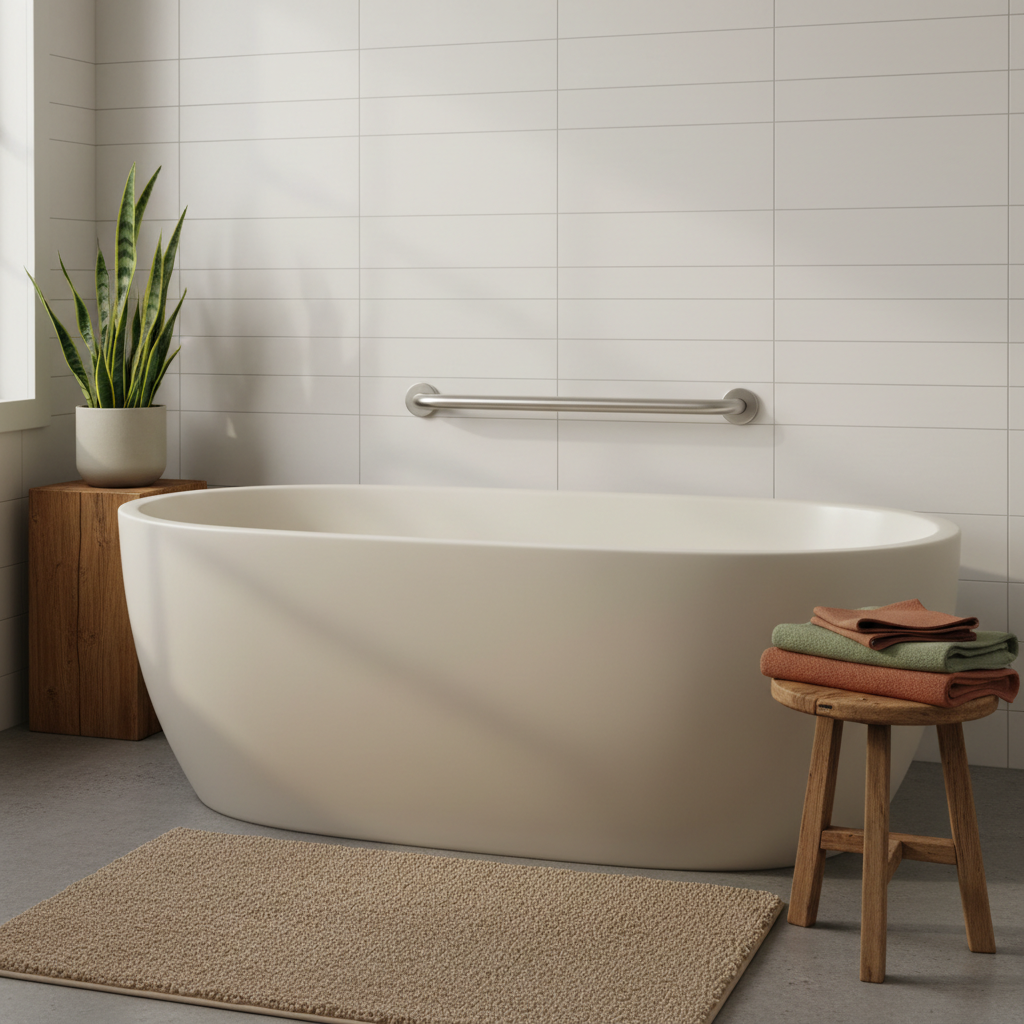
- Inside the shower or tub: A 32–36 inch angled bar at the entry point, plus a horizontal bar at mid-height for balance while washing.
- Outside the tub: A vertical or angled bar helps people step over the tub edge safely.
Avoid placing bars on drywall without proper anchoring. A bar that pulls out of the wall during a fall is worse than no bar at all.
Clamp-On Bars: A Word of Caution
Clamp-on or suction-cup grab bars exist and are marketed as no-drill solutions. We understand the appeal — installation is simple and there’s no wall damage. But suction cups can lose grip over time, especially on older tub surfaces or when temperatures shift. We don’t recommend clamp-on bars as a primary safety solution. If drilling isn’t possible, consult a plumber or contractor about installing proper blocking in the wall first.
Our Top Picks
Best Overall: Moen Home Care 32-Inch Grab Bar (LR8932)
Moen has been making plumbing fixtures for decades, and their Home Care grab bar line reflects that expertise. The LR8932 is a 32-inch horizontal bar rated to 500 lbs, with a clean concealed-screw design that looks at home in any bathroom.
The grip section uses a lightly knurled texture that’s noticeable enough to help wet hands hold on without feeling rough. The 1.25-inch diameter sits right in the middle of the ADA-recommended range — manageable for most hand sizes, including people with mild arthritis.
Available finishes include chrome, brushed nickel, and oil-rubbed bronze, so it can match existing fixtures. This matters more than people expect: a grab bar that fits the aesthetic of the bathroom is a grab bar that actually gets installed rather than sitting in a box.
Installation requires two mounting flanges, each attached with three screws. Moen includes all hardware. For best results, mount into wall studs; if studs aren’t in the right position, use the manufacturer-specified toggle bolts (not cheap drywall anchors).
Best for Tub Entry: Delta Faucet 41524-SS Universal 24-Inch Grab Bar
Delta’s grab bar line is priced accessibly and performs above its price point. The 41524-SS is a 24-inch bar that works well for tub entry points, where shorter bars often fit better than longer ones.
The brushed stainless finish resists fingerprints and holds up well in wet environments. The bar ships with a SecurMount flange that can accept toggle bolts or standard screws — useful flexibility for bathrooms where you can’t always find a stud in the right spot.
At around 1.25 inches in diameter, the grip is comfortable and meets ADA diameter specs. It’s rated to 500 lbs.
Best for Arthritic Hands: Carex Health Brands Grab Bar with ErgoGrip
People with rheumatoid arthritis or reduced grip strength need more than just a metal tube on the wall. Carex’s ErgoGrip bar features a contoured grip section with soft-touch coating that makes it easier to hold, especially in the morning when hands are stiffest.
The bar is 12 inches long — shorter than typical models — making it ideal for tight spaces like next to a toilet in a small bathroom. It’s rated to 250 lbs, which is the ADA minimum rather than the 500 lbs we prefer, so this bar is best suited for people who need grip assistance more than full weight-bearing support.
Best Long Bar: Drive Medical Grab Bar, 42-Inch
When someone needs to support significant body weight — not just stabilize their balance — a longer bar provides more mounting points and more grip surface. Drive Medical’s 42-inch bar is designed exactly for this purpose.
The bar features a textured grip across nearly the full length and mounts with four screws per flange for extra security. Drive Medical is a well-established name in durable medical equipment, and this bar reflects their focus on functional reliability over aesthetics. It’s available in chrome only, but at its price point and safety rating, that’s an easy trade-off.
Best for Shower Walls: Moen Home Care 18-Inch Angled Grab Bar (LR8918ANG)
Many bathrooms have shower walls where a horizontal bar won’t land where it’s most useful. Moen’s angled bar addresses this directly — it’s designed to mount at a 45-degree angle, which provides support both for stepping into the shower and for steadying yourself while standing.
At 18 inches, it’s compact enough to fit in tight shower stalls without blocking movement. The finish and construction match the rest of Moen’s Home Care line, so it pairs cleanly with their other bars if you’re outfitting the full bathroom.
Installation Tips from Occupational Therapists
We spoke with OTs who work with home modification specialists. Their consistent advice:
Hire a handyman or contractor if you’re not confident in your DIY skills. A grab bar that isn’t properly anchored is dangerous. A licensed handyman can install a standard grab bar in under an hour for a reasonable fee.
Use a stud finder before drilling. Wall studs are typically 16 inches apart. If a bar’s mounting holes don’t line up with studs, use the manufacturer’s recommended toggle bolts — not standard drywall anchors, which can fail under load.
Install bars at height before finalizing position. Have the person who will use the bar stand in position and reach naturally. The bar should be reachable without stretching or straining. For toilet grab bars, the standard guidance is 33–36 inches from the floor.
Think about the exit, not just the entry. Most people instinctively install bars where they’ll grab on the way in. But getting out of the shower or up from the toilet is often harder. Position bars to help with both directions of movement.
Frequently Asked Questions
How much weight should a grab bar support? ADA standards require grab bars to withstand 250 lbs of force. We recommend bars rated to at least 500 lbs for home use, since people often apply force at angles during a stumble that exceed what a static test measures.
Can I install a grab bar myself? If you’re comfortable using a drill and a stud finder, and you can locate your wall studs confidently, a standard grab bar installation is manageable. The key is making sure screws go into studs — not just drywall. If you’re uncertain, a handyman is worth the small cost.
Will a grab bar damage my tiles? Installing a grab bar on a tiled wall does require drilling through tile. This is standard practice and doesn’t compromise structural integrity if done correctly with a tile drill bit. A professional installer can do this cleanly. Suction-cup alternatives that avoid drilling are not reliable for safety purposes.