Stepping over a bathtub edge is one of the most dangerous movements in daily life for seniors — hips must lift, weight shifts onto one leg, and balance is tested on a wet, often slippery surface. Every year, more than 230,000 people over 65 are treated in emergency rooms for bathtub-related injuries in the United States, according to the Consumer Product Safety Commission.
A shower transfer bench removes that step entirely. Instead of stepping over, you sit on the outside half of the bench, slide across, and shower from a seated position. For seniors with hip problems, knee replacements, balance disorders, or limited strength, this change can make independent bathing both possible and safe.
What Is a Transfer Bench for Shower?
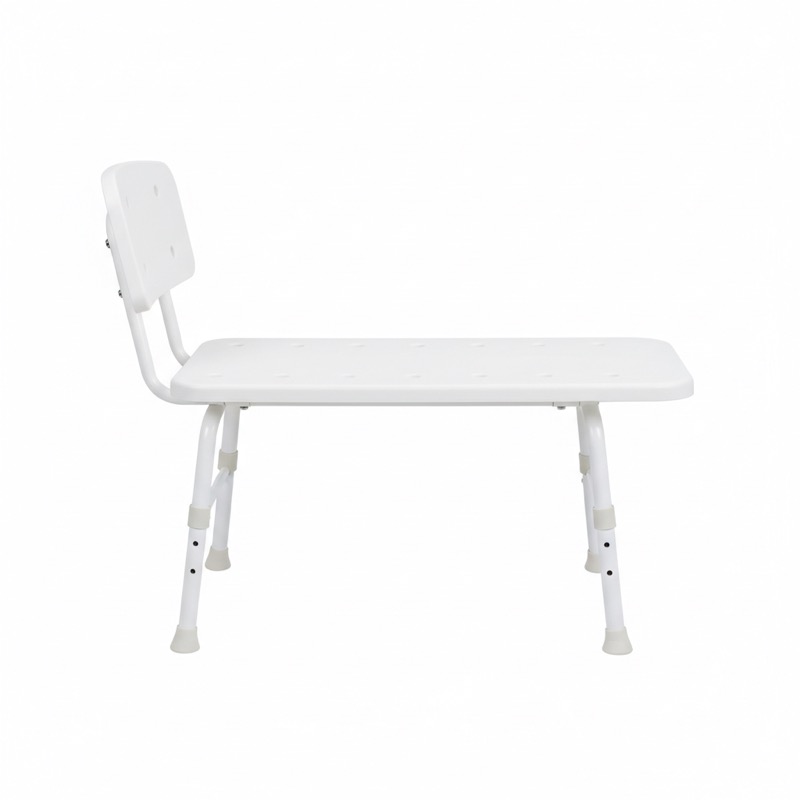
A transfer bench for shower is a four-legged bench that spans the tub wall, with two legs inside the tub and two legs on the bathroom floor outside the tub. The user sits on the outer half, swings their legs over the tub edge, and slides to the inner half — eliminating the need to step over anything. Most models include a backrest, an armrest on the tub side, and rubber-tipped legs for grip on both surfaces.
Transfer benches are classified as durable medical equipment (DME) and are frequently prescribed by occupational therapists for post-surgical recovery, stroke rehabilitation, and long-term use for seniors with limited lower-body mobility.
How Does a Transfer Bench Work?
A transfer bench works by bridging the tub wall so the user can perform a seated lateral slide transfer rather than a standing step-over entry. Two legs sit inside the tub basin; two legs rest on the bathroom floor outside. The seat surface spans the tub wall itself, giving the user a stable, continuous surface to slide across.
The critical design feature is the seat height: it must align with the tub wall height so sliding doesn’t require any lifting. Most benches have adjustable leg heights — 14 to 20 inches is typical — to match different tub heights and user preferences.
How to Use a Transfer Bench Safely: Step-by-Step
This is the standard transfer technique used in occupational therapy and rehabilitation:
Before the transfer:
- Place a non-slip bath mat inside the tub and confirm the bench legs are secure.
- Have a handheld showerhead attached and within reach — you’ll be showering from a seated position.
- Wear non-slip socks or keep bare feet on a dry mat until the transfer is complete.
Getting into the shower:
- Stand with your back to the bench, close enough to feel the seat behind your legs.
- Lower yourself onto the outer edge of the bench seat — use both armrests if available.
- Lift one foot, then the other, over the tub edge. If needed, use your hands to assist your legs.
- Slide across the bench toward the faucet end, keeping your weight centered and using the inner armrest for support.
- Adjust your position on the seat, then turn on the water using the handheld showerhead.
Getting out of the shower:
- Turn off the water and dry your hands.
- Slide back to the outer portion of the bench (toward the bathroom side).
- Lift one foot, then the other, back over the tub wall to the bathroom floor.
- Press through both armrests to stand, keeping weight through your heels.
How to Choose the Right Transfer Bench for Your Shower
Not all tubs and not all users are the same. Here are the key decisions:
Left-hand vs. right-hand configuration. Transfer benches are directional — the armrest on the inside (tub side) needs to be on the correct side based on which direction you transfer. If you approach the tub from the left and the faucets are on the right, you need a right-hand bench. When in doubt, consult an occupational therapist before purchasing.
Weight capacity. Standard benches support 300–350 lbs. Heavy-duty models support 400–500 lbs. Don’t push the limits — fatigue and wear reduce rated capacity over time.
Backrest. A backrest is strongly recommended for anyone bathing independently. It prevents backward tipping during the slide, and allows rest breaks during bathing without the user having to brace continuously.
Seat material. Smooth plastic seats slide more easily during transfer. Textured seats are more comfortable for seated showering but require more effort to slide across. Some models offer a rotating cut-out seat that makes sliding easier.
Tub height compatibility. Standard tubs are 14–17 inches high. Measure your tub wall height before buying and confirm the bench’s adjustable range includes that height.
Installing a Tub Transfer Bench (What to Know)
Transfer benches assemble without tools — they’re designed to be set up and taken down quickly. Here’s the standard process:
- Assemble the frame per the manual (typically 5–10 minutes, no tools).
- Confirm the bench spans the tub wall with the inner legs positioned inside the tub basin.
- Adjust all four legs to equal height so the seat is level.
- Check that all rubber tips are in contact with the surfaces — both tub floor and bathroom tile.
- Test by sitting on the bench and applying weight before any transfer attempt.
One important note: Transfer benches do not attach to the tub — they rely on weight and friction. This means they are stable when weight is applied centrally, but can shift if a user loses balance sideways. A grab bar mounted on the tub wall provides a crucial secondary anchor point. Our bathroom safety hub has guidance on grab bar placement that pairs with transfer bench use.
Transfer Bench vs. Walk-In Tub vs. Shower Chair: Which Is Right?
| Option | Best For | Cost |
|---|---|---|
| Transfer bench | Existing tub, step-over elimination | $50–150 |
| Walk-in tub | Maximum comfort, full tub bathing | $3,000–10,000+ |
| Shower chair (walk-in shower) | Seated showering, no tub involved | $30–120 |
| Roll-in shower conversion | Wheelchair users, full renovation | $5,000–15,000+ |
For most seniors with a standard bathtub, a transfer bench at $50–150 delivers most of the safety benefit at a fraction of the cost of a walk-in tub conversion. For seniors who already have a walk-in or roll-in shower, a shower seat or shower chair is the right tool — not a transfer bench.
Our Top Transfer Bench Picks
Shop Transfer Benches on Amazon →
Drive Medical Tub Transfer Bench with Backrest
The Drive Medical tub transfer bench is the most consistently recommended model in occupational therapy because it gets the fundamentals right: stable four-leg design, included backrest, adjustable height for different tub depths, and left/right configurations so it fits most bathrooms.
The 400 lb weight capacity covers the large majority of users. Assembly takes under 10 minutes without tools. The seat surface is smooth enough to allow lateral sliding without excessive effort, but firm enough to feel stable.
Price: ~$65–80 | Capacity: 400 lbs | Configuration: Left or Right
Key Features
- Backrest and armrests included
- Adjustable height 14–20 inches
- Left and right configurations available
- 400 lbs capacity, tool-free assembly
Carex Shower Transfer Bench
The Carex transfer bench is a strong option for users who prioritize smooth sliding. Carex uses a polished seat surface that reduces friction during the lateral transfer — particularly useful for heavier users or those with limited upper body strength who can’t assist the slide with much push.
The 300 lb capacity is adequate for most users. Non-slip rubber feet on both the tub floor and bathroom tile sides hold the bench in place throughout the transfer.
Price: ~$70–85 | Capacity: 300 lbs | Configuration: Adjustable
Key Features
- Polished sliding seat surface
- Non-slip feet inside tub and on bathroom floor
- Adjustable leg height
- 300 lbs capacity
Medline Heavy Duty Tub Transfer Bench
For users over 350 lbs, the Medline heavy-duty model is the clear choice. The 500 lb weight capacity and reinforced aluminum frame provide a meaningful safety margin. The 20-inch wide seat gives broader support for larger users, and the 14–20-inch height adjustment range fits virtually all standard tubs.
Price: ~$80–100 | Capacity: 500 lbs | Seat Width: 20 inches
Key Features
- 500 lbs weight capacity
- Extra-wide 20-inch seat
- Reinforced aluminum frame
- Adjustable 14–20 inch height
Frequently Asked Questions
Does a transfer bench fit all bathtubs?
Most standard transfer benches fit tubs that are 14–17 inches high with adjustable legs. They do not fit walk-in tubs, very wide soaking tubs, or tubs with non-standard rim shapes. Measure your tub wall height before purchasing.
Can I use a transfer bench in a walk-in shower?
A transfer bench is designed specifically for tubs — it needs a tub wall to bridge. For walk-in showers, use a shower chair or shower seat for elderly instead. If you have both a tub and a walk-in shower, you’ll need different equipment for each.
Do I need a grab bar with a transfer bench?
A grab bar mounted on the tub wall is strongly recommended alongside a transfer bench. AARP’s home modification guidelines consistently recommend pairing the two for maximum safety — the grab bar provides a vertical anchor point during the slide that the bench itself doesn’t offer.
Is a transfer bench covered by Medicare?
Medicare Part B covers tub transfer benches as durable medical equipment when prescribed by a physician for a documented medical condition and purchased from a Medicare-enrolled DME supplier. Standard 80/20 cost-sharing applies after the deductible.
How do I clean a transfer bench?
Most transfer benches clean with standard bathroom cleaner and a cloth. Remove the bench from the tub periodically to clean underneath, and inspect the rubber feet for wear — worn feet reduce grip on wet surfaces.
Stay Informed
Want more practical guides for bathroom safety at home? Join thousands of seniors and caregivers who get our weekly tips — no spam, just helpful advice.
Sign up for our free newsletter
Related reading: Best Grab Bars for Seniors | Shower Seat for Elderly: Choosing the Right Bath Chair | Bathroom Safety Hub