Bathing should feel safe and comfortable — not like a hazard to manage. For elderly adults dealing with reduced balance, muscle weakness, or conditions like Parkinson’s, multiple sclerosis, or post-stroke fatigue, standing in a wet shower becomes genuinely dangerous. The National Council on Aging reports that one in four Americans over 65 falls each year, and the bathroom is one of the highest-risk locations.
A shower seat isn’t about giving up independence — it’s about maintaining it safely, on your own terms. This guide helps you choose the right type for your specific shower, body, and lifestyle.
What Is the Best Shower Seat for Elderly Users?
The best shower seat for elderly users is one that fits their specific shower space, supports their weight safely with a non-slip design, and matches their level of mobility. For most seniors with a walk-in shower, a shower chair with a backrest, padded armrests, and adjustable legs — such as the Medokare Premium — provides the right combination of stability and comfort. Those with very limited mobility may benefit more from a wall-mounted fold-down bench or a tub transfer bench.
What Are the Main Types of Shower Seats for Elderly?
There are four main types of shower seats suited to elderly users:
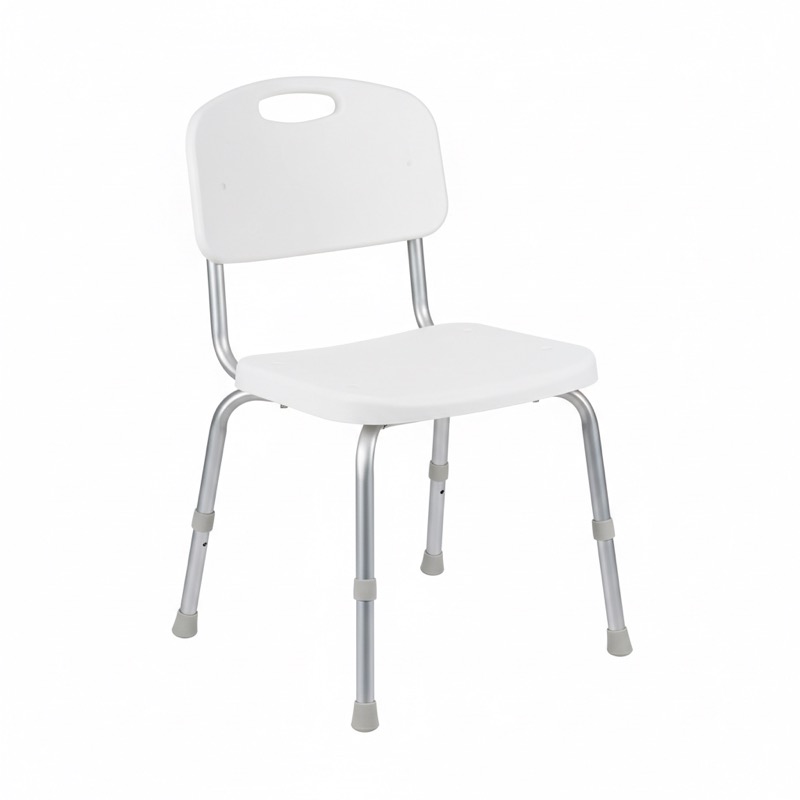
1. Freestanding Shower Chairs with Backrest and Arms The most versatile option. Four adjustable legs, a full backrest, and armrests. Moves easily between shower and tub. Best for: seniors with moderate balance difficulty who shower alone or share a bathroom.
2. Shower Benches (Portable) A simple bench without a backrest or arms. Lighter and more compact. Best for: seniors with good upper body strength who need a seat for fatigue management rather than full balance support.
3. Wall-Mounted Fold-Down Shower Benches Permanently attached to the shower wall, fold flat when not in use. Most stable because they don’t move. Best for: walk-in showers with a dedicated user who won’t need to store it away.
4. Corner Shower Seats Triangular seats that mount in the shower corner. Best for: small shower stalls where a bench or chair would block movement.
For seniors who have a bathtub and need to get in and out safely, a transfer bench for shower is a better choice than a shower chair — it spans the tub wall and eliminates the step-over entirely.
What Features Matter Most in a Shower Seat for the Elderly?
The most important features in a shower seat for elderly users are: non-slip leg tips, a weight capacity that exceeds the user’s weight by at least 50 lbs, adjustable leg height, and a backrest for users with limited trunk control.
Here’s what to evaluate for each feature:
Non-slip leg tips. Rubber tips on all four legs are essential. Check that tips cover the full base of each leg — not just a small rubber dot. In showers without drain-centered flooring, legs may need to straddle the drain, so look for wide-base or angled-leg designs.
Weight capacity. Most chairs are rated 250–350 lbs. Exceed your actual weight by at least 50 lbs — daily use, wet conditions, and leverage during standing can all push beyond a static rating. For users over 300 lbs, choose a heavy-duty model rated 400+ lbs.
Height adjustability. A seat that’s too low makes standing up harder; too high reduces stability. Look for at least 4–5 inches of adjustment range. The typical range is 17–22 inches from floor to seat surface.
Backrest vs. no backrest. Any elderly user with lower back pain, fatigue, or a history of falls should use a chair with a full backrest. Benches without backs are more appropriate for users who primarily need a place to rest, not full support.
Armrests. Padded armrests make a notable difference for users with arthritis. Fixed armrests are more stable; removable or flip-up armrests allow easier caregiver-assisted transfers from the side.
How to Choose the Right Size Shower Seat
Sizing a shower seat comes down to three measurements:
- Seat height. Measure from the floor to the back of your knee with shoes off. This is your ideal seat height. Most models adjust to cover the typical adult range of 17–22 inches.
- Seat width. Standard shower chairs are 17–19 inches wide. Bariatric models are 22–24 inches. If the user is large-framed or over 300 lbs, a wider seat provides more stability.
- Shower stall dimensions. Measure the interior width and depth of your shower. A standard 32×32 inch stall leaves very little room around a chair; a 36×36 or larger stall works better for chairs with full armrests.
For walk-in showers under 32 inches wide, a corner seat or a wall-mounted fold-down bench is often more practical than a freestanding chair.
Our Top Shower Seat Picks for Elderly Users
Medokare Premium Shower Chair with Back and Arms
The Medokare Premium Shower Chair is the best all-around option for most elderly users. What sets it apart from cheaper models is the padded non-slip armrests — they don’t just look better, they make pushing up from the seat much more comfortable for arthritic hands. The backrest provides full lumbar support, and the chair adjusts across 6 height settings from 17 to 22 inches.
Assembly is tool-free and takes about 5 minutes. It folds flat for storage in shared bathrooms. At 350 lbs capacity, it covers the majority of users comfortably.
Price: ~$55–70 | Capacity: 350 lbs | Height: 17–22 inches
Key Features
- Padded non-slip armrests and backrest
- 6 height settings, tool-free assembly
- Folds flat for storage
- 350 lbs capacity
Drive Medical Folding Shower Chair with Back
The Drive Medical folding shower chair is the practical choice for shared bathrooms or anyone who needs to move the chair in and out frequently. It folds completely flat — thin enough to hang on a towel hook or store in a cabinet.
At 300 lbs capacity and a height range of 17.5–21.5 inches, it handles most users. The folding mechanism is simple and reliable. The back is thinner than the Medokare’s full backrest, but provides enough lumbar support for most seated showers.
Price: ~$35–50 | Capacity: 300 lbs | Height: 17.5–21.5 inches
Key Features
- Folds completely flat
- 300 lbs capacity
- Adjustable height
- Compact storage
Teak Folding Wall-Mounted Shower Bench
For seniors with a dedicated walk-in shower and a caregiver or family member who can assist with installation, a teak wall-mounted fold-down bench is the most durable and stable long-term option.
Natural teak is among the best materials for wet environments — it’s naturally oil-rich, resists mold and mildew, and doesn’t require sealing. The wall-mounted design means zero floor-contact legs, so there’s nothing to slip or shift. When folded, it takes up only 3–4 inches of shower space.
Installation requires drilling into wall studs or using wall anchors rated for the weight — an occupational therapist or handyman can do this in under an hour.
Price: ~$80–150 | Capacity: 250 lbs | Type: Permanent wall-mount
Key Features
- Natural teak, moisture resistant
- Folds flat against wall
- Wall-anchored — maximum stability
- No floor legs to slip
How to Use a Shower Seat Safely
Installing the shower seat correctly is the first step. Using it safely every time matters just as much. According to Mayo Clinic, consistent use of bathroom safety equipment combined with regular balance exercises significantly reduces fall risk in adults over 65.
Follow these guidelines:
- Sit before turning on the water. Standing while adjusting water temperature is one of the highest-risk moments in shower use. Sit first, then reach for the controls.
- Use a handheld showerhead. A fixed overhead showerhead makes seated bathing difficult and encourages leaning, which destabilizes the seat. A handheld showerhead with a slide bar is a low-cost upgrade that pairs perfectly with any shower seat.
- Keep the floor around the chair clear. Soap bottles, shampoo, and loofahs on the floor are tripping hazards. Use a corner shelf or over-the-door caddy to keep everything within arm’s reach from the seat.
- Check leg tips regularly. Rubber tips wear down with daily use, reducing grip on wet tile. Inspect monthly and replace when the rubber shows flat spots or cracks.
Frequently Asked Questions
What is the weight limit for most shower seats?
Standard shower chairs for elderly users support 250–350 lbs. Heavy-duty and bariatric models are rated 400–600 lbs. Always choose a model rated at least 50 lbs above the user’s actual weight to account for dynamic loading during standing and sitting.
Should a shower seat for the elderly have arms?
Yes, for most elderly users. Armrests significantly reduce the difficulty of standing up from a seated position — especially for users with weak hips, knees, or arthritis. The exception is users who primarily need the seat for fatigue management and have good upper body strength, where a simple bench works fine.
Can a shower chair be used in a bathtub?
Yes — most freestanding shower chairs fit inside standard bathtubs. Set the chair legs inside the tub, confirm all four legs are on the tub surface, and enter the tub normally before sitting. For entering and exiting the tub safely, a tub transfer bench is a safer option than a standard shower chair.
How do I keep a shower chair from slipping?
Confirm all rubber leg tips are in full contact with the shower floor. Avoid placing legs over the drain. For tile floors with a significant slope toward the drain, look for chairs with wider leg bases or adjustable individual leg heights. A non-slip shower mat under the chair adds an extra layer of security.
Is a shower seat covered by Medicare?
Shower chairs are generally not covered by Medicare as durable medical equipment unless specifically prescribed for a documented medical condition. Some Medicare Advantage plans cover them — check with your plan’s DME benefit. As an alternative, many Area Agencies on Aging offer home modification assistance programs that include bathroom safety equipment.
Stay Informed
Want more bathroom safety guidance for elderly family members? Join thousands of caregivers and seniors who get our weekly tips.
Sign up for our free newsletter
Related reading: Transfer Bench for Shower: How to Get In and Out Safely | Best Grab Bars for Seniors | Bathroom Safety Hub