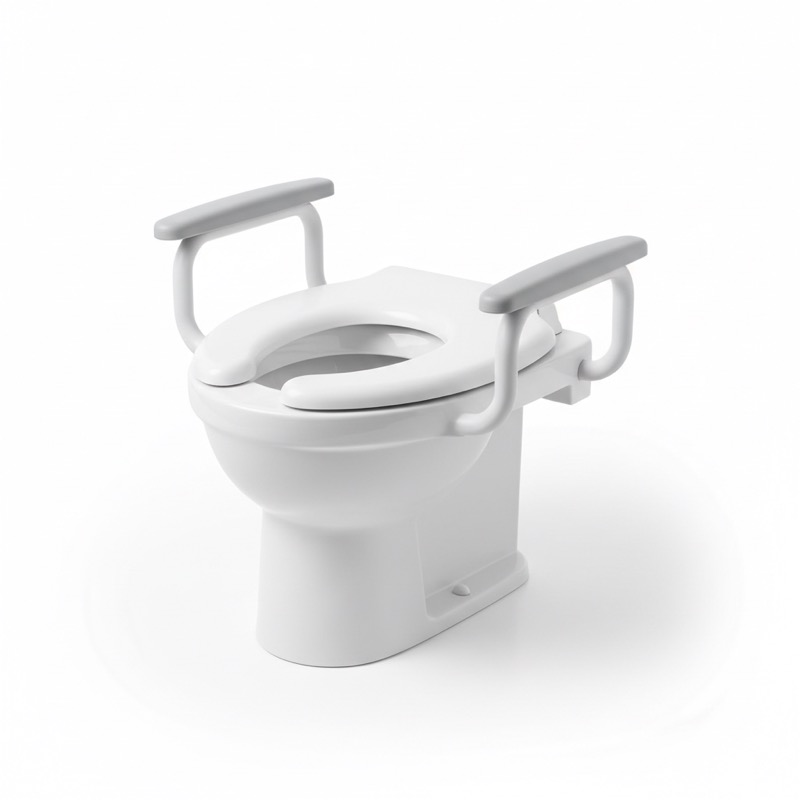
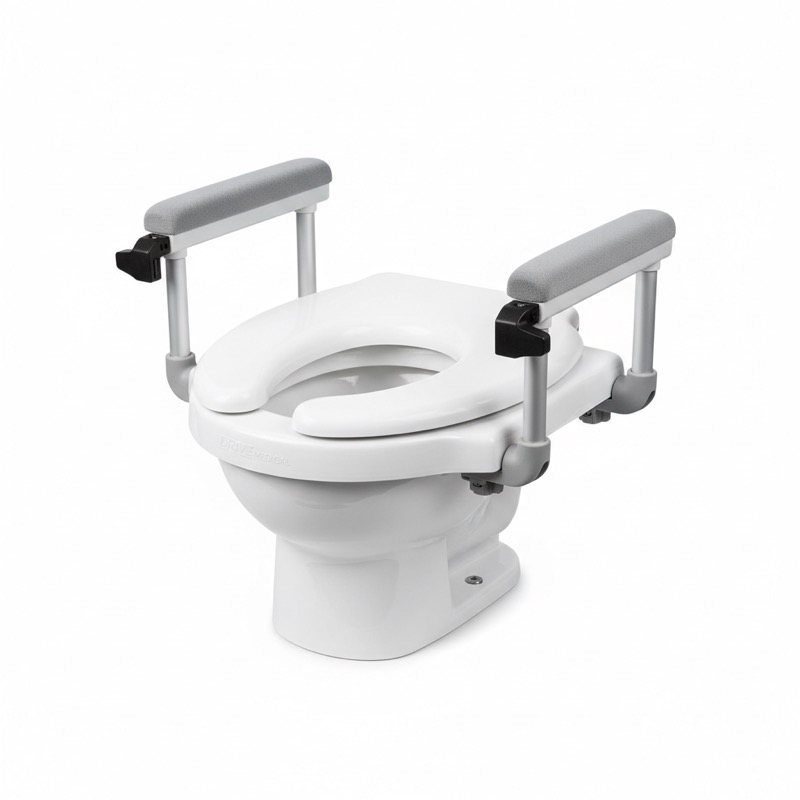
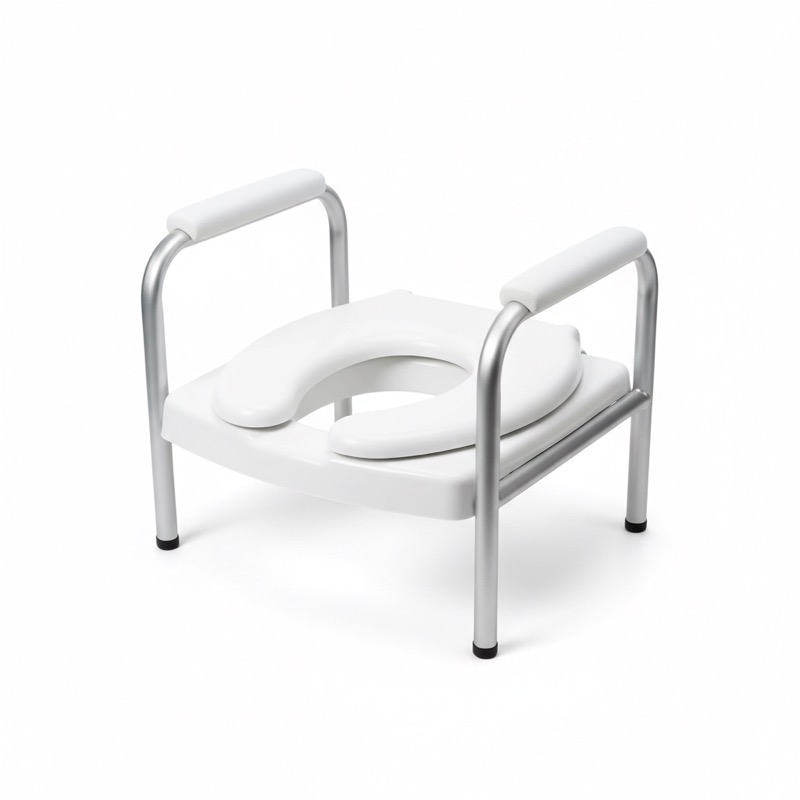
Getting on and off the toilet gets harder as strength, balance, and joint flexibility decline. For millions of seniors — especially those recovering from hip replacement, managing knee arthritis, or living with Parkinson’s — this seemingly simple task becomes a daily physical challenge. A raised toilet seat with handles addresses exactly that, without requiring any bathroom renovation.
This guide covers the main types, how to choose the right model, step-by-step installation, and the safety checks that matter most.
What Is a Raised Toilet Seat with Handles?
A raised toilet seat with handles is a portable device that attaches to an existing toilet to increase seat height by 2–6 inches and provide grip handles on both sides for sitting and standing support. Most models weigh under 5 lbs, install without tools in under 10 minutes, and are covered by Medicare Part B as durable medical equipment when prescribed by a physician.
The handles — also called armrests — are what distinguish these from basic risers. They give users something to push against when standing, which is where most of the fall risk lies.
What Are the Different Types of Raised Toilet Seats?
There are four main types of raised toilet seats with handles, each suited to different needs and bathroom configurations:
1. Clamp-On Raised Toilet Seats with Arms The most common type. A frame clamps directly to the toilet bowl rim, with a raised seat and integrated armrests. Easy to install and remove. Best for: shared bathrooms, renters, or users who need the seat occasionally.
2. Locking Raised Toilet Seats These use a ratchet or cam-lock mechanism that tightens under the bowl rim. More secure than basic clamp-on designs. Best for: users who apply significant lateral force when standing or sitting.
3. Toilet Safety Frames (Standalone) A freestanding steel frame that wraps around the toilet without attaching to it. Handles are at standing height. Best for: users who need extra tall handles, or bathrooms where the toilet bowl rim isn’t suitable for clamping.
4. Hinged Raised Toilet Seats A raised seat that hinges open like a regular toilet lid, allowing the toilet to be used normally or with elevation. Best for: households where one person needs the riser and others don’t.
How Do You Choose the Right Raised Toilet Seat with Handles?
Choosing the right raised toilet seat depends on four key factors: height increase, weight capacity, toilet shape, and armrest style.
Height increase. Standard raised toilet seats add 3–6 inches. The CDC recommends that toilet seat height for seniors should allow knees to bend at roughly 90 degrees with feet flat on the floor. Taller users with long femurs may need 5–6 inches; shorter users 3–4 inches.
Weight capacity. Most models support 250–300 lbs. For users over 275 lbs, look for heavy-duty models rated at 400 lbs or more.
Toilet shape. Toilet bowls come in round and elongated shapes. Elongated bowls are about 2 inches longer front-to-back. Most modern raised toilet seats fit both, but verify before buying — a poor fit creates a rocking hazard.
Armrest style. Padded foam armrests are easier on arthritic hands. Fixed armrests offer maximum stability. Removable or foldable armrests are better for caregivers who need clear access during transfers.
How to Install a Raised Toilet Seat with Handles (Step-by-Step)
Most clamp-on raised toilet seats install in under 10 minutes without tools. Here’s the process:
- Clean the toilet bowl rim. Wipe the rim with a damp cloth. Any buildup under the seat can prevent a secure lock.
- Remove the old toilet seat (if it creates too much height — most raised toilet seats can go over the existing seat).
- Position the raised seat. Set it centered on the bowl. Elongated models should hang slightly over the front.
- Tighten the locking knobs. Turn the adjustment screws or levers under the rim until snug. Do not overtighten — you want it firm, not cracked.
- Test stability. Sit on the seat and shift your weight side to side. There should be no movement or rocking.
- Check armrest height. Arms should allow you to push up comfortably without straining your shoulders. Most models let you adjust armrest height independently.
When to call a professional: If your toilet has a non-standard bowl shape, a wall-mounted toilet, or if the floor around the toilet is uneven, consult an occupational therapist or a certified aging-in-place specialist before installing.
Are Raised Toilet Seats with Handles Covered by Medicare?
Yes, under specific conditions. Medicare Part B covers raised toilet seats when prescribed by a physician for a documented medical condition, when purchased from a Medicare-enrolled supplier, and when the item meets Medicare’s definition of durable medical equipment (DME). The standard Medicare DME reimbursement requires a written order from your doctor indicating medical necessity.
Co-pay is typically 20% after the Part B deductible. If you have a Medicare Advantage plan, coverage terms vary — call your plan’s DME department directly.
Safety Tips: Getting the Most Out of Your Raised Toilet Seat
Installing the seat correctly is only half the job. These safety practices matter just as much:
- Check the seat lock daily. Give it a firm side-to-side wiggle before sitting. Locking mechanisms can loosen over time, especially on households where the toilet is used frequently.
- Keep the bathroom floor dry. A raised seat helps, but wet tile floors remain the primary fall risk in bathrooms. Non-slip bath mats are a complement, not a substitute.
- Don’t rush the sit-down. Lower yourself slowly using both armrests. Abrupt sitting can cause the seat to shift even when locked, or cause sudden pain in weak joints.
- Pair with a grab bar for maximum safety. According to AARP’s home safety guide, combining a raised toilet seat with a grab bar mounted on the adjacent wall reduces fall risk more than either modification alone. Our grab bar installation guide covers ADA mounting heights (33–36 inches) and the exact stud-mount process.
- Replace every 3–5 years. Plastic fatigue and locking mechanism wear reduce effectiveness over time. Inspect for cracks, discoloration, or wobble annually.

Our Top Picks for Raised Toilet Seats with Handles
Shop Raised Toilet Seats on Amazon →
Drive Medical Raised Toilet Seat with Removable Arms (RTL12027RA)
The Drive Medical RTL12027RA is the most recommended model by occupational therapists in the US for a reason: it combines the two things that matter most — meaningful height increase and real push-off support from the armrests.
At 5 inches of added height, it puts most seniors at a near-standing position when lowering down, dramatically reducing the quad and hip flexor load. The padded armrests lock securely and can be removed one at a time — useful if one side of the toilet is against a wall.
Price: ~$45–55 | Fits: Round + Elongated | Capacity: 300 lbs
Key Features
- 5-inch height increase
- Padded locking armrests, removable
- Tool-free installation
- Fits most toilets
Carex Toilet Seat Riser with Handles
For users with arthritis or reduced hand strength, the Carex Raised Toilet Seat stands out because of its soft-grip padded handles. Standard metal or hard plastic armrests can be painful to grip when hands are stiff — Carex’s foam padding makes a real difference first thing in the morning.
The 3.5-inch height boost is more conservative than Drive Medical’s 5-inch model, making it a better match for shorter users or those who don’t need maximum elevation. The easy-lock attachment is simple and reliable.
Price: ~$60–70 | Fits: Round + Elongated | Capacity: 250 lbs
Key Features
- Soft foam padded handles
- 3.5-inch height increase
- Easy-lock mechanism
- Lightweight frame
Medline Locking Raised Toilet Seat with Handles
When weight capacity is the primary concern, the Medline locking model at 400 lbs capacity is the standout choice. The dual locking levers provide a more secure fit than single-lever models, and the foldable armrests make caregiver-assisted transfers easier.
The 4-inch height boost and padded seat make it comfortable for daily use. For heavier users or those who apply significant lateral force when standing, this model’s extra stability margin is worth the slightly higher price.
Price: ~$55–65 | Fits: Round + Elongated | Capacity: 400 lbs
Key Features
- 400 lbs weight capacity
- Dual locking levers
- Foldable armrests
- 4-inch height increase
How Does a Raised Toilet Seat Compare to a Toilet Safety Frame?
A raised toilet seat with handles attaches to the toilet bowl and raises the sitting surface. A toilet safety frame is a freestanding metal frame that wraps around the toilet and provides grab handles at standing height — but does not change the seat height.
Choose a raised toilet seat if your main challenge is getting down and back up from a low seat. Choose a safety frame if you need taller handles for support but your existing toilet seat height is adequate, or if your toilet bowl shape makes a clamping riser impractical.
Many seniors benefit from both: a raised seat for height plus a grab bar on the adjacent wall for directional support. Our full bathroom safety hub page covers the complete picture of bathroom modifications for seniors.
Frequently Asked Questions
How much height does a raised toilet seat with handles typically add?
Most models add between 3 and 6 inches to toilet seat height. The most common sizes are 3.5 inches (for shorter users or minor difficulty), 4 inches (the most common fit for average-height adults), and 5 inches (for taller users or those with severe hip or knee limitations).
Can a raised toilet seat be used with any toilet?
Most raised toilet seats fit standard round and elongated toilet bowls. They do not fit one-piece toilets where the tank and bowl are seamlessly joined, wall-hung toilets, or non-standard bowl shapes. Check the product dimensions against your bowl measurements before purchasing.
What’s the difference between a raised toilet seat and a toilet booster seat?
They are the same thing — “raised toilet seat,” “toilet riser,” “toilet booster,” and “elevated toilet seat” are all terms for the same category of product. The term “raised toilet seat with handles” specifically refers to models that include integrated armrests.
Are raised toilet seats easy to clean?
Yes. Most are smooth plastic that wipes down with standard bathroom cleaner. Remove the seat from the toilet periodically — monthly is reasonable — to clean the contact surfaces and inspect the locking mechanism.
Does Medicare pay for raised toilet seats with handles?
Medicare Part B covers raised toilet seats as durable medical equipment when a physician writes a prescription documenting medical necessity. You’ll pay 20% co-insurance after your deductible. Contact a Medicare-enrolled DME supplier to confirm coverage for specific models.
Stay Informed
Want more tips for bathroom safety at home? Join thousands of seniors and caregivers who get our weekly guides — practical advice, no spam.
Sign up for our free newsletter
Related reading: Best Grab Bars for Seniors | Bathroom Safety Tips for the Elderly | Bathroom Safety Hub