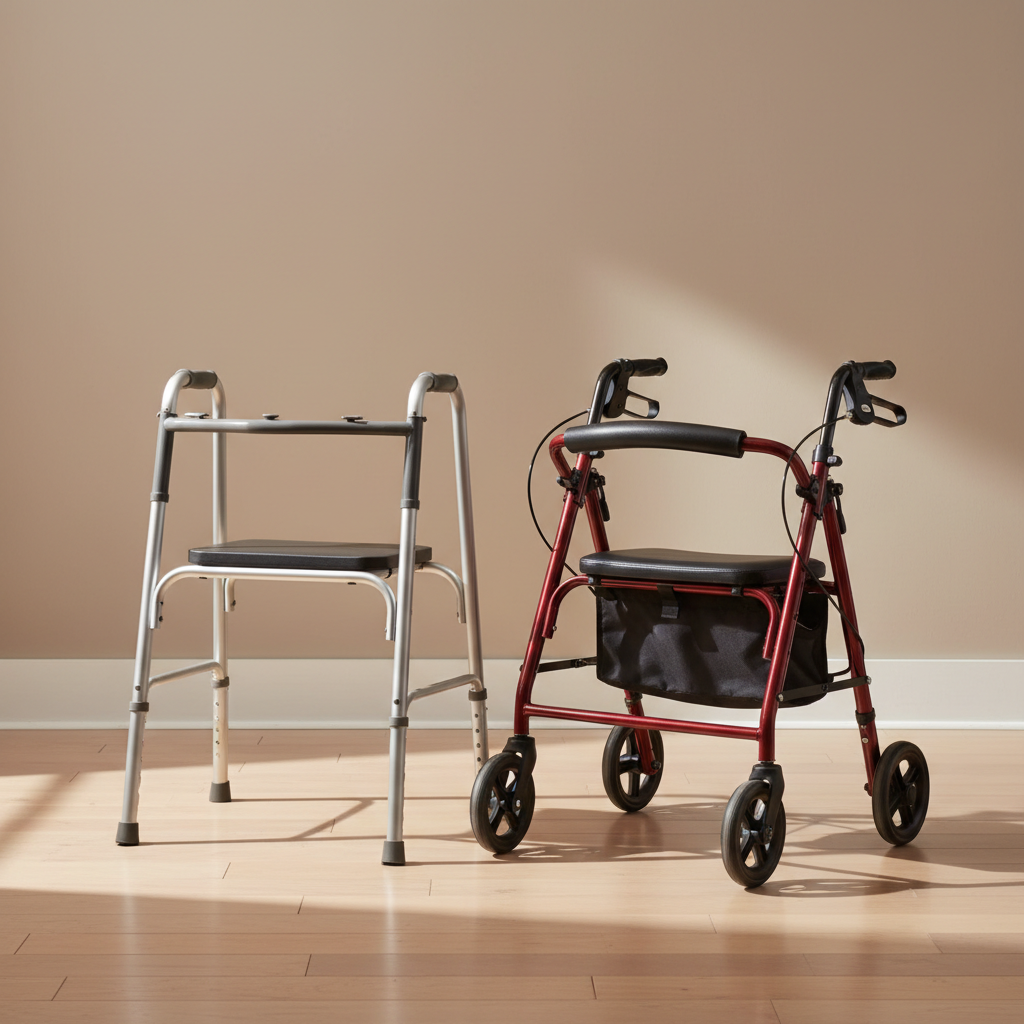
Mobility aids have one job: to help you move through life safely and with confidence. But the category has gotten complicated. Walk into any medical supply store and you’ll see canes, quad canes, hemi-walkers, two-wheeled walkers, four-wheeled rollators, transport chairs, power scooters — and a staff that may or may not know the difference between them.
This guide is a plain-language overview of every major type of mobility aid, who each one is right for, and what to actually look for when you’re shopping. Whether you’re a senior evaluating your own options or an adult child helping a parent, this is where to start.
How We Approach Mobility Aid Reviews
We don’t test mobility aids in a pristine lab. We look at clinical recommendations from physical and occupational therapists, cross-reference with verified long-term user feedback, evaluate against ADA and FDA safety standards, and pay attention to what medical professionals actually prescribe in real care settings.
We prioritize products from established manufacturers with track records in clinical supply: Drive Medical, Hugo Mobility, Medline, OasisSpace, and similar companies that sell into hospitals, rehab centers, and home health programs. We don’t recommend gadgets from unknown brands just because they’re cheap.
Weight capacity, height adjustability, brake design, folding mechanism, and terrain handling all factor into our assessments. So does availability through Medicare-enrolled suppliers, since cost accessibility matters for most seniors.
Canes: When to Use One and Which Kind
A cane is appropriate for mild balance issues or as a light support on one side of the body. It’s not a weight-bearing device — it provides a third point of contact to improve confidence and steadiness, not to substitute for a weak leg.
Standard single-tip cane — The right starting point for someone with minor balance concerns or mild pain on one side. Adjust the height so your elbow has a slight bend (15 to 20 degrees) when you grip the handle. Never use one that’s too tall; it forces your shoulder up and disrupts your posture.
Quad cane (four-tip base) — Provides more stability than a single-tip cane and can stand on its own. A good step up for someone who needs more than a standard cane but isn’t ready for a walker. Look for a wide-base quad cane for maximum stability.
Offset handle cane — The handle sits slightly behind the shaft rather than directly above it, which distributes your weight more efficiently over the cane tip. More comfortable for all-day use than a straight cane. Hugo and Drive Medical both make reliable versions.
Our pick in this category is the Hugo Mobility Adjustable Folding Cane. It adjusts from 31 to 40 inches, folds for travel, and has a comfortable foam grip that’s easy on arthritic hands.
Standard Walkers: Stability First
A standard walker — also called a pickup walker — has four legs and either no wheels or two small front wheels. It’s the most stable walking aid available and is the right choice when someone needs genuine weight-bearing support through their arms.
Use a standard walker after hip or knee surgery, during recovery from a stroke or neurological event, or any time a physical therapist specifies that the user needs to bear weight through their upper body while walking.
The trade-off: standard walkers slow you down and interrupt your natural gait. Over time, the lift-and-plant motion can reinforce poor walking habits. Most physical therapists plan to transition patients to a rollator once they’ve rebuilt sufficient strength and balance.
Our pick: Drive Medical Folding Walker with Two Front Wheels. Lightweight (under 7 lbs), height adjustable from 32 to 39 inches, folds flat, and available in a two-wheeled version that reduces lifting fatigue without sacrificing rear-leg stability. It’s the walker you’ll find in more post-acute care settings than almost any other.
Rollators: The Everyday Workhorse
For most ambulatory seniors who don’t need heavy weight-bearing support, a rollator is the right mobility aid. Four wheels, loop brakes, a built-in seat, and a gliding motion that mirrors natural walking — rollators are faster, more comfortable, and more practical for outdoor use than any standard walker.
The key variables when choosing a rollator are wheel size (larger is better for outdoor terrain), brake responsiveness, weight capacity, and frame weight.
Best Rollator for Indoor Use
Medline Premium Empower Rollator — Hospital-grade build quality, sensible price, and available through most Medicare-enrolled suppliers. The 6-inch wheels are adequate for smooth indoor surfaces. A practical pick for someone who primarily walks inside and wants a place to rest.
Best Rollator for Outdoor Use
Hugo Mobility Elite Rollator — The 8-inch wheels handle cracked sidewalks, packed gravel, and grass without the lurching that plagues smaller-wheeled models. The brakes are easy to operate with reduced grip strength. It’s consistently recommended by PTs for patients who want to keep walking outside. See our full outdoor walkers guide for a detailed breakdown.
Best Premium Rollator
Drive Medical Nitro Euro Style Rollator — The 10-inch wheels are the largest on any consumer rollator. It folds thin, weighs 17 lbs, and includes an underseat bag. For a senior who walks outside daily and wants the most capable standard rollator on the market, this is it. The price is higher, but the build quality reflects it.
Best Budget Rollator
OasisSpace Compact Rollator — Under 15 lbs, 7.5-inch wheels, clean folding mechanism. Not built for rough terrain, but handles pavement and park paths well. A good entry point for someone new to rollators or on a tighter budget.
Transport Wheelchairs: For Distance and Fatigue
A transport wheelchair is not the same as a standard wheelchair. It’s lighter (often under 20 lbs), has smaller rear wheels, and is designed to be pushed by a caregiver rather than self-propelled. It fills the gap between a rollator and a full wheelchair.
Transport chairs are appropriate when a senior can walk short distances but fatigues too quickly for longer outings — grocery stores, airports, medical appointments, outdoor events. They’re not a substitute for a walking aid for daily around-the-house mobility.
Our pick: Drive Medical Lightweight Transport Wheelchair. At 19 lbs, it folds flat into a car trunk and has comfortable padded armrests. The 12-inch rear wheels handle smooth surfaces easily. Drive Medical’s build quality is reliable, and parts are readily available if something needs replacing.
Power Scooters: Independence for Limited Walkers
For seniors who can no longer walk safely for more than very short distances, a power mobility scooter offers meaningful independence. Scooters are appropriate when walking ability is genuinely limited — not as a convenience substitute for walking when walking is still possible.
Three-wheel scooters turn more easily in tight spaces. Four-wheel scooters are more stable on uneven outdoor terrain. Most have a range of 10 to 15 miles per charge and a top speed around 4 mph.
Medicare Part B may cover a power scooter if your doctor documents that you have a mobility limitation that significantly impairs your ability to perform daily activities, and that you are unable to safely use a cane or walker. The documentation requirements are specific, so work with your physician if you think you qualify.
A note on safety: Power scooters require the user to have sufficient cognitive ability to operate them — understanding when to stop, how to navigate around people and objects, and how to manage the controls. If cognitive decline is a concern, discuss this carefully with the prescribing physician.
What Medicare Covers
Medicare Part B covers certain durable medical equipment (DME) including canes, walkers, rollators, manual wheelchairs, and power scooters — when medically necessary and prescribed by a physician. You must use a Medicare-enrolled supplier to receive coverage.
For most walkers and rollators, Medicare pays 80% of the approved amount after you meet your Part B deductible. Medigap or supplemental plans may cover the remaining 20%.
Coverage does not mean Medicare will pay for the specific brand or model you want. It pays for the category of device. If you want a particular model, you may need to pay the difference between Medicare’s approved amount and the device’s price.
Choosing the Right Aid: A Quick Decision Guide
- Mild balance concern, no pain → single-tip cane
- Moderate balance concern, one-sided weakness → quad cane or offset cane
- Post-surgery or heavy support needed → standard walker (two front wheels)
- Good balance, needs endurance support → rollator
- Uses rollator, walks long distances or outdoors often → rollator with 8-inch+ wheels
- Can walk short distances, needs help with longer outings → transport wheelchair
- Walking is severely limited, has caregiver support → power scooter (with MD evaluation)
The most common mistake: getting a device that’s appropriate for your current worst day, when you actually need something for your typical day. Work with a physical therapist to calibrate the right level of support.
Working With a Physical Therapist
A one-time mobility evaluation from a physical therapist — sometimes called a gait assessment — is one of the most practical things a senior can do before buying a mobility aid. Most take less than an hour. The PT will watch you walk, evaluate your balance and strength, and recommend the right category of device and the correct settings.
Many seniors are using aids that don’t fit them — handles at the wrong height, the wrong type of walker for their condition, or a cane in the wrong hand. These details affect both safety and comfort significantly.
Ask your primary care physician for a PT referral. Medicare typically covers a gait assessment when ordered by a physician.
Frequently Asked Questions
How do I know when it’s time for a mobility aid? Common signs include holding onto walls or furniture while walking, reluctance to go out because of fear of falling, a recent fall or near-fall, or new pain in the hips, knees, or feet that changes your gait. If you notice any of these, talk to your doctor. A mobility aid used early prevents falls — it doesn’t signal a permanent decline.
Can I buy a rollator or walker without a prescription? Yes. Mobility aids are available without a prescription from medical supply stores, pharmacies, and online retailers. A prescription is only required if you want Medicare to help cover the cost. Even without insurance coverage, having a PT recommend the right type and settings is worth doing.
What is the safest way to use a rollator on a slope? On a downhill slope, engage the brakes slightly to control your speed before you begin descending — don’t rely on your body to slow the rollator. Keep the rollator close to your body rather than extended in front of you, which reduces your leverage and control. If a slope is steep enough that you’re uncertain, consider an alternate route. For regular outdoor users, a rollator with reliable loop brakes is essential.