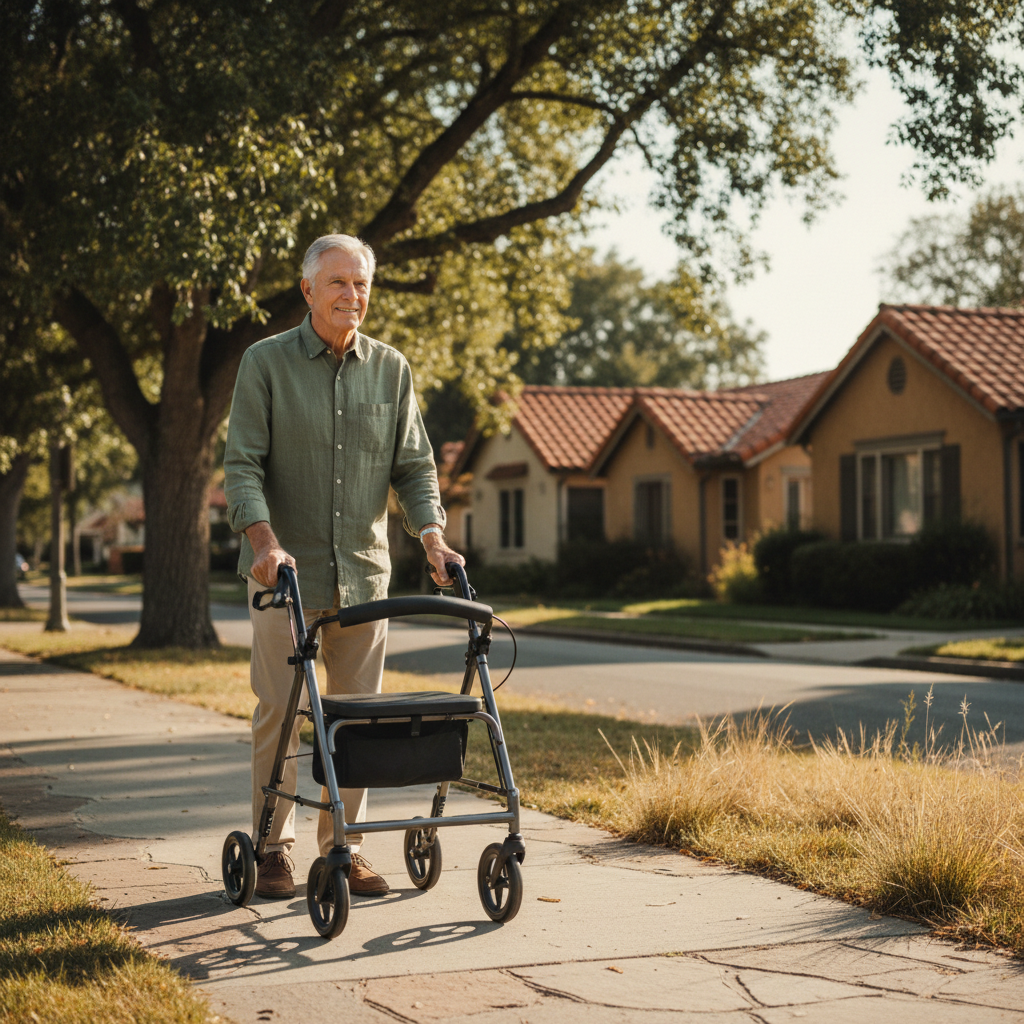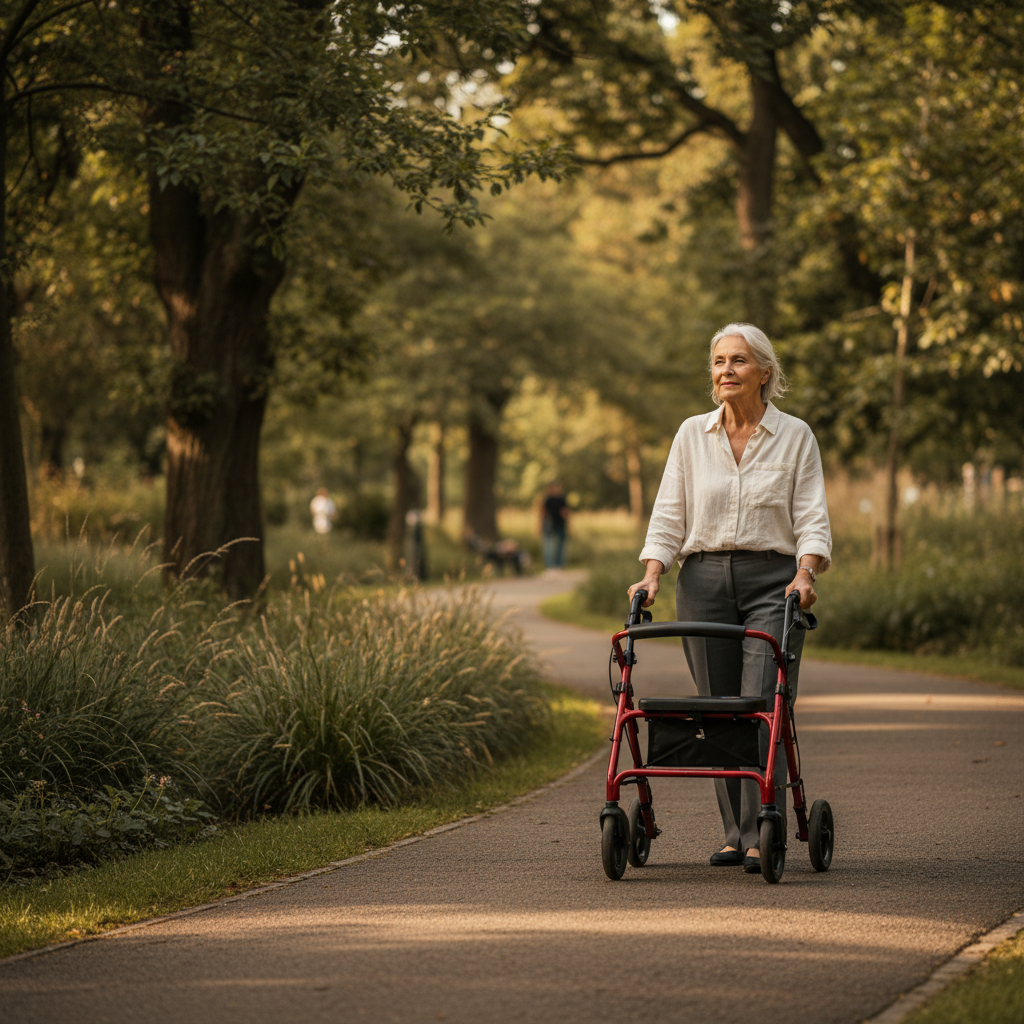
If you or a parent uses a walker mostly indoors, any basic model will do the job. But outdoor walking is a different story. Cracked pavement, gravel driveways, uneven grass, and curb cuts can turn a standard walker into a liability. The wrong walker outside doesn’t just slow you down — it can catch a wheel and send you forward.
This guide focuses specifically on walkers built to handle the real world: outdoor terrain, variable surfaces, and the kinds of conditions seniors encounter on everyday walks.
How We Evaluated These Walkers
We looked at user feedback from physical therapists, occupational therapists, and long-term care facilities, cross-referenced with verified buyer reviews from people who actually use these products outside. We paid attention to wheel diameter (bigger is almost always better outdoors), brake responsiveness, frame stability under load, and how easily each walker folds for transport.
We also checked compliance with FDA Class II medical device standards and looked at which models physical therapists most commonly recommend for outdoor use. Weight capacity ratings matter too — many seniors need a walker rated for at least 250 to 300 lbs, and a surprising number of budget models fall short.
What Actually Matters for Outdoor Use
Wheel size is the single biggest factor. Standard indoor rollators often have 5- or 6-inch wheels. Outdoors, you want 7.5 to 8 inches minimum. Larger wheels roll over obstacles instead of catching on them.
Frame width and stability. A wider stance means less tipping on slopes or soft ground. Look for a wheelbase at least 22 inches wide.
Brake design. Loop brakes (the squeeze-to-stop style) give you more control than push-down brakes on inclines. If you’re walking on any kind of slope, loop brakes are safer.
Weight. You need something light enough to fold and lift into a car, but sturdy enough to feel solid underfoot. Most good outdoor walkers land between 15 and 22 lbs. Carbon fiber and aircraft aluminum frames hit the sweet spot.
Height adjustability. The right handle height lets you stand upright, not hunched. Your elbows should have a slight bend — roughly 15 to 20 degrees — when gripping the handles. Most quality walkers adjust in 1-inch increments.
Our Top Picks
Best Overall: Hugo Mobility Elite Rollator
The Hugo Elite has become a go-to recommendation among physical therapists for a reason. Its 8-inch wheels handle most outdoor surfaces — gravel, packed dirt, grass, and uneven sidewalks — without the lurching that plagues smaller-wheeled models. The brakes are responsive and easy to operate, which matters for anyone with arthritis or reduced grip strength.
The seat is padded and rated for 300 lbs, so you can actually rest on it rather than just perching briefly. The frame folds flat for car transport in about 5 seconds. At roughly 18 lbs, it’s not ultralight, but it’s manageable.
One note: the width (about 26 inches open) is wider than a standard 24-inch interior doorframe. Measure your main entry door before ordering.
Best for Rough Terrain: Drive Medical Nitro Euro Style Rollator
Drive Medical is one of the most trusted names in mobility equipment, and the Nitro is their premium outdoor model. The 10-inch wheels are the largest you’ll find on a consumer rollator — they genuinely roll over small roots, curb lips, and grassy ground. The frame is aluminum, the whole unit weighs about 17 lbs, and it folds down thin enough to fit in most car trunks standing upright.
The Nitro also has a hand-stitched bag underneath the seat, which most competitors charge extra for. The downside: it’s priced at the high end of the category. But for someone who walks outside regularly, it’s worth the investment.
Best Budget Pick: Medline Premium Empower Rollator
Medline makes reliable, hospital-grade products at prices that don’t require a second mortgage. The Empower has 7.5-inch wheels — not quite as large as the Hugo or Drive Medical Nitro, but a real step up from indoor walkers. It handles smooth concrete and packed paths without issue and wobbles only a bit on looser gravel.
The handle grips are rubberized and comfortable for longer walks. The seat height is fixed rather than adjustable, which is a limitation, but the price makes it accessible for users on a fixed income or Medicare who aren’t getting full coverage.
Best Lightweight Option: OasisSpace Compact Rollator
If your priority is something easy to fold and carry — especially for travel or fitting in smaller vehicles — the OasisSpace Compact deserves a look. At just under 15 lbs, it’s one of the lighter aluminum rollators available. The 7.5-inch wheels handle pavement and smooth outdoor surfaces well.
It’s not designed for truly rough terrain, but for a senior who wants to walk on sidewalks, park paths, or around the neighborhood, it does the job without the bulk or weight of heavier models.
Standard Walker vs. Rollator for Outdoor Use
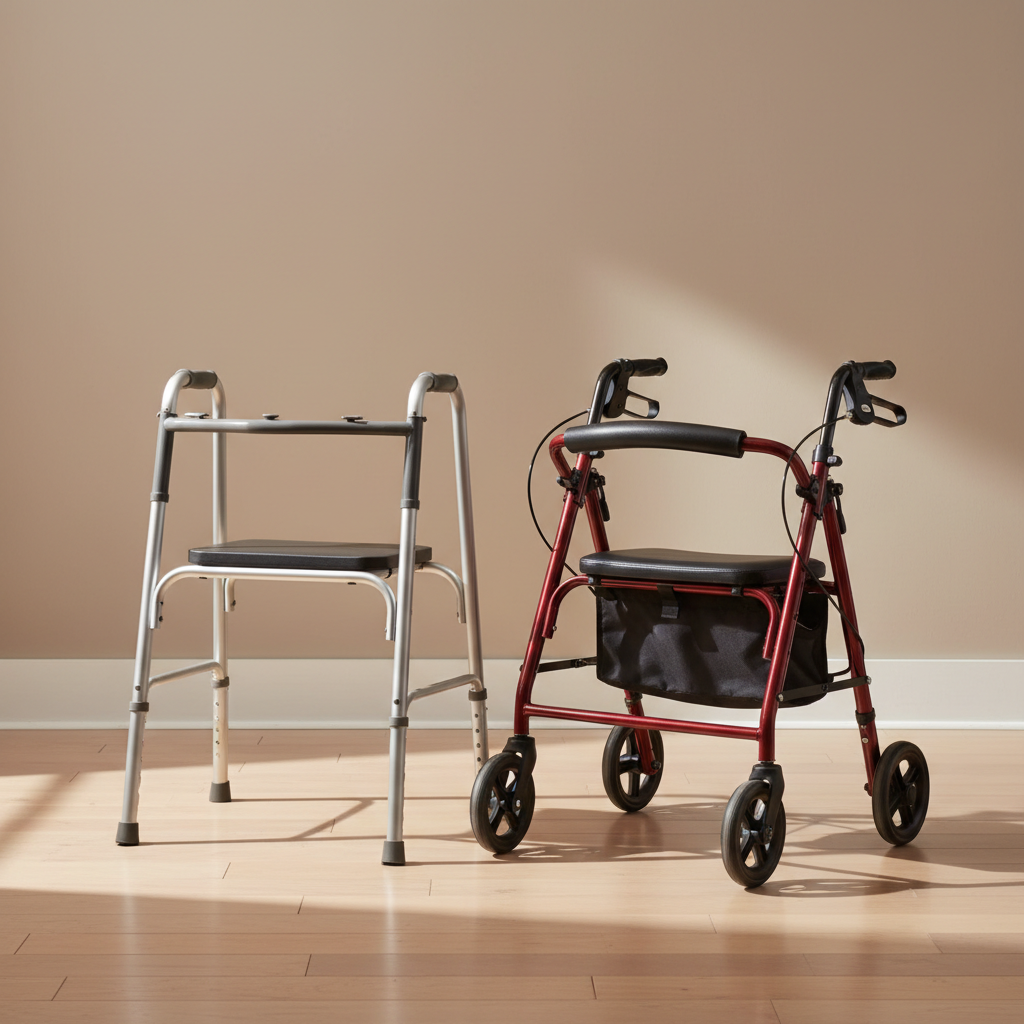
A traditional two-wheeled or four-legged standard walker is generally not the right choice for outdoor surfaces. They require you to lift and plant with every step, which is tiring and awkward on anything but flat, smooth flooring. Rollators — with four wheels and a gliding motion — are far more practical outside.
The main advantage of a standard walker is stability for people who need full weight-bearing support and don’t trust themselves to control a rolling frame. If your doctor or physical therapist has specifically recommended a non-wheeled walker, follow that advice. But for most ambulatory seniors who want to walk outside independently, a rollator is the better tool.
Tips for Getting the Right Fit
Before buying, have someone measure your wrist height while you’re standing with arms at your sides and wearing your usual shoes. That measurement is your starting handle height. Most physical therapists recommend handles at wrist height, giving you that slight elbow bend when gripping.
If you’re buying online, check the height range in the product specs. Some walkers don’t go high enough for taller users (above 6 feet) or low enough for shorter seniors (below 5’2”).
Try the brakes before committing. If possible, visit a medical supply store to squeeze the brake handles. If you can’t compress them comfortably, that model isn’t right for you.
Frequently Asked Questions
Can I use an outdoor rollator inside my home? Yes. A rollator sized for outdoor use will work indoors as well — just make sure it fits through your doorframes when open. Measure any narrow doorways, especially bathroom entries.
Does Medicare cover outdoor walkers? Medicare Part B may cover a standard walker or rollator if prescribed by your doctor as medically necessary. Coverage typically requires a prescription and that the supplier is Medicare-enrolled. The specific model covered depends on your plan and what your doctor documents. Call your Medicare plan directly for details.
How do I know if a walker is the right width for me? When you grip the handles and stand inside the frame, you should have a few inches of clearance on each side. You want to feel supported, not squeezed. A physical therapist can do a proper fitting in about 15 minutes and it’s worth the time, especially for outdoor use.