Managing multiple medications is one of the most common challenges seniors face — and one of the most consequential to get right. Missing a dose, taking the wrong pill at the wrong time, or accidentally doubling up can have real health consequences. A good pill organizer doesn’t just keep things tidy; it can meaningfully reduce medication errors.
The right organizer depends on how many medications you take, how many doses per day, and how much help you want from technology. We’ve organized our picks from simplest to most automated.
When a Basic Organizer Is Enough
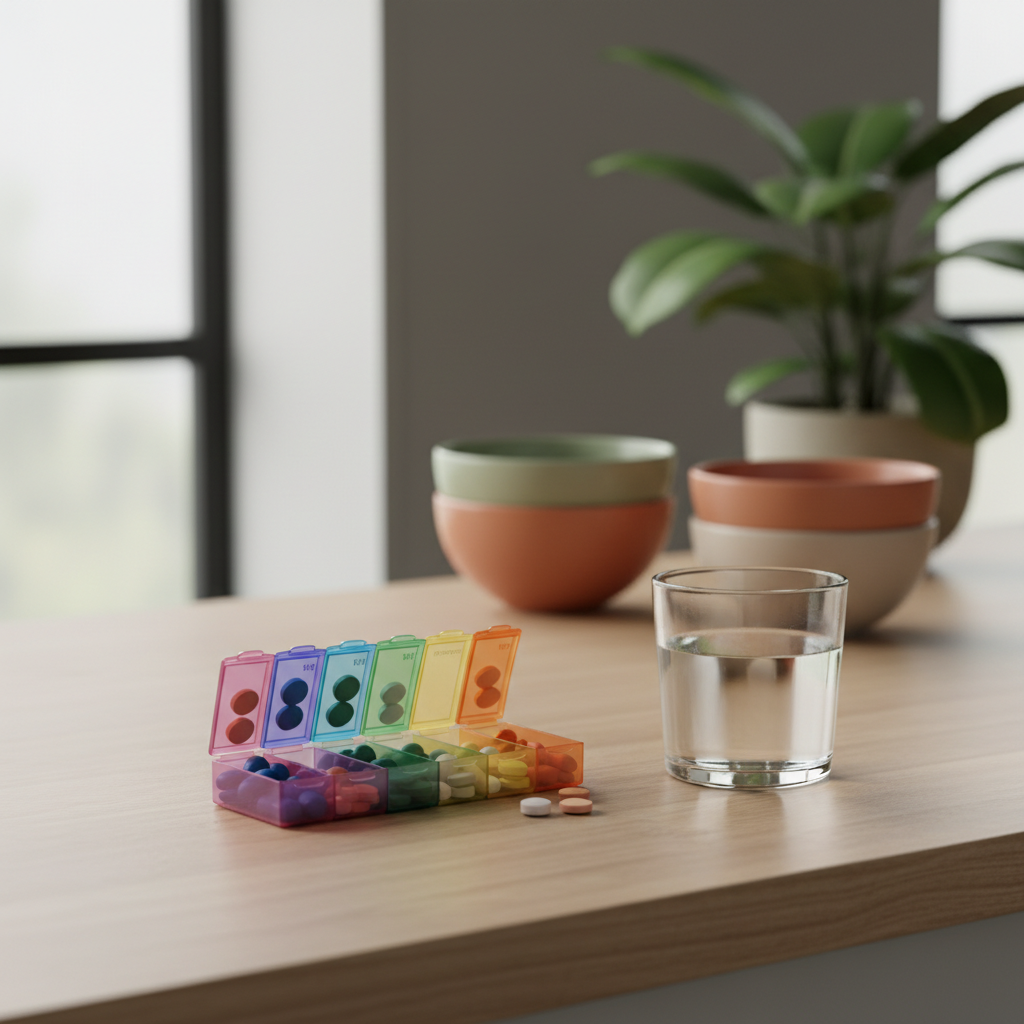
If you take one or two medications once a day, a straightforward weekly pill organizer may be all you need. The Medline Premium Weekly Pill Organizer is a reliable, no-frills option that’s been a staple in pharmacies for years.
It has seven large, clearly labeled compartments — one per day — with wide-mouth openings that are easy to fill and open, even with reduced grip strength or arthritis. The lids snap shut firmly enough to prevent accidental spills in a bag or purse but don’t require excessive force to open.
If you take morning and evening doses, the Medline AM/PM model splits each day into two compartments. It’s a small upgrade in organization that makes a meaningful difference if you’ve ever wondered whether you took your evening pill.
Best for: Seniors on simple, once-daily or twice-daily medication regimens.
The Best Option for Multiple Daily Doses: APEX Ultra Pill Organizer
For seniors taking medications three or four times a day, a standard weekly box becomes hard to manage fast. The APEX Ultra Weekly Pill Organizer addresses this with four compartments per day — morning, noon, evening, and bedtime — each clearly color-coded and labeled.
The case is compact enough to travel with and the daily rows detach, so you can take just Tuesday’s pills to an appointment without carrying the whole week. The compartment openings are large and the lids are easy to lift. For anyone with moderate arthritis, this design is noticeably more accessible than organizers with smaller, tighter lids.
Best for: Seniors with three to four daily dose times who want a portable, simple solution.
When You Need Reminders: the Pivotell Advance Pill Dispenser
For seniors who are independent but sometimes lose track of whether they took a particular dose, an alarm-based dispenser adds a useful safety layer without requiring anyone else to be involved.
The Pivotell Advance is a rotating automatic dispenser that holds up to 28 doses and sounds a clear alarm when it’s time to take a dose. The next compartment rotates into the opening — you can only access the current dose, which prevents accidentally taking tomorrow’s pills.
Setup is straightforward enough that most seniors can manage it themselves, or with one session of help from a family member or pharmacist. No Wi-Fi or app required.
Best for: Independent seniors who want a reminder system without relying on a smartphone.
For Complex Schedules: e-Pill MedTime Station
The e-Pill MedTime Station is our top pick for anyone managing a genuinely complex regimen — four or more medications at multiple times of day, particularly if memory lapses or confusion are a concern.
The station holds 28 doses across up to six programmable daily alarm times. When a dose is due, a loud alarm sounds and the device’s light flashes. The correct cup rotates into the dispensing slot. Once you’ve taken the dose, the cup locks away, so there’s no way to accidentally take it again.
e-Pill is a well-established company in the medical adherence space, and the MedTime Station is one of their most reliable designs. It doesn’t require a smartphone or internet connection, which matters for seniors who aren’t comfortable with apps.
Adult children or caregivers can fill the device weekly, making it a practical choice when some oversight is helpful but full-time supervision isn’t needed.
Best for: Seniors with four or more medications and multiple daily doses, especially where double-dosing is a safety concern.
A Note on Medication Safety
A pill organizer, however good, is a tool — not a substitute for clear communication with your pharmacist and doctor. Before adopting any new organizational system, especially for a parent or loved one with a complex regimen:
- Review the full medication list with a pharmacist. Drug interactions and timing requirements vary. Many pharmacies offer free medication reviews.
- Ask about blister pack dispensing. Some pharmacies will pre-package medications in dated blister packs for a small fee — an excellent option when daily organization has become genuinely difficult.
- Never stop or change a medication without consulting your doctor, even if you’re simplifying a routine.
Pill organizers reduce errors from forgetfulness or confusion. They don’t replace medical oversight.
Frequently Asked Questions
Can I use a pill organizer for liquid medications or inhalers? Standard pill organizers are designed for solid oral medications — tablets and capsules. Liquid medications, inhalers, patches, and injections need to be managed separately. Ask your pharmacist for the best approach to organizing these alongside your oral medications.
How far in advance can I fill a pill organizer? Most pharmacists recommend filling no more than one week at a time. Some medications are sensitive to humidity and light and can degrade if left in an open organizer for extended periods. Keep the organizer away from bathrooms (too humid) and windowsills (too much light). A nightstand or kitchen counter in a cool, dry spot is usually ideal.
What if my loved one refuses to use a pill organizer? Resistance is common, especially if the person equates the organizer with a loss of independence. Starting with a simple, non-intrusive weekly tray — rather than jumping straight to an automatic dispenser — often reduces pushback. Framing it as a convenience rather than a safety net tends to work better than emphasizing the risks of missed doses.